

Adjust your setup, move often, and build strength to stop posture pain.
You can feel better at work without long workouts or fancy gear. I’ve spent years helping teams and busy pros learn how to prevent work posture pain with simple changes that stick. In this guide, I’ll show you how to prevent work posture pain step by step, backed by research and field-tested tips you can use today.
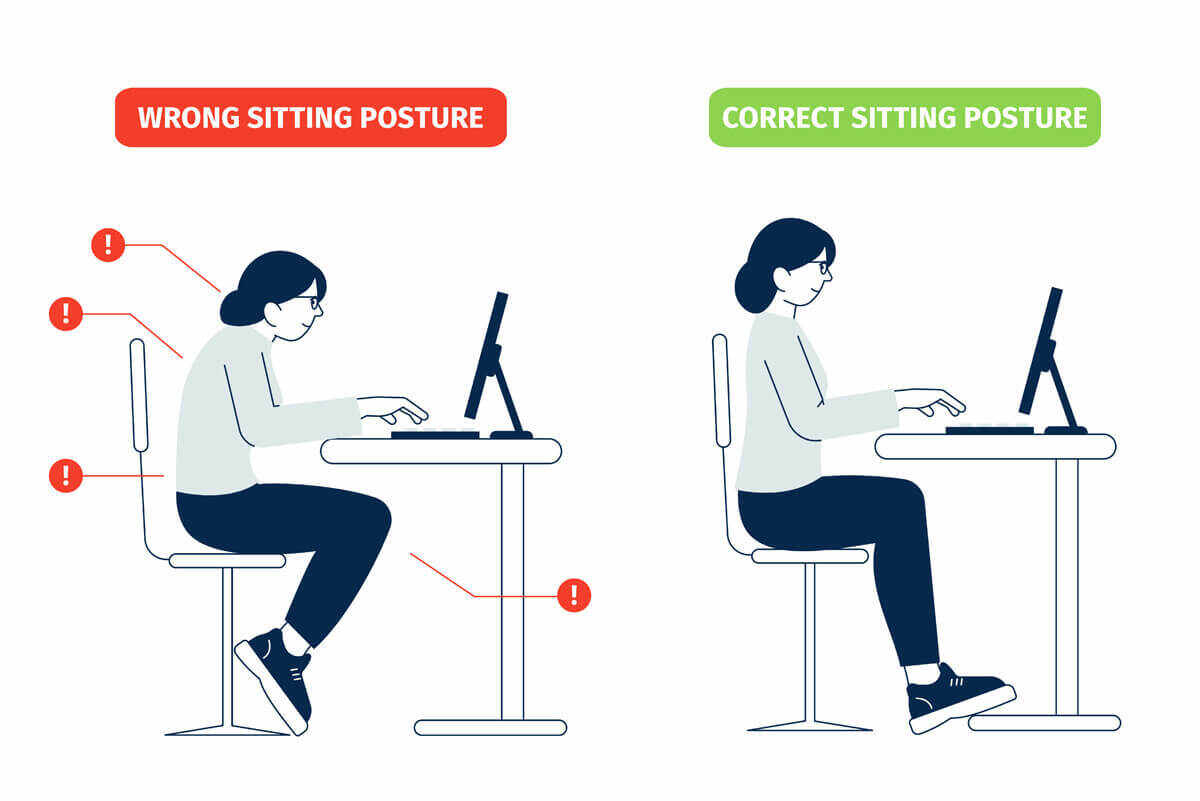
Source: saintalphonsus.org
Why work posture pain happens
To learn how to prevent work posture pain, it helps to know why it starts. Most desk pain is not about one “bad” pose. It comes from holding one shape too long. Your muscles get tired. Your joints stiffen. Your brain turns down body signals when you focus hard, so you miss early warning signs.
Common triggers include:
- Long sitting or long standing: Static load makes tissues sore. Small breaks stop this build-up.
- Forward head and rounded shoulders: This adds strain to your neck and mid-back. Screens pull you forward.
- Poor desk fit: Chair too low, screen too high, keyboard too far. Tiny gaps add up over hours.
- Stress and low sleep: Tense muscles and slow recovery raise pain risk. Breath work helps.
- Low strength in hips and mid-back: Your body works harder to hold you up when support is weak.
Research reviews show this pattern: variety beats one “perfect” posture. Move more, change shape often, and set your desk to fit you. That is the base of how to prevent work posture pain.
The desk setup checklist that actually works
If you want to know how to prevent work posture pain at a desk, start here. Use this fast checklist. Spend five minutes to dial in each point.
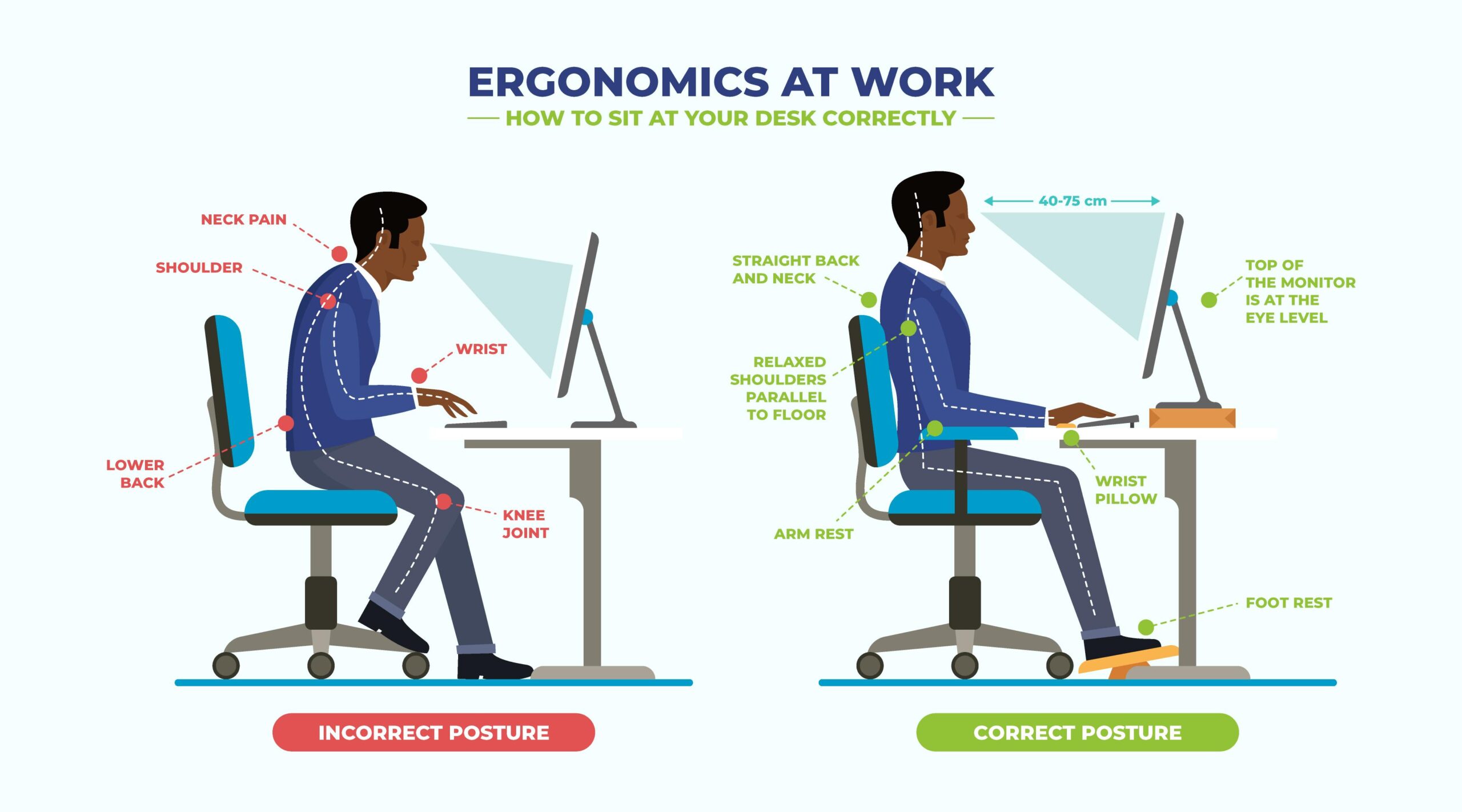
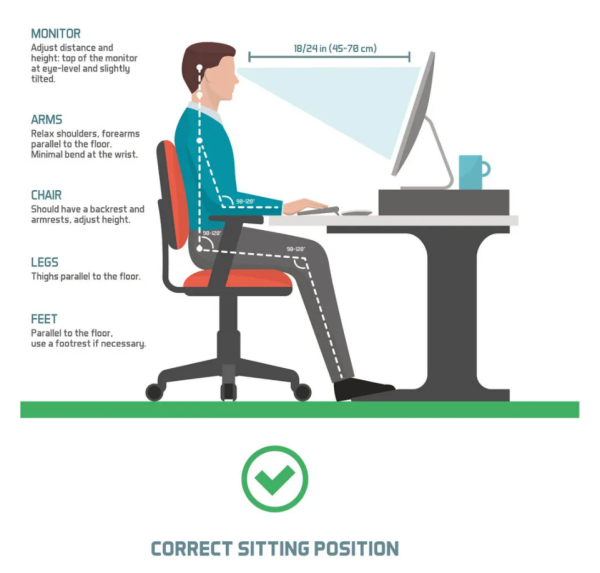
- Chair height: Feet flat. Knees level with hips or slightly lower. Thighs relaxed.
- Back support: Sit back with a small lumbar curve. Use a rolled towel if your chair lacks support.
- Desk height: Forearms level with the desk. Elbows near 90 degrees and close to your body.
- Keyboard: Keep it flat. Place it so your shoulders stay down and relaxed.
- Mouse: Keep it next to the keyboard. Use your whole arm, not just your wrist.
- Monitor: Top of the screen at or just below eye level. Arm’s length away.
- Dual screens: Use one main screen front and center. Angle the second toward you.
- Lighting: Face light from the side, not behind the screen. Cut glare to avoid leaning in.
- Foot support: If feet dangle, use a footrest or a box to unload your back.
Personal note: my own neck pain dropped in a week when I lowered my desk by half an inch and moved the mouse closer. Small tweaks matter.

Source: polkadotpowerhouse.com
Daily movement habits to reset your posture
Movement is the heart of how to prevent work posture pain long term. You do not need to sweat. You just need to break stillness often.
Try these easy patterns:
- The 25–5 method: Work 25 minutes. Move 5 minutes. Stand, walk, or do two quick drills.
- The 20–8–2 rule: Each 30 minutes, sit 20, stand 8, walk or stretch 2.
- Microbreaks: Every 30–45 minutes, do 30 seconds of motion. Set a phone timer or use a reminder app.
- Walking calls: Take phone calls while standing or walking.
- Water trigger: Sip water every 20 minutes. Stand to refill. Habit stacking works.
Two quick “movement snacks”:
- Shoulder resets: 10 reps. Pull shoulder blades down and back. Pause one second each.
- Neck turns: 5 each side. Slow turn, chin level, then gentle side bend.
These tiny moves cut stiffness fast and help you learn how to prevent work posture pain without a gym.

Source: polkadotpowerhouse.com
Simple exercises to build a pain-proof body
Strength is your long-term shield. These moves are core to how to prevent work posture pain. Do them three days a week. Ten minutes is enough.
- Dead bug: 2 sets of 6–8 each side. Keep your low back gently pressed to the floor.
- Side plank (knees or feet): 2 sets of 20–30 seconds each side. Build lateral core.
- Hip hinge with a backpack: 2 sets of 10. Push hips back. Keep spine neutral.
- Glute bridge: 2 sets of 10–12. Squeeze at the top for two seconds.
- Row with band: 2 sets of 12. Elbows back, shoulder blades down.
- Face pull with band: 2 sets of 12. Targets mid-back and rotator cuff.
Tip from the field: if you sit a lot, focus on glutes, mid-back, and deep core. These zones unlock strong, easy posture.
Source: ac.ke
Stretches that help without stealing your day
You can stretch in short bursts. Do 30–60 seconds per side. Two or three times a day is plenty. This is a simple way to learn how to prevent work posture pain while you work.
- Doorway chest stretch: Elbow at 90 degrees on the frame. Step through until you feel a light pull.
- Hip flexor stretch: Half-kneel. Tuck pelvis, squeeze glute, shift forward.
- Thoracic extension over a towel: Place a rolled towel mid-back. Lean back with hands behind your head. Breathe.
- Wrist flexor and extensor stretch: Gentle, palm up and palm down. Great for heavy typing.
- Seated hamstring floss: Sit tall. Extend one leg. Point and flex the foot in a small range.
Keep the pull light. Breathe slow. Pain should not spike during or after.

Source: northgatechiropractic.com
Laptop and phone ergonomics in real life
Most of us live on laptops and phones. Here is how to prevent work posture pain when devices fight you.
- Laptop: Raise the screen to eye level with a stand or books. Use an external keyboard and mouse.
- Tablet: Use a stand with an external keyboard for long tasks.
- Phone: Bring it to eye level. Use voice notes or dictation for longer replies.
- Travel tip: A foldable stand and tiny keyboard turn any table into a better setup.
- On the go: If you must work on your lap, sit back against support. Limit this to short sprints.
Dual monitors? Put the main task front and center. If you use both 50/50, center the seam and angle both toward you.
Source: acc.vn
Standing desks, chairs, and other tools
Tools can help, but they are not a cure by themselves. Use them to add variety. That is the key in how to prevent work posture pain.
- Sit-stand desk: Change position every 30–60 minutes. Do not stand all day.
- Anti-fatigue mat: Reduces foot and calf strain while standing.
- Footrest: Great when sitting or standing. Shifting weight eases your back.
- Lumbar roll: Keeps a gentle curve in your low back.
- Chair with adjustability: Height, back angle, armrests. Set it to fit you, not the other way around.
- Headset: Stops phone cradling and neck strain.
Limits to note: standing can also hurt if you lock your knees or slump. Mix sit, stand, and short walks. Variety wins.
Manage flare-ups and know when to get help
Even with a great plan, you may have a bad day. Here is how to prevent work posture pain from turning into a long flare.
- Short rest, then gentle motion: Avoid bed rest. Walk. Do light range-of-motion drills.
- Heat or ice: Use what feels best for 10–15 minutes. Heat often helps tight backs.
- Over-the-counter meds: Use as directed if safe for you. Ask a clinician if unsure.
- Sleep support: Side-lying with a pillow between knees or back-lying with knees propped helps.
- Stress check: Breath 4 seconds in, 6 out, for two minutes. Calms pain signals.
Red flags: see a clinician if you have new numbness, weakness, loss of bladder or bowel control, severe unrelenting pain, fever with back pain, or symptoms after trauma. A licensed physical therapist can tailor how to prevent work posture pain to your body and job.
Frequently Asked Questions of how to prevent work posture pain
What is the best sitting posture for long hours?
The best posture is your next posture. Sit tall with support, then change position often to keep tissues fresh.
How often should I take breaks to avoid pain?
Every 30–45 minutes works for most people. Even 30 seconds of movement helps reset your muscles and focus.
Do I need a standing desk to fix posture pain?
No. A standing desk adds variety, which helps. You can still learn how to prevent work posture pain with microbreaks and a good chair.
Which exercises are best for desk workers?
Core, glutes, and mid-back work best. Try dead bugs, bridges, rows, and face pulls three days a week.
Can stretches alone stop my neck and back pain?
Stretches help, but strength and movement breaks matter more. Blend all three for the best results.
How high should my monitor be?
Set the top of the screen at or just below eye level. Keep it about an arm’s length away.
When should I see a professional?
If pain lasts more than six weeks, or you notice numbness, weakness, or red flags, get expert care. A PT can build a plan for your body and job.
Conclusion
You do not need a perfect posture to feel great at work. You need a desk that fits, frequent small breaks, and a bit of strength. That simple mix is how to prevent work posture pain and keep your energy steady all day.
Start today. Pick one setup change, one movement snack, and one exercise. Track how you feel for a week. If you want more tips on how to prevent work posture pain, subscribe for updates, share this guide with a friend, or drop a question in the comments.


