

Stand up every 30 minutes, fix your desk setup, and build strength to stop sitting pain.
If you want a simple, proven plan for how to avoid long sitting pain, you’re in the right place. I coach desk workers, developers, and remote teams on posture and movement. In this guide, I’ll show you how to avoid long sitting pain with easy setup tweaks, short breaks, and light exercises that fit real life. You’ll get a friendly plan backed by research and real results.
What long sitting pain is and why it happens
Long sitting pain is the ache, tightness, or numbness you feel after hours in a chair. It often shows up in the lower back, neck, shoulders, or hips. It can also cause headaches, stiff wrists, or tingling legs.
Here is what drives it:
- Muscle fatigue from holding one position. Your back and neck work hard to keep you upright.
- Higher disc pressure while slumped. This loads your spine and can flare pain.
- Tight hips and weak glutes. This pulls your pelvis forward and strains your back.
- Reduced blood flow. Stiff tissues get cranky and sore.
Research links long sitting to more back and neck pain. Short, frequent breaks reduce discomfort and boost focus. Understanding this makes how to avoid long sitting pain much easier and more doable.
Source: drmahmoodahmad.com
The ergonomic setup that works
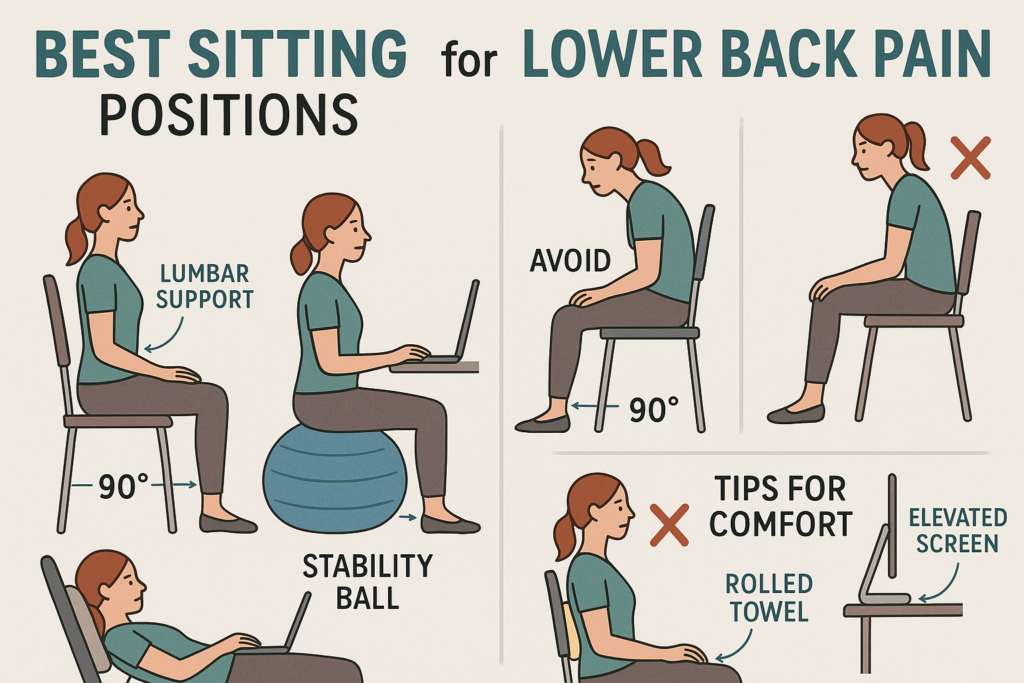
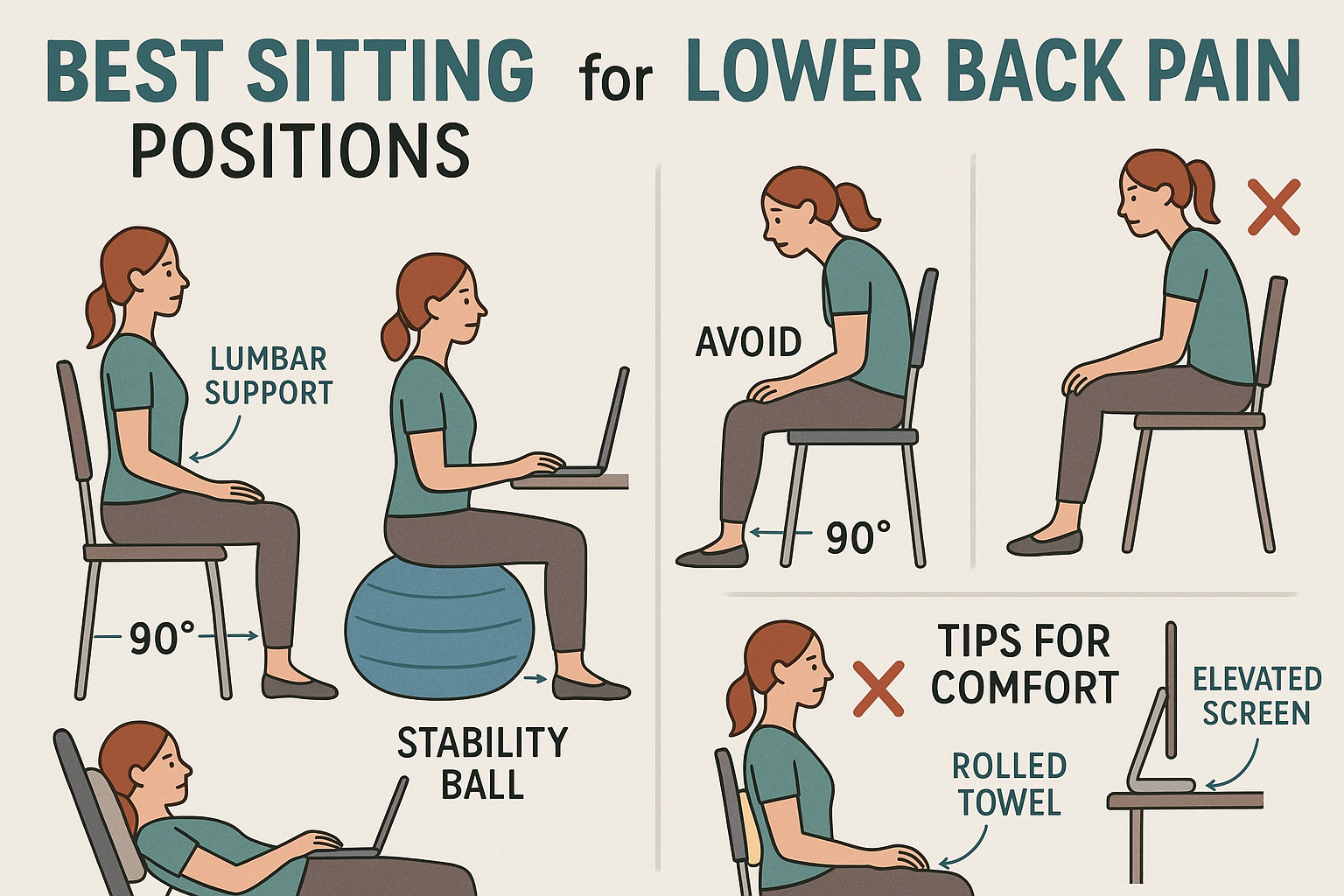
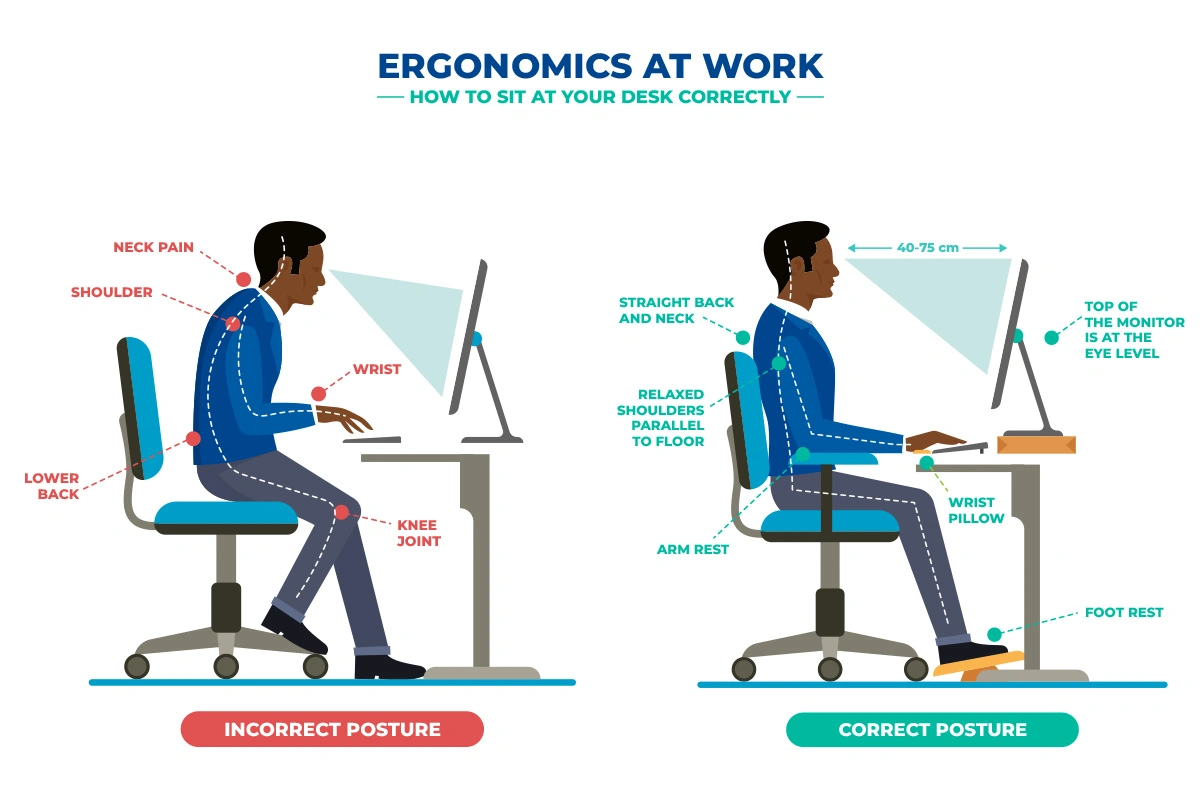
You do not need a fancy chair to learn how to avoid long sitting pain. You do need a setup that fits you. Aim for neutral joints and easy reach.
Follow this quick checklist:
- Chair height: Feet flat on the floor. Knees level with hips.
- Back support: Use a small pillow or lumbar support at your lower back.
- Seat depth: A two-finger gap between the seat edge and your calves.
- Desk height: Elbows at 90 degrees, shoulders relaxed.
- Keyboard and mouse: Close to you. Wrists straight and supported.
- Monitor: Top of the screen at eye level. One arm’s length away.
- Lighting: Reduce glare. Keep the screen bright enough to avoid squinting.
Small details matter. For example, pushing the keyboard too far away makes you hunch. That small fix alone can cut shoulder pain within a week.

Source: harvard.edu
Microbreaks and movement you can stick to
Movement is the number one rule for how to avoid long sitting pain. Long sitting hurts. Short sitting with frequent movement feels fine.
Try these patterns:
- 20-8-2 rule: Sit 20 minutes, stand 8, move 2.
- 30-2 rule: Every 30 minutes, stand up for 2 minutes.
- Pomodoro: Work 25, break 5. On breaks, walk, stretch, or breathe.
Easy break ideas:
- Walk to refill water.
- Calf raises at your desk.
- Shoulder rolls and neck turns.
- Two deep belly breaths with long exhales.
From my own routine, the 30-2 rule is gold. It is short, simple, and it sticks. Clients who use it cut back pain in days, not months.
Source: drmahmoodahmad.com
Stretches to undo sitting
Tight spots build up with sitting. Stretch them before they bark. Here are my go-to moves to help with how to avoid long sitting pain.
Do 30–45 seconds each, one to two rounds:
- Chest opener at a doorframe. Step through and feel a gentle chest stretch.
- Seated figure-four. Cross ankle over knee. Hinge forward for the hip.
- Hip flexor lunge. Tuck your pelvis, squeeze the back glute, and lean forward.
- Cat-cow on hands and knees. Slow, smooth spinal motion.
- Chin tucks. Gently pull your chin back to align the neck.
If a stretch causes sharp pain, back off. Gentle and regular beats hard and rare.
Source: drparimalkore.com
Strength that protects your back and hips
Stronger muscles give you more sitting “insurance.” They hold you in good shape with less effort. A simple plan two to three days a week goes far for how to avoid long sitting pain.
Try this circuit, 2–3 rounds:
- Glute bridges x 12. Pause at the top.
- Side planks x 20–30 seconds each side.
- Bodyweight squats x 10–15. Smooth and steady.
- Bird dogs x 8 each side. Keep hips level.
- Face pulls or band pull-aparts x 12–15. Open your upper back.
Progress slowly. If you are new, one round is enough. Add reps or rounds as it gets easy.
Source: paintreatmentmd.com
Pain relief toolkit for busy days
Even with good habits, flares happen. Build a small kit. It will save your day and help you stick with how to avoid long sitting pain.
What to include:
- Heat pack for stiff muscles, 10–15 minutes.
- Ice pack for sharp flare-ups, 10 minutes, as needed.
- Massage ball or foam roller for quick trigger point work.
- Over-the-counter pain relief when appropriate. Follow labels.
- A short walk. Yes, it belongs in the kit.
Use heat to relax, movement to restore, and gentle self-massage to calm hotspots. Most desk aches ease with these basics.
Daily habits that keep you moving
Your calendar can help or hurt your body. Make it work for you and for how to avoid long sitting pain.
Build simple cues:
- Put water on your desk. Sip often. More sips = more steps.
- Set a phone timer for 30-minute stand breaks.
- Take calls standing or walking.
- Eat lunch away from your screen.
- Stretch before your day’s first email and the last one.
I used to grind for hours and skip breaks. My back let me know. Now I plan short walks between tasks. My pain dropped. My work got better too.
Travel, driving, and meetings on the go
Travel can wreck a good routine. Plan small moves. That is how to avoid long sitting pain when you cannot control your seat.
On planes and trains:
- Stand or aisle-walk every 30–45 minutes.
- Do ankle pumps and seated marches.
- Use a rolled sweater for lumbar support.
In cars:
- Adjust seat so hips and knees are level.
- Keep hands at a low, relaxed wheel position.
- Stop every 60–90 minutes for 3–5 minutes of walking.
In long meetings:
- Sit near the edge to stand quietly.
- Take notes while standing for a few minutes.
- Offer a quick stretch break. Most folks will thank you.
Red flags and when to see a pro
Most sitting pain is simple and responds to movement. Still, know the warning signs. Part of how to avoid long sitting pain is knowing your limits.
Seek help if you have:
- Pain that wakes you at night or keeps getting worse.
- Numbness, weakness, or pain down a leg.
- Bowel or bladder changes.
- Unexplained weight loss or fever.
- A fall or trauma with new back pain.
A licensed clinician or physical therapist can assess you. They can tailor a plan and rule out serious causes.
A simple 7-day plan you can try
Use this as a starting point. It is short, clear, and built for how to avoid long sitting pain.
Day-by-day:
- Day 1: Set up your desk. Use the checklist.
- Day 2: Add the 30-2 rule all day.
- Day 3: Stretches once in the morning and once in the afternoon.
- Day 4: Strength circuit, 1–2 rounds.
- Day 5: Walk 10 minutes after lunch. Keep microbreaks.
- Day 6: Strength circuit, 2 rounds. Add one new stretch.
- Day 7: Review what worked. Adjust your timers. Celebrate small wins.
Keep going. Repeat the week and build slowly. Consistency beats intensity.
Tools and gear worth considering
You do not need to spend a lot to learn how to avoid long sitting pain. A few smart picks help.
Good options:
- Adjustable chair with lumbar support.
- External keyboard and mouse for laptops.
- Monitor riser or a stack of books to raise the screen.
- Sit-stand desk or a desk converter.
- Footrest if your feet do not reach the floor.
- A firm cushion for brief use, not all day.
Test one change at a time. That way, you will know what actually helps you.
Frequently Asked Questions of how to avoid long sitting pain
How often should I stand up during the workday?
Every 30 minutes is a good target. Stand for 2–3 minutes and move your joints.
Do I need a standing desk to prevent pain?
No. A standing desk helps, but breaks and posture matter more. Start with frequent microbreaks.
What is the best sitting posture?
The best posture is your next posture. Switch often between upright, slight recline, and standing.
Can walking alone fix my back pain from sitting?
Walking helps circulation and mood. Pair it with simple strength and stretches for best results.
Are back braces a good idea for desk pain?
They can calm a flare short term. Do not rely on them daily; build strength instead.
Which exercises help most for desk workers?
Glute bridges, planks, bird dogs, and pull-aparts are great. They target hips, core, and upper back.
How long until I feel better after changing habits?
Many feel relief in a few days. Bigger changes often show in 2–4 weeks.
Is crossing my legs bad?
Not always, but it can twist your hips and back. Switch legs often and vary positions.
What if I already have sciatica?
Use gentle movement, short walks, and neutral postures. See a clinician for a tailored plan.
Can I do stretches at my desk without looking odd?
Yes. Try neck turns, shoulder rolls, and seated figure-four. Keep them small and smooth.
Conclusion
You now have a clear plan for how to avoid long sitting pain: move often, fine-tune your setup, and build simple strength. Small, steady actions add up fast. A few minutes each hour can turn long days into pain-free days.
Pick one change today. Set a 30-minute timer, stand up, and take a short walk. Your back will notice. Want more support? Subscribe for weekly tips, save this guide, and share your progress in the comments.


