
Stand 5–10 minutes every 30–45 minutes, building 1–2 standing hours across your workday.
You came here to settle a simple question: how often should you stand at your desk? I help teams set up healthy workstations, and I have tested many sit-stand routines myself. In this guide, I explain what works, why it works, and how you can start today without pain or guesswork.
Disclosure: As an Amazon Associate, Ergonomic Zone earns from qualifying purchases. Some links on this page are affiliate links, which means we may earn a commission if you make a purchase through them, at no extra cost to you.
Why timing matters: what the science says
Your body likes change. Long sitting strains the back, hips, and neck. Long standing can tire the feet, legs, and veins. The best approach is gentle switching and small bursts of movement.
Research on office workers shows that breaking up sitting every 30 minutes can lower back discomfort. Short light breaks of 1–3 minutes can help blood sugar control after meals. Standing raises energy use a bit and helps you feel more alert.
Think of sitting and standing like gears on a bike. You shift to match the terrain. That is why the question how often should you stand at your desk matters so much. The right rhythm keeps your body fresh and focused.

The simple rule: how often should you stand at your desk
Use this rule of thumb. Stand 5–10 minutes every 30–45 minutes of sitting. Aim for 1–2 total standing hours in the first week. Work up to 2–3 hours across the day if you feel good.
If you ask how often should you stand at your desk, start small. Short and often beats long and rare. Many people do well with a 1:3 or 1:2 stand-to-sit ratio at first. Some move to a 1:1 ratio once they adapt.
Try these tips:
- Set a timer for 35 minutes. When it chimes, stand for 7 minutes.
- Stand for tasks that fit well. Calls, emails, and reading are great.
- Sit for deep focus tasks. Complex writing or design often feels better sitting.
- Keep your feet moving. Shift weight, use a foot rail, or do small calf raises.
How often should you stand at your desk will change by day. Listen to your body and the kind of work you do. Adjust the cycle to keep comfort high and strain low.

Benefits you can expect
Most people report less back and neck tightness in two to four weeks. Standing in short bursts can ease hip stiffness and shoulder strain. Many feel more alert in the afternoon slump.
Studies suggest that regular switches plus light movement can help blood flow and post-meal glucose. The calorie burn is small, but it adds up across weeks. Mood and focus often improve because you break the monotony.
When you wonder how often should you stand at your desk, remember the goal. You are chasing comfort, energy, and steady output. Not perfection.

Risks and mistakes to avoid
Standing all day is not the goal. That can cause foot pain, knee lock, and leg fatigue. It may stress veins if you do not move much. Long holds in one posture are the real issue, sitting or standing.
Watch out for these mistakes:
- Standing too long at once. Cap early sessions at 5–10 minutes.
- Locking your knees. Keep a soft bend and shift often.
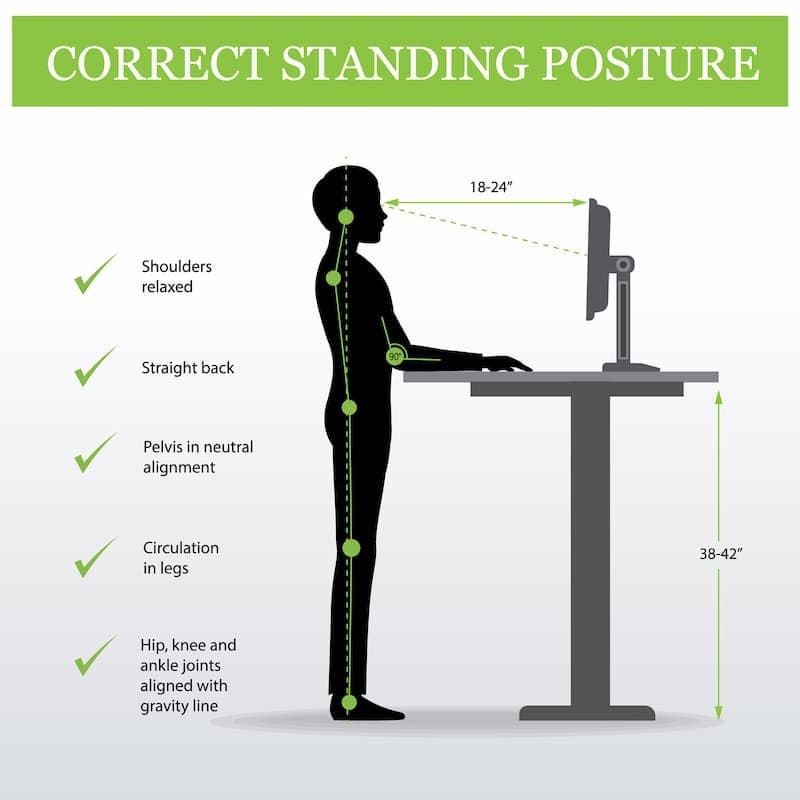
- Poor desk height. Elbows near 90 degrees keeps wrists happy.
- Hard floors and bad shoes. Use an anti-fatigue mat and supportive shoes.
- No plan. Timers and cues make it easy to switch.
How often should you stand at your desk depends on your ergonomic desk setup, too. Fix the basics and each stand block will feel better.
Set up your workstation for easy switching
Small setup wins make a big difference.
- Desk height. Forearms level, elbows at about 90 degrees when standing.
- Monitor. Top of screen near eye level. Keep it an arm’s length away.
- Keyboard and mouse. Keep wrists straight. A slight negative tilt helps many people.
- Foot options. Use a foot rail or a small box to change leg load.
- Floor. Use an anti-fatigue mat. Wear soft, supportive shoes.
- Cables. Leave slack so raising the desk is smooth and safe.
If you adjust these once, switching all day feels natural. That makes how often should you stand at your desk easier to follow.
Sample sit-stand schedules you can try
Pick one schedule. Test it for a full week. Adjust based on comfort and focus.
Option A: 30–7 cycle
- Sit 30 minutes.
- Stand 7 minutes.
- Add a 2-minute walk after every second stand.
Option B: 45–10 flow
- Sit 45 minutes for deep work.
- Stand 10 minutes while you sort email or read.
- Do five calf raises at the end.
Option C: Meeting-based plan
- Stand for phone calls and one-on-ones.
- Sit for long video meetings unless you feel fresh.
- Walk 2 minutes between meetings.
In each plan, ask yourself how often should you stand at your desk this week. Keep notes. Shift the ratio up or down to match your body and your tasks.

Who should modify the schedule
Some people need a gentler plan.
- New to standing desks or history of back, knee, or foot issues.
- Varicose veins, circulation problems, or very low blood pressure.
- Pregnancy, recent surgery, or joint replacement.
- Diabetes with neuropathy or balance issues.
If any of these apply, talk to a clinician. Start with shorter stands. Add more walking breaks. The question how often should you stand at your desk is personal for your health needs.

Movement beats standing: add light activity
Standing is better than sitting still. Moving beats both. Sprinkle tiny moves through the day.
- March in place for 60 seconds every 30 minutes.
- Do five squats to your chair. Keep it slow and easy.
- Walk to get water each hour.
- Do shoulder rolls and neck turns during stand blocks.
- Take a 3–5 minute brisk walk after lunch.
These “snacks” boost comfort and focus. They also make how often should you stand at your desk feel less rigid and more natural.
Track progress and build the habit
Make the habit easy and visible.
- Use phone or watch reminders for 35–40 minutes.
- Keep a sticky note with today’s stand blocks.
- Set a daily target. For example, 8 stand blocks by 3 p.m.
- Review each Friday. What felt good? What hurt? Adjust.
My first week, I stood too long. My feet ached and my back got tight. I switched to 7-minute stands with a mat and a foot rail. The pain faded, my focus rose, and I kept the habit. If you keep asking how often should you stand at your desk, you will find a rhythm that sticks.
Frequently Asked Questions of how often should you stand at your desk
How often should you stand at your desk during an 8-hour day?
Aim for 5–10 minutes of standing every 30–45 minutes. That often totals 2–3 hours of standing spread across the day.
Is standing all day better than sitting?
No. Long holds in any one posture cause problems. Switch often and add short movement breaks for the best results.
How fast should I ramp up my standing time?
Start with 1–2 total hours per day in week one. Add 15–30 minutes each week if you feel good.
What if standing hurts my feet or knees?
Shorten each stand block and use a mat and better shoes. Add a foot rail and shift weight often to share the load.
Should I stand after meals?
Yes, light standing or a 2–3 minute walk after meals can help post-meal blood sugar. Keep it gentle and pain-free.
Do I need an anti-fatigue mat?
It helps most people by easing pressure on feet and legs. If you work on hard floors, a mat is a smart buy.
What is the best ratio of sitting to standing?
Start with 3:1 or 2:1 sitting to standing. Move toward 1:1 if it feels good and your work allows it.
Conclusion
You now have a clear playbook. Stand 5–10 minutes every 30–45 minutes, adjust to comfort, and add small movement snacks. Fix your setup, avoid long holds, and track your week.
Start today. Set one timer and try three stand blocks before lunch. Then share what worked, ask a question, or subscribe for more simple ergonomics tips.


