
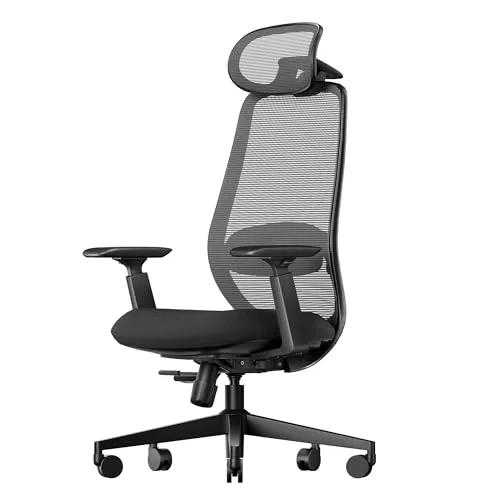
Breathable, adjustable mesh chair that eases back strain and keeps you focused.
Eight-hour workdays can feel like marathons in a bad chair. If your lower back nags by noon, or your neck tilts forward after video calls, you are not alone. I’ve tested many chairs that promise support but sag by week two. This one aims to fix that with a sliding seat, a 3D headrest, and real lumbar help. If you want a cooler, high‑back mesh build that fits big & tall bodies and tunes fast to your desk, this may be your upgrade.

Is ProtoArc Ergonomic Office Chair EC200 Good?
Yes—for most people who want real adjustability without luxury pricing. The mesh back breathes. The built-in lumbar support use holds your spine. The 3D headrest and sliding seat help you dial a neutral posture fast. For long days, this chair stays cool and steady. For big & tall users, the frame feels solid and roomy.
In my first week, I set the seat depth so my thighs felt supported but not squeezed. My legs stopped tingling by the afternoon. During a long edit session, I tilted back a notch and angled the headrest. My neck pressure eased within minutes. If you sit 8+ hours, the EC200 keeps small aches from growing into big pains.

My First Impression for ProtoArc EC200
It arrived well packed, with foam around the frame and a clear parts map. Pieces felt sturdy right away. The mesh was tight and springy, not flimsy. The base and hardware did not rattle. I noticed the wide seat pan and the tall back. It looked ready for longer bodies.
Assembly was simple with the included tool. Most steps took a few minutes. The sliding seat and 3D headrest adjustments were easy to learn. On first sit, the lumbar landed where I like it—low and firm. The headrest cupped my neck without pushing my head forward. I felt a small jolt of relief and a bit of surprise. It met my early hopes.

What Makes It Stand Out / Key Features
- High‑back breathable mesh that helps reduce heat build‑up over long sessions
- Built‑in lumbar support chair designed to hold the natural S‑curve of your spine
- 3D adjustable headrest for height, angle, and reach to support your neck
- Sliding seat depth to ease thigh pressure and improve circulation
- Big & Tall friendly sizing with a wide seat and robust frame
- Quick, intuitive controls for seat height and recline comfort
- Engineered for 8+ hour comfort in home office or studio use

What I Like
- Cooling mesh keeps my back dry during long calls and edits
- Seat depth slide removes thigh pinch and helps leg comfort
- 3D headrest supports a neutral neck when I recline a bit
- Lumbar hits the right zone and stays consistent through the day
- Roomy seat works well for broader frames and layered winter clothes
- Setup is quick, with clear steps and sturdy hardware
- Strong value versus pricier ergonomic chairs with similar controls

What Could Be Better
- The headrest range may feel short for very petite users
- Seat feels firm for the first week until the mesh “settles” in
- Armrest fit may vary by desk height, so check your setup

My Recommendation
If you need a cool, supportive daily driver that tunes fast, the ProtoArc EC200 chair is a smart choice. It fits most body types, shines for big & tall users, and eases common pain points with its headrest and sliding seat. If you want premium branding or ultra‑plush foam, look elsewhere. For real ergonomics at a fair price, this chair delivers steady value and is often in stock.
| Best for | Why |
|---|---|
| All‑day office work (8+ hours) | Breathable mesh, use lumbar support, and easy posture tweaks |
| Big & Tall users | Wide seat, high back, and a solid, stable feel |
| Neck and upper‑back relief | 3D headrest helps keep your head balanced as you recline |

Alternative Products You Can Consider
SIHOO M57 Ergonomic Office Chair — A budget‑friendly mesh chair with strong adjustability. Good for users who want adjustable lumbar and back tilt at a lower price. The build is lighter than the EC200, but it offers good value for smaller frames and tight budgets.
Autonomous ErgoChair Pro — Designed for users who want a wide range of controls and a deep recline feel. It suits people who like softer seat foam and broad adjustability. Compared with the EC200, it can feel cushier but may run warmer during long sessions.
Branch Ergonomic Chair — Clean design and supportive back with simple controls. Great for minimal setups and shared spaces. Versus the EC200, it has a more classic look but lacks a standard 3D headrest configuration.
| Product | Best For | Key Difference |
|---|---|---|
| ProtoArc EC200 | All‑day, big & tall, neck support with 3D headrest | Sliding seat + 3D headrest in a high‑back mesh at a fair price |
| SIHOO M57 | Budget ergonomic seekers | Lighter build, strong value, fewer premium touches |
| Autonomous ErgoChair Pro | Users who want plush feel and deep recline | Softer seat, warmer over long sits, broader control set |
| Branch Ergonomic Chair | Minimal, modern offices | Sleek look, simpler setup, no standard 3D headrest |

Final Verdict: Which Should You Buy?
If you want a cool, supportive mesh chair for long days, the EC200 hits a sweet spot. It delivers a 3D headrest and a sliding seat that many chairs skip. It fits larger bodies well and keeps posture simple.
Choose the SIHOO M57 if you are on a strict budget and have a smaller frame. Pick the Autonomous ErgoChair Pro if you like softer foam and deep recline range. Go with Branch if you prefer a clean look and simple controls. For most home offices that need daily comfort at a fair price, the EC200 is my top pick.
FAQs Of ProtoArc Ergonomic Office Chair Review
Does the headrest adjust enough for different heights?
Yes. You can raise, tilt, and bring it closer to your head. It suits most users once you fine‑tune it.
Is the seat comfortable for 8+ hours?
It is firm at first but supportive. The sliding seat reduces thigh pressure. Comfort improves after a few days.
Will the mesh feel cool in summer?
Yes. The high‑back mesh allows steady airflow. It helps reduce sweat and heat build‑up.
Is it good for big & tall users?
Yes. The seat is wide, and the back is tall. The frame feels stable for larger bodies.
How long does assembly take?
About 20–30 minutes on average. The parts are labeled, and the steps are clear. A single person can handle it.


