
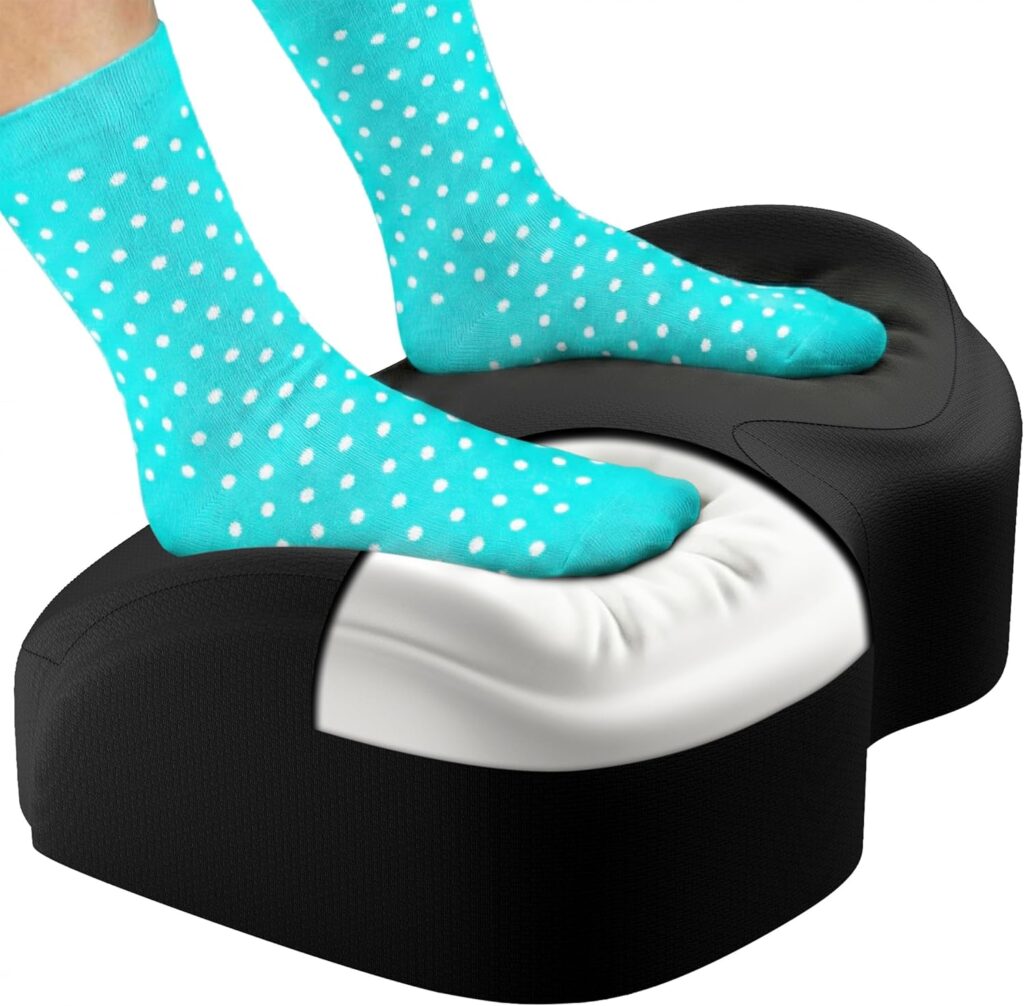
Sitting for long hours can strain your legs, hips, and lower back. An ergonomic footrest helps you sit in a relaxed, supported posture by lifting your feet, opening your hip angle, and reducing pressure on your thighs. The right model can ease tension right away and keep you comfortable all day.
Affiliate Disclosure: This article may contain affiliate links. If you buy through them, we may earn a small commission at no extra cost to you. We only recommend products we would use ourselves. This support helps us keep creating practical, honest buying guides and in-depth reviews for you.
Choose an ergonomic footrest with adjustable height so your knees stay near a 90-degree angle. Look for a tilt range of 0–20° for proper angle support. A non-slip surface keeps your feet steady. Prioritize firm comfort, stable build quality, and durable materials that resist wear.
Why Choosing the Right Footrest Matters
A footrest is not a luxury. It is a small tool that can change your whole sitting experience. It supports your feet and legs so your hips and spine can stack in a healthy way. This support reduces strain and helps you stay focused longer.
- Better posture support: When your feet are grounded, your pelvis stays neutral. Your lower back muscles work less. Your spine stays closer to its natural curve.
- More comfort during long sitting: A slight lift under your feet reduces pressure on your thighs. It helps blood flow. You feel less tingling and less numbness.
- Less leg strain and swelling: Proper knee and ankle angles improve circulation. This can cut down on tight calves, cold feet, or heavy legs at the end of the day.
- Energy and focus: When your body is at ease, you can think and work better. Tiny discomforts add up. A footrest removes them.
Key Features to Look for in an Ergonomic Footrest
Before you shop, know what matters most. Use this simple buying guide to focus on comfort, adjustability, and long-term value. These are the features that affect daily use.
- Adjustable height: Look for clear steps or smooth adjust options. Your feet should rest flat. Your knees should be at or slightly below hip level. If you share a desk, a wide height range is key. A typical useful range is 3–6 inches. Taller users may need more.
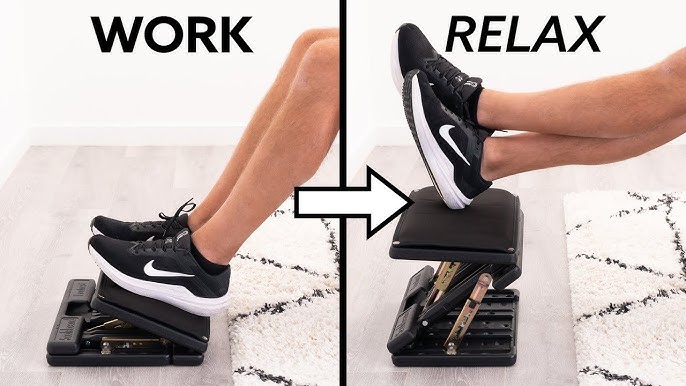
- Tilt/angle control: A tilt range of 0–20 degrees works for most. This lets you fine-tune ankle and knee angles. Some footrests rock or tilt freely. Others lock in place. Free tilt can boost micro-movements. Locking tilt can help with steady tasks.
- Anti-slip surface and base: Your feet should stay put. Look for a textured top and rubber feet. This keeps the footrest in place on wood, tile, or carpet. A sliding footrest is more than annoying. It breaks your posture setup.
- Material and feel (foam vs. plastic/metal): High-density foam feels plush and warm. It molds to your feet. It shines if you like shoes off. Hard plastic or metal platforms feel firm and steady. They work well with shoes on. Foam can compress over time. Hard platforms tend to last longer and offer better tilt functions.
- Size and shape: A wider surface (at least 17 inches wide) gives room to move. A gentle curve can help ankle comfort. Some designs include massage textures or pedals. These can be a nice perk but are not must-haves.
- Build quality and warranty: A strong hinge or tilt mechanism makes daily use smooth. Check weight rating, hardware quality, and brand support. A 1–3 year warranty is a good sign.
How to Choose Based on Your Desk Setup
Your desk, chair, and leg length determine the right footrest height and tilt. Use the steps below to dial in a match that feels great all day. What most buyers ignore is the link between desk height and knee angle. Get that right, and everything else clicks.
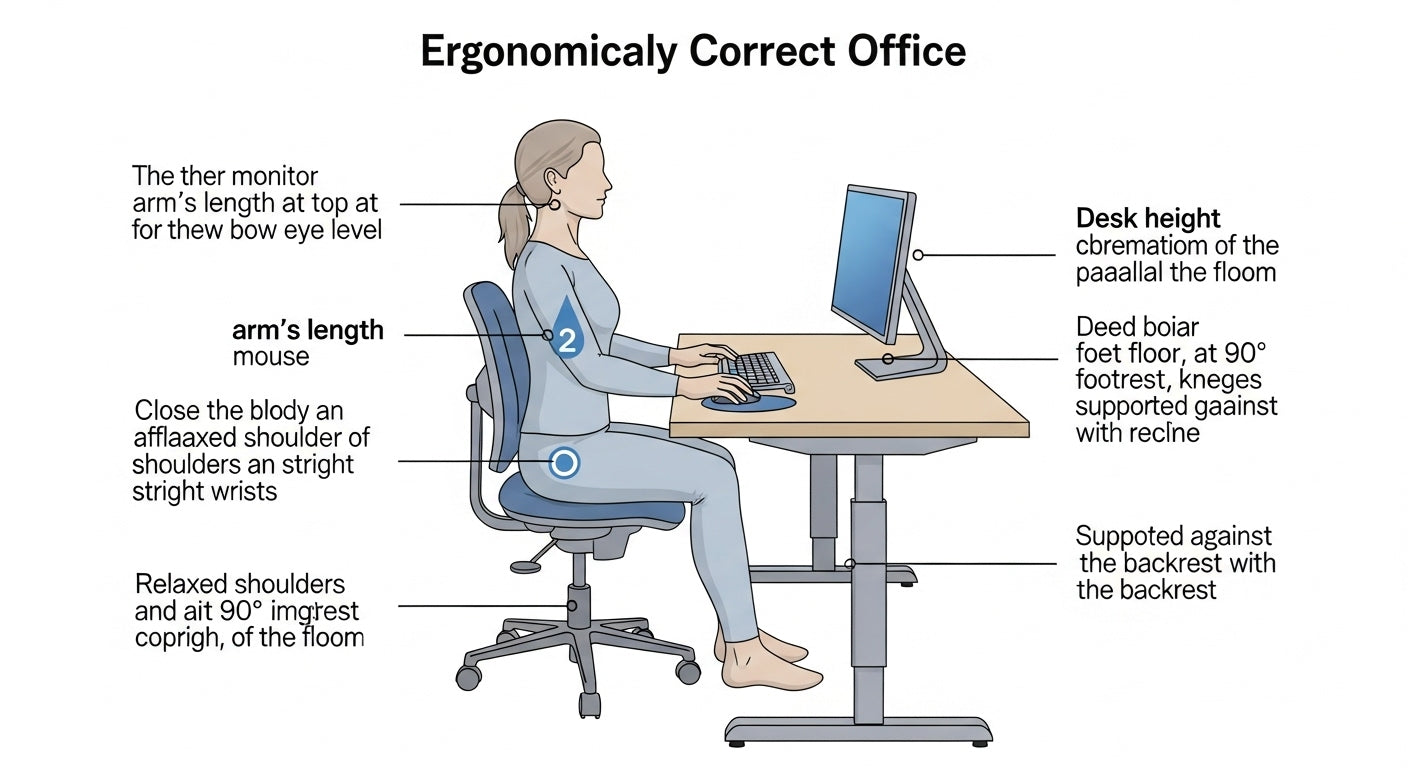
- Start with chair height: Raise or lower your chair so your elbows rest near 90 degrees on the desk. Your shoulders should feel relaxed. Your wrists should be straight.
- Measure your leg gap: With your chair set, see if your feet touch the floor flat. If your heels lift or your thighs press hard into the seat edge, you need a footrest.
- Pick the right height: Aim for knees at a 90-degree angle or slightly open (up to 100 degrees). If your thighs press into the seat, try a higher footrest. If your knees feel jammed or hit the desk underside, go lower.
- Set the tilt: Start at 10–15 degrees. Adjust to remove strain in your ankles and calves. If you fidget a lot, try a rocking model. If you do precise tasks, a fixed tilt may feel better.
- Desk height: Higher desks raise your arms. That can force you to raise your chair. A footrest then becomes essential to fill the space below your feet. For sit-stand desks, choose a footrest that is easy to move and has quick height changes.
- Leg length: Shorter users often need more lift. Taller users often need extra width and a lower tilt. If your legs are long, avoid tiny foam wedges that force your knees too high.
Pro tip: Wear your usual work shoes when you set up. Thick soles change footrest height needs.
Mistakes Most People Make When Buying
Here is how to avoid this costly mistake: buying on looks or price alone. The wrong footrest can make your posture worse. Use the points below as a quick filter before you check out.

- Ignoring adjustability: One height does not fit all. If your chair or desk is not standard, a fixed model may fail you. If in doubt, choose adjustable height and tilt.
- Choosing the wrong height: Too high lifts your knees and rounds your lower back. Too low leaves your feet hanging and strains your thighs. Aim for a knee angle near 90 degrees.
- Buying too cheap: Ultra-low-cost models often slide, crack, or have weak hinges. You end up buying twice. Invest in durable materials and a solid base.
- Overlooking surface grip: Smooth tops or slippery bases cause constant fidgeting. Look for a textured top and rubber feet or a heavy base.
- Forgetting your use case: If you often sit without shoes, foam may feel better. If you wear shoes and like tilt, a hard platform is wiser.
- Skipping size checks: If the platform is too narrow, your stance feels cramped. A wider platform lets you move through the day.
Types of Footrests (Which One is Right for You?)
Footrests fall into a few simple groups. Each type has a feel and best use. Pick the one that matches your work style and your desk.
Static vs. Rocking/Active
A static footrest holds its angle. It feels stable and predictable. It is great for focused tasks and precision work. A rocking or “active” footrest moves with your feet. It encourages small ankle pumps and blood flow. It suits restless sitters and long sessions.

Choose static if you want a strong, set-and-forget platform. Choose rocking if you like gentle movement or stand-sit transitions.
Foam vs. Hard Platform
Foam footrests are soft and warm. They shape to your feet. They are light and quiet. They can feel great in socks. The trade-off is durability and height control. Foam compresses with time. It offers no tilt.

Hard platforms use plastic or metal. They give firm support, clear tilt angles, and better adjustability. They can feel cold with bare feet but excel with shoes. They last longer and suit shared offices.
Best Ergonomic Footrests (Top Picks)
Below are top picks across use cases. Each pick balances comfort, adjustability, and build quality. Use this list as a starting point, then match to your desk and chair.

Everlasting Comfort Memory Foam Foot Rest (Best Overall):
One of the top-selling footrests on Amazon, this memory foam model adapts to your feet for maximum comfort during long sitting hours. It helps reduce leg pressure, improve posture, and comes with a non-slip bottom and washable cover. Ideal for office workers and beginners looking for all-day support. 👉 Check the latest price on Amazon
ComfiLife Ergonomic Foot Rest (Best Budget Choice):
A highly rated and affordable option, this footrest offers soft memory foam support and a lightweight design that fits easily under most desks. It’s perfect for improving sitting posture without spending too much, making it a great entry-level choice for daily use.
ErgoFoam Adjustable Foot Rest (Best for Ergonomic Setup):
Designed for proper posture alignment, this adjustable footrest allows you to customize height for your desk and chair setup. It provides firm yet comfortable support and is often recommended for those who want a more precise ergonomic setup at home or office.
Humanscale Foot Machine (Best Premium Option):
This premium footrest features a rocking motion that encourages subtle movement, helping improve blood circulation and reduce stiffness during long sitting sessions. Its durable wooden design and ergonomic angle make it a favorite among professionals. 👉 See the latest deal on Amazon
StrongTek Ergonomic Wooden Foot Rest (Best for Durability):
Built with high-quality wood, this sturdy footrest supports heavy use and offers a gentle rocking motion for active sitting. It’s a great choice for users who want a long-lasting, eco-friendly option with solid stability and simple design.
Quick Buying Checklist
Use this one-minute checklist before you buy. It is the simple buying guide that keeps your setup on point.
- Can it reach your ideal knee angle near 90 degrees?
- Does it offer tilt up to 15–20 degrees, or rocking if you want movement?
- Is the top textured and the base non-slip?
- Is the width at least 17 inches for a relaxed stance?
- Foam or hard platform: Which matches your shoe habits?
- Is the build quality solid, with a stated weight limit and warranty?
- Will it fit under your desk with your chair and mat?
- Returns: Is there a fair trial or return window?
How to Set Up Your New Footrest in 3 Minutes
A good footrest only works if you set it right. Follow these steps the first day you get it.
- Adjust your chair so your elbows rest at 90 degrees on the desk. Shoulders relaxed.
- Place the footrest so your feet sit flat and even. Set the height so your knees are near 90 degrees.
- Set a tilt of 10–15 degrees. If you feel ankle strain, reduce tilt. If your thighs feel pressure, raise height slightly.
- Sit back so your back meets the chair backrest. Keep hips and knees aligned.
- Test for 10 minutes. If you feel calf tension, lower the tilt. If your thighs go numb, raise the height.
Tip: Re-check after lunch or when you change shoes. Small tweaks help comfort all day.
Who Should Use a Footrest?
A footrest can help most people who sit. But it is essential for some groups. If any of the points below sound like you, a footrest may be a fast win.
- Shorter users who cannot plant their feet flat on the floor
- Anyone with a high desk and raised chair
- Sit-stand desk users who want movement during sit breaks
- People who feel thigh pressure, tingling, or cold feet
- Remote workers with non-standard furniture
- Pregnant users who need better leg support and circulation
Note: A footrest is not medical treatment. If you have pain or swelling, talk with a licensed clinician.
Care and Maintenance Tips
A clean, stable footrest works better and lasts longer. A few minutes every month is enough.
- Wipe plastic and metal parts with a damp cloth. Dry well.
- Wash foam covers per label. Use cold water and air dry to avoid shrinkage.
- Check screws or hinges every few months. Tighten if loose.
- If the base slides, add a thin non-slip mat or replace worn rubber feet.
- Rotate a foam footrest 180 degrees now and then to spread wear.
Bonus: Comparison Table and Setup Diagram (Ranking Boost)
Want to help readers choose even faster? Add a simple comparison table and a short setup diagram to your post or product page. This can lift clarity and trust right away.
- Comparison table: List height range, tilt range, dimensions, surface type, and warranty. Keep it scannable. Add a “Best for” column.
- Setup diagram: Show desk height, chair height, knee angle, hip angle, and footrest placement. Use clear labels and a plain style. Readers love a quick visual.
- Mobile view: Make the table scrollable on phones. Add a “Compare” button that jumps to it.
FAQs
Q1: Do I really need a footrest if my chair is already ergonomic?
A: If your feet rest flat and your knees are near 90 degrees with no thigh pressure, you may not need one. But if you must raise your chair for desk height, or your legs feel heavy, a footrest fills the gap and improves comfort fast.
Q2: What height should I pick for a foam footrest with no adjustability?
A: Choose a size that brings your knees near 90 degrees when your chair is set for proper elbow height at the desk. If you are shorter, pick a taller foam block. If you are taller, pick a lower block or a hard platform with adjustability.
Q3: Is rocking better than a fixed tilt?
A: It depends on your work style. Rocking supports micro-movements and blood flow, which helps during long sits or calls. Fixed tilt feels stable for precise tasks. If you switch often, pick a footrest that can rock gently but also hold a preferred angle.
Conclusion
The right ergonomic footrest can transform your day. It keeps your knees and hips aligned. It relieves thigh pressure. It supports better posture without effort. Start with adjustability, tilt range, a non-slip surface, and durable build quality. Match the height to your chair and desk. Then fine-tune the tilt for ankle comfort. That is how you avoid this costly mistake and buy with confidence.
Ready to upgrade your setup today? Pick a model that matches your work style. Choose foam for plush comfort or a hard platform for control and long life. Use the quick buying checklist above, then compare the top picks. Make one small change now and feel better in your very next work session.


