
Affiliate disclosure: This article contains affiliate links. If you buy through them, we may earn a small commission at no extra cost to you.
Yes, a footrest can help with knee pain for many desk workers. It supports your feet, sets a better knee angle, and reduces pressure behind the knees. Good sitting posture and leg position shift loads from the knees to the hips and chair. That can ease strain, improve blood flow, and lower stiffness during long sitting.
What Does a Footrest Do Under a Desk?
A footrest lifts and supports your feet when the chair is too high or the desk is fixed. It fills the gap between your shoes and the floor. This lets you keep a neutral knee angle and relax your thighs. It also reduces pressure under the thighs and behind the knees, so blood can flow better to your lower legs and feet.
- Stabilizes both feet in a flat, balanced stance
- Sets a steady base so your back and hips can relax
- Helps shorter users reach a safe seated posture

Can a Footrest Really Help With Knee Pain?
For many people, yes. A footrest can reduce knee stress in two main ways. First, it prevents your feet from dangling, which pulls on your knees and tightens your thighs. Second, it helps you avoid tucking your feet under the chair, a posture that compresses the knee joint. With your feet supported, load spreads more evenly from your knees to your hips and chair, which often eases pain.
This is most helpful if:
- Your desk is too high and you must raise your chair
- Your feet do not rest flat on the floor
- You feel pressure at the back of your knees or numb toes
How Sitting Position Affects Knee Pressure
Your knee joint handles force from above (your torso) and below (your feet). When your feet lack support, your knees act like the “bridge” that holds you up. This adds compressive load and strain on tendons and the kneecap. Crossing your legs or sitting on one foot twists the knee and can reduce blood flow.
Key ideas:
- Neutral hip-knee-ankle line cuts shear force on the kneecap
- Even thigh support reduces pressure on the back of the knee
- Stable feet reduce quad tension that can pull on the knees
Best Foot Position for Reducing Knee Pain
Aim for a light, stable stance:
- Knees bent about 90–110 degrees
- Hips level with or slightly above knees
- Both feet flat on the floor or footrest
- Toes pointing ahead, not flared wide or turned in
Action tips:
- Keep shins near vertical
- Do not tuck feet under the chair
- Uncross legs; cross at ankles only if needed and only for short periods
Types of Footrests That Help Most
Not all footrests are equal. Look for these features:
- Adjustable height: Fine-tunes knee angle for different shoes
- Tilt/rocker platform: Lets your ankles move to boost blood flow
- Non-slip surface: Keeps your feet in place
- Wide platform: Supports both feet at once
Popular options:
- Adjustable tilt platform (best all-around ergonomic footrest)
- Rocking footrest (adds active movement for circulation)
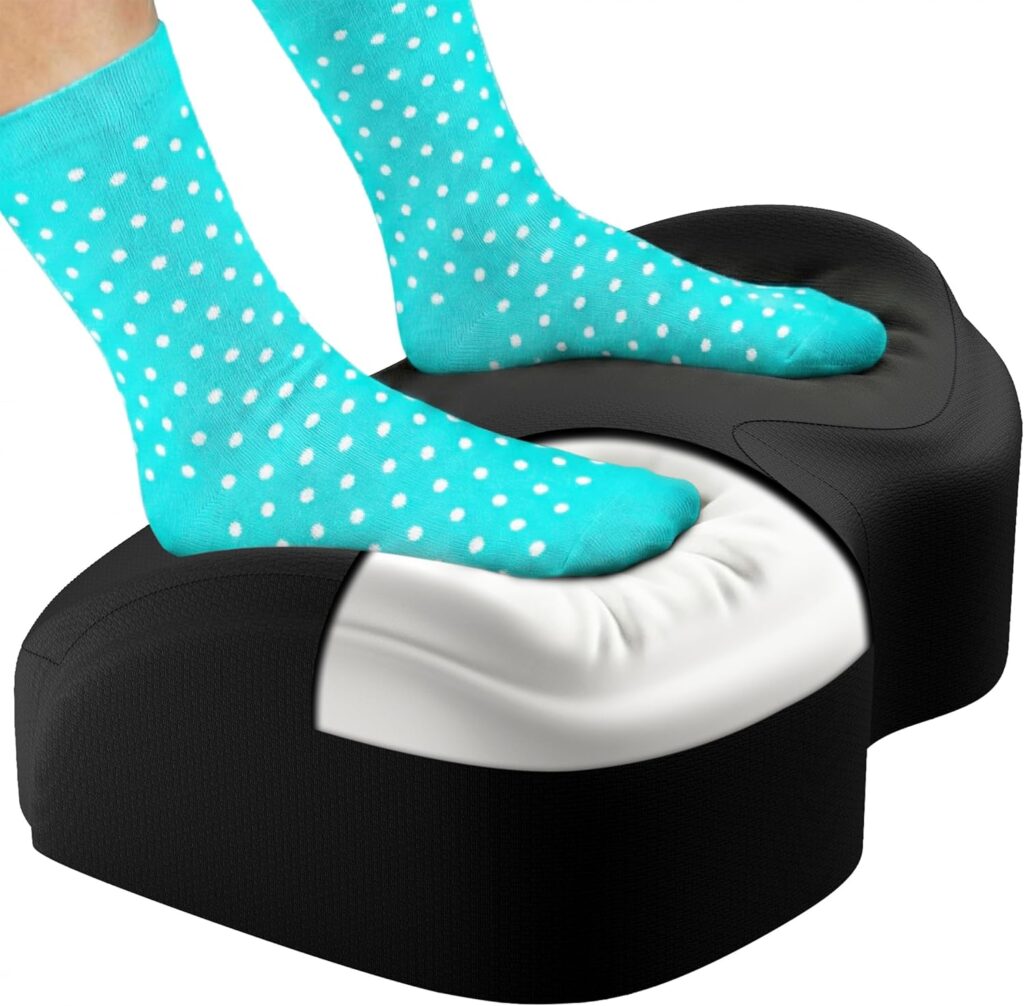
- Memory foam wedge (soft, portable, good for short users)
- Under desk footrest hammock (comfy but can sag; use with care to keep knees neutral)
Common Desk Setup Mistakes That Worsen Knee Pain
Watch for these errors:
- Chair too high: Feet dangle, pulling on knees
- Chair too low: Knees flex too much, compressing the kneecap
- Seat pan too deep: Cuts into the back of the knees; leaves no space for circulation
- Feet tucked back or on chair base: Increases knee stress
- Crossing legs for long periods: Twists the knee and reduces blood flow
Quick fixes:
- Raise or lower chair to get hips level with or slightly above knees
- Leave 2–3 fingers of space between seat edge and back of knees
- Use an ergonomic footrest if the desk is too high to fix
How to Use a Footrest Properly
Set it up like this:
- Place it under the desk where your feet land naturally
- Adjust height so your knees are near 90–110 degrees
- Use a slight tilt to keep ankles relaxed (10–20 degrees)
- Rest both feet on it; switch foot position often
Micro-movements help:
- Rock ankles every 20–30 minutes
- Straighten and bend knees a few times each hour
- Stand or walk for 2–3 minutes every 30–60 minutes
Footrest vs No Foot Support
- With a footrest: Feet stay stable, knees align, thighs relax, and the load shifts to the chair and hips. Circulation improves, and stiffness drops.
- Without support: Feet may dangle or tuck back. Knees bear more load, quads get tight, and pressure builds behind the knees. This can lead to numbness and pain over time.
In short, a footrest for knee pain can make a clear difference if your chair and desk heights do not match your body.
Who Should Use a Footrest?
A footrest is useful if:
- Your feet do not reach the floor when your chair is at the right height for typing
- You use a fixed-height desk
- You feel pressure behind the knees or numb toes
- You are shorter, pregnant, or have swelling in the lower legs
- You switch between shoes of different heights
It is also a smart tool for shared workstations and home offices where multiple people use the same desk.
When a Footrest May Not Help
A footrest is not a cure-all. It may not help if:
- Your chair seat is too deep or too hard on the thighs
- Your desk is too high and forces shrugged shoulders
- You have acute knee injury, severe arthritis flare, or sharp pain
- You have a leg length difference that needs custom support
- Your pain is from non-seating causes (sports injury, trauma)
When in doubt, talk to a clinician. Pair an ergonomic footrest with a proper chair, desk height, and healthy movement breaks.
FAQ
Q1: Why do my knees hurt when I sit at my desk?
A: Often your feet lack support, or your chair is too high or too low. That increases knee load and reduces blood flow. Fix height and add a footrest if needed.
Q2: What is the best knee angle while sitting?
A: Aim for 90–110 degrees with hips level with or slightly above the knees. Keep shins vertical and feet supported.
Q3: Should my feet be flat or on toes under the desk?
A: Keep both feet flat on the floor or an ergonomic footrest. Avoid standing on toes or tucking feet back.
Q4: Which ergonomic accessories help knee pain most?
A: An adjustable footrest, a chair with seat depth adjustment, and a keyboard tray to lower shoulder load. Together they support a neutral posture.
Q5: How can I improve circulation while sitting?
A: Move often. Rock your ankles, straighten your knees, and stand for 2–3 minutes every 30–60 minutes. A rocking footrest also helps blood flow.
Final Thoughts
A well-set under desk footrest reduces knee strain by supporting your feet and setting a healthy knee angle. It helps align your hips, knees, and ankles and improves circulation. It will not cure medical conditions, but it can make desk time more comfortable and lower knee pain while sitting. Use it with good desk posture, regular breaks, and a chair that fits you.


