
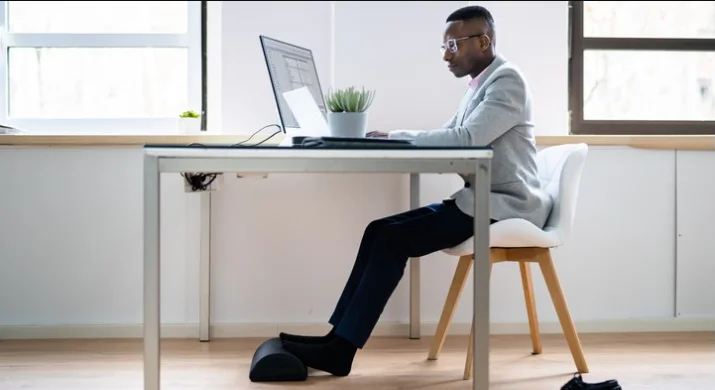
If you sit for hours and your lower back aches, you’re not alone. Many office workers and students try a footrest hoping for fast relief. But here’s the catch: a footrest helps only if it fixes your posture. Used the wrong way, it does nothing—or even makes pain worse. The good news? With a few small tweaks, this simple tool can reduce strain on your back fast.
Affiliate disclosure: This article contains affiliate links. If you buy through them, I may earn a small commission at no extra cost to you.
Medical disclaimer: This article is educational and not a substitute for medical advice.
Yes, a footrest can reduce back pain when used correctly. It improves posture and hip alignment by letting your feet rest flat and supported. It works best if your feet don’t reach the floor or your chair is high. Used at the wrong height or angle, it won’t help.
How a Footrest Actually Reduces Back Pain
A footrest works by helping your body sit in a more natural shape. When your feet are flat and supported, your hips sit level and your pelvis stays neutral. That eases the pull on your lower back muscles. It also opens your hip angle so your spine stacks better, which lowers pressure on your discs and joints. In simple terms: balanced feet, relaxed hips, happier back.

Key ways it helps
- Pelvic alignment: Foot support keeps your pelvis from tilting back. That prevents the slouch that strains your lower back.
- Hip angle: With your feet up a bit, your hips are slightly higher than your knees. This opens your hips and reduces tightness.
- Reduced spine pressure: Stable feet = less fidgeting. Your weight spreads through the chair and footrest, not only your tailbone.
Bonus: A footrest can act like a tiny platform that reminds you to sit back and use your chair’s backrest. When you sit back, your core can relax. Your back muscles do not have to fight to keep you upright.
Why Your Back Still Hurts (Even With a Footrest)
If you are using a footrest and still feel sore, you are not alone. Most people use this wrong. A few common mistakes stop the footrest from doing its job.
Top reasons it fails
- Wrong height: If it is too high, your knees curl up and your lower back rounds. Too low and your feet still dangle. Both increase strain.
- Too soft cushion: A squishy pad feels cozy, but your feet sink and wobble. That kills stability and your hips twist.
- Feet not stable: If your toes only touch or your feet slide off, your body fights to balance. That tension climbs up to your back.
- Leaning forward: If your footrest is set but you lean toward your screen, your pelvis still tucks and your back rounds.
- No back support: A footrest helps only if you sit back. If your chair lacks lumbar support, the relief may be small. See our Lumbar Support Guide for an easy setup: /guides/lumbar-support
When You Actually Need a Footrest
Not everyone needs one. But if any of these apply, an under desk footrest is a simple fix that works fast.
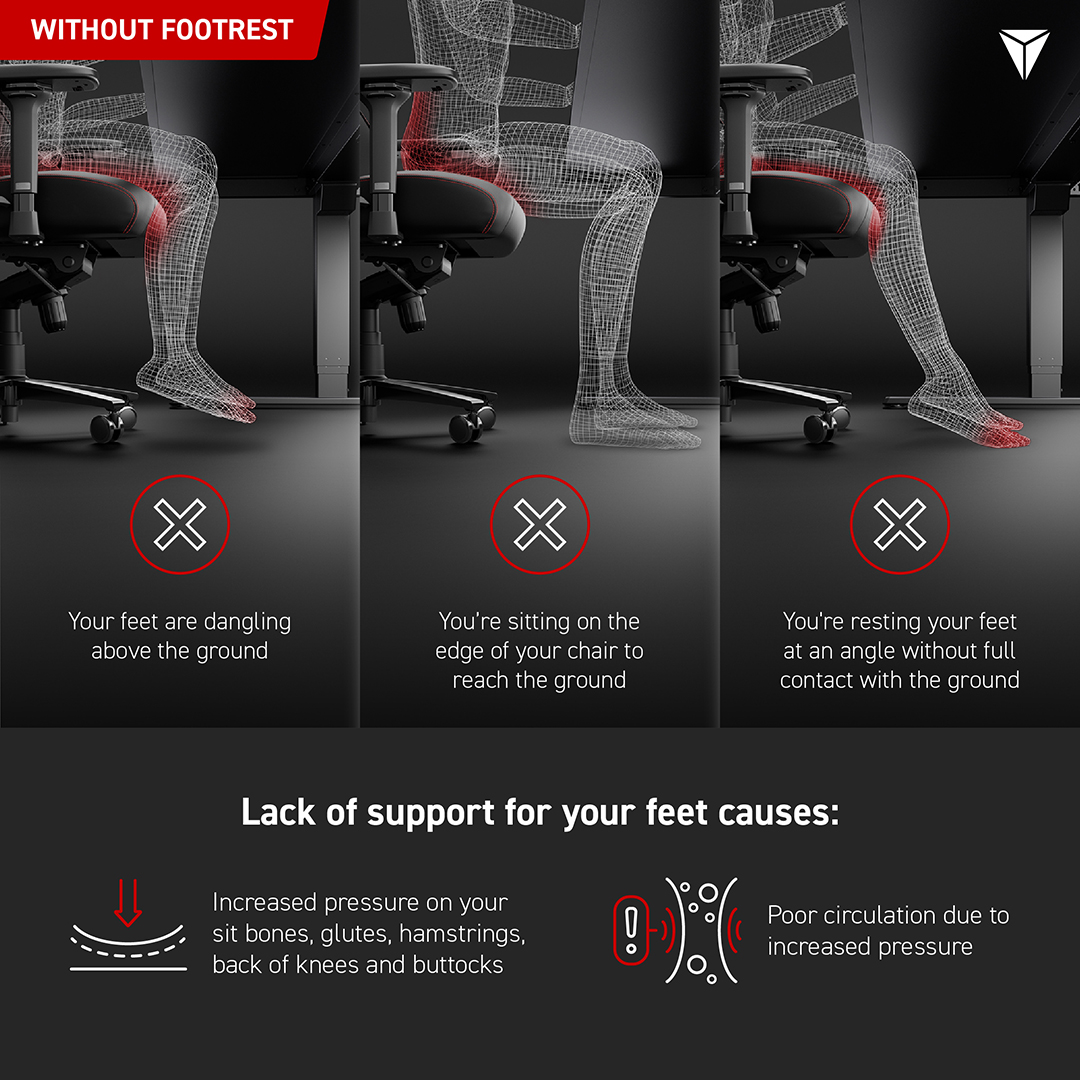
Use a footrest if
- Your feet don’t rest flat on the floor when you sit back in your chair.
- Your chair is set high for your desk and your knees dangle.
- You sit 4–10 hours daily and feel tailbone or lower back soreness.
- You share a desk and the chair height changes a lot.
- You use a standing desk but sit part-time and can’t get both desk and chair at the right heights.
How to Use a Footrest Correctly (Step-by-Step)
Set it once, and your sitting posture footrest setup will work for you all day. Here is the simple checklist most people skip.
Step-by-step setup
- Sit back first
- Slide your hips all the way back.
- Use your chair’s lumbar support to keep a small natural curve.
- If needed, add a small cushion. See Posture Basics: /guides/posture-basics
- Adjust chair height
- Raise or lower your chair so your elbows are level with the desk, about 90–100°, when typing.
- Place the footrest
- Set the footrest so both feet rest fully on it—heels and balls of the feet.
- Your knees should be at about 90–100°. Hips slightly above knees is ideal.
- Find the right angle
- Start with a small tilt (5–15°). This often feels best.
- If it tilts or rocks, that’s okay. The key is stable, supported feet.
- Test and tweak
- If your thighs press hard under the desk, lower the footrest.
- If your feet still dangle, raise it a notch.
- Keep some movement
- Shift feet, change angles, or use a rocking footrest. Small changes boost blood flow and cut stiffness.
Simple rule: stable feet, open hips, relaxed back.
Common Footrest Mistakes That Cause More Pain
Avoid these traps. They are the reason many people give up on footrests.

- Using it too high: Knees hiked up = tucked pelvis = rounded back. Lower it until your hips sit a bit higher than your knees.
- Leaning forward to see the screen: Fix screen height and distance. Your eyes should look slightly down, not way down. Pull the monitor closer.
- Not adjusting the chair: If the chair is too low or too high, the footrest cannot fix it. Set chair height for your elbows first, then set the footrest.
- Only toes on the rest: Keep heels down too. Full foot contact reduces strain.
- Overly soft cushion: Choose firm support. Think “solid platform,” not “pillow.”
- Ignoring breaks: Even a perfect setup cannot replace moving. Stand up, stretch, or walk for 1–2 minutes every 30–45 minutes.
Footrest vs No Footrest (Real Difference After 5 Hours)
Here is what most people feel after a long session at the desk. These under desk footrest benefits are easy to spot once you test them.

After 5 hours, with no footrest
- More slouching and tailbone pressure
- Tight hips and hamstrings
- Tired lower back and stiff shoulders
- Feet slide under the chair; you fidget more
After 5 hours, with a footrest
- Better posture with less effort
- Hips feel open; less pulling on the lower back
- Feet stay planted; body stays balanced
- Lower fatigue and fewer “ache spikes” when standing up
Bottom line: With the right height and angle, a footrest gives your body a base. Your spine stacks, your muscles relax, and you feel fresher at the end of the day.
Best Footrests for Back Pain (Top Picks)
These picks focus on firm support, easy adjustability, and a tilt feature. Prices and availability may vary.
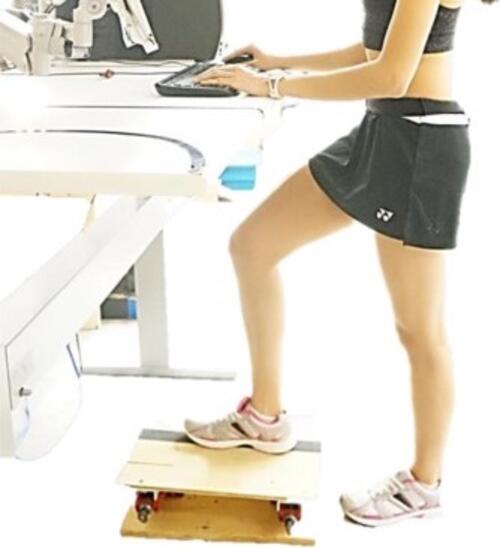
- Adjustable Tilt Footrest (Office Standard)
- Why it works: Wide platform, adjustable height, and a smooth tilt reduce pressure on your lower back.
- Best for: Most desks; long hours; shared offices
- Look for: 2–3 height settings, textured surface for grip
- Rocking Footrest (Active Option)
- Why it works: Gentle rocking keeps blood moving and prevents stiffness.
- Best for: Fidgeters or anyone who gets stiff sitting still
- Look for: Firm, curved base; non-slip grip; quiet motion
- Memory Foam + Firm Base Combo
- Why it works: Foam cushions feet while a rigid base keeps ankles and hips stable.
- Best for: People who prefer a softer feel but still need control
- Look for: High-density foam, anti-slip cover, washable
- Under-Desk Bar Footrest (Minimalist)
- Why it works: Lets you change foot positions often. Good if floor space is tight.
- Best for: Compact setups; people who like to shift posture
- Look for: Adjustable height and a stable clamp
Note: If you buy, use reputable retailers. Some links may be affiliate links, which help support this site at no cost to you.
Quick Setup Checklist (1-Minute Fix)
Use this before your next meeting. This small change reduces pain fast.
- Feet fully supported on footrest (heels and balls of feet)
- Knees at ~90–100°, hips slightly higher than knees
- Sit back against the backrest; keep a gentle curve in your lower back
- Screen top near eye level; monitor at arm’s length
- Keyboard and mouse close; elbows ~90–100°
- Take a short standing or walking break every 30–45 minutes
FAQs
Does a footrest help lower back pain?
- Yes—if your feet don’t reach the floor or your chair is high. It aligns your pelvis and opens your hips, which reduces strain. Used at the right height and angle, footrest back pain relief can be real and fast.
Should feet be flat on a footrest?
- Yes. Keep heels and toes in contact. Full-foot support makes you stable and reduces tension from your ankles up to your back.
Is a footrest necessary if my feet touch the floor?
- Not always. If your hips feel tight, or you slump after an hour, a slight tilt can still help. Test a small rise or tilt. If it feels easier to sit upright, keep it.
What else should I change for less back pain?
- Add gentle lumbar support, raise your screen to eye level, and keep your elbows level with the desk. If your chair is worn out, consider an upgrade.
Conclusion
A footrest can reduce back pain—but only when set up right. Think stable feet, open hips, and a relaxed spine. Skip the soft, wobbly pads. Aim for firm support, a small tilt, and full-foot contact. Pair it with a good chair setup and a monitor at the right height. Then take short breaks. Adjust your setup now, and you should feel less strain by the end of today.


