

The 7 Best Ergonomic Chairs for Herniated Disc Relief that actually help.
You stand up from your desk and feel that sharp pull low in your back. Maybe there is a tingle down one leg, or a dull, deep ache that hangs around for hours. I know that feeling, and I also know a chair can make or break your day. When you live with a herniated disc, the right seat does more than feel nice. It helps your spine rest in a safer, more neutral spot. In this guide, I break down the Best Ergonomic Chairs for Herniated Disc Relief and explain what to look for: firm lumbar, good tilt control, seat depth, and arms that meet you where you work.
Herman Miller Aeron Chair (PostureFit, Adjustable)

The Herman Miller Aeron with PostureFit built in is a staple for serious back care. The mesh seat and back cradle you without trapping heat. PostureFit supports the base of your spine to help you keep a gentle pelvic tilt. That small cue can lower strain on discs while you sit.
With the tilt limiter, you set how far you recline. You also get a seat angle adjust that helps you lean forward without rounding your back. The arms are easy to dial in so your shoulders relax. Pick the right size (A, B, or C) to match your body for the best fit.
Pros:
- PostureFit support helps the sacrum and lower back stay aligned
- Breathable mesh keeps you cool in long sessions
- Tilt limiter and seat angle adjust for precise posture
- Arms adjust to reduce shoulder and neck load
- Comes in sizes to fit small and large users
- Build quality that holds up over years of daily use
Cons:
- High price compared with many office chairs
- Mesh seat feels firm if you like plush foam
- Choosing the wrong size hurts the fit and support
My Recommendation
If you want a proven chair that helps your pelvis stay stable, this is it. The Aeron makes it easier to maintain a neutral curve in your spine while you type or call. That is key when you live with a disc issue. It earns a top spot among the Chairs for Herniated Disc Relief because its support cues work all day.
| Best for | Why |
|---|---|
| All-day desk work | PostureFit and tilt limiter keep your spine stable |
| Warm offices | Pellicle mesh breathes and reduces sweat and slip |
| Shared workspaces | Fast, repeatable arm and tilt adjustments |
Steelcase Gesture Office Chair (Graphite)

The Steelcase Gesture shines when you change tasks and positions a lot. Its 360-degree arms move in and out, up and down, and pivot. That lets your forearms stay supported when you type, swipe, or hold a phone. Supported arms mean less shoulder hunch and less pull on your lower back.
The seat has a slider for depth, which matters when your thighs need full support. The back flexes with you but still gives a firm center. I like the smooth recline. It helps you shift load to reduce disc pressure during long sessions.
Pros:
- 360-degree arms support many tech and task setups
- Seat depth adjust fits short and long legs
- Back flex keeps you supported when you move
- Recline is smooth and easy to control
- Strong build and quiet operation
Cons:
- Cost sits in the premium tier
- Upholstered seat can run warm versus mesh
- Lumbar feels subtle if you like a very firm push
My Recommendation
If you live in your chair and do many things, the Gesture is a safe bet. It is great for people who need arm support in many positions. The back feels natural and does not fight you when you shift. It belongs in the 7 Best Ergonomic Chairs for Herniated Disc because it reduces strain from tech-heavy work.
| Best for | Why |
|---|---|
| Multi-device work | Arms adjust for typing, tablet use, and calls |
| Users with long legs | Seat depth slider supports full thigh length |
| Frequent position changes | Flexible back and smooth recline share the load |
Nouhaus Ergo3D Mesh Chair with Headrest

The Nouhaus Ergo3D aims to bring big-chair adjustability to a fair price. It has a tall mesh back, a separate headrest, and a 3D lumbar that moves as you do. The 4D arms make it easy to set elbow support where you need it. The blade wheels glide on hard floors and low-pile carpet.
The seat edge is gentle on the back of your knees, which helps blood flow. The recline goes back far enough for breaks, and the mesh stays cool. For many home offices, this chair hits a sweet spot. It is a solid value if you need real lumbar options without a premium budget.
Pros:
- Strong feature set at a mid-range price
- 4D armrests help reduce shoulder and neck load
- 3D lumbar follows your movement for steady support
- Blade wheels roll smooth on many floors
- Breathable mesh for warm rooms and long days
Cons:
- Lumbar may feel light for heavy users
- Headrest can sit low for very tall people
- Tilt tension range is modest
My Recommendation
Pick this if you want flexible lumbar at a fair price. The Ergo3D is easy to set up for work, study, or gaming. It gives you steady support and airflow without a big bill. It secures its place among the Chairs for Herniated Disc for its value-to-comfort ratio.
| Best for | Why |
|---|---|
| Home office budgets | High adjustability without premium pricing |
| Petite to average frames | Lumbar tracks movement and sits in the right spot |
| Warm climates | All-mesh design keeps heat and sweat down |
Branch Ergonomic Chair (Graphite/White)

The Branch Ergonomic Chair blends a clean look with real support. The mesh back breathes and includes an adjustable lumbar pad. The seat uses foam with a waterfall edge to ease pressure on the legs. Arms adjust in height and depth to meet your desk and keyboard height.
The tilt has a lock and tension control, so you can set a mild recline. That small recline can ease disc pressure when you sit for hours. Setup is simple with clear steps. For small teams and home offices, Branch hits the mark on price and build.
Pros:
- Great price-to-feature ratio
- Adjustable lumbar pad for targeted support
- Breathable back and comfortable foam seat
- Simple, clean design suits any space
- Easy assembly with clear instructions
Cons:
- Arms are not true 4D on some builds
- Headrest not included by default
- Lumbar range may feel limited for very tall users
My Recommendation
Need a sharp, supportive chair that does not drain your budget? The Branch Ergonomic Chair is a smart pick. It offers the tools you need to sit safer and move more. It stands strong in the 7 Best Ergonomic Chairs list for its balance of cost, comfort, and looks.
| Best for | Why |
|---|---|
| Budget-conscious buyers | Core adjustments at a fair price |
| Minimalist setups | Clean design blends with any office style |
| Long video calls | Consistent lumbar and arm support reduce fatigue |
CAPOT Ergonomic Mesh Chair, 400 lb Capacity
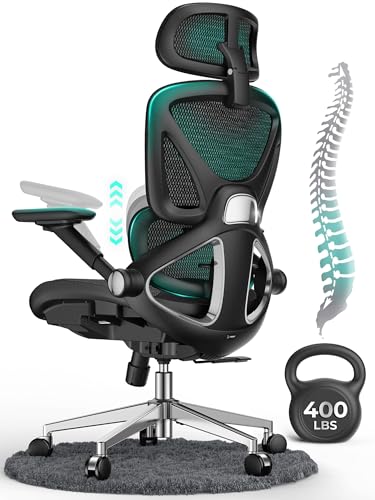
The CAPOT Ergonomic Mesh Chair is built for larger body types. It lists a 400 lb capacity with a wide seat and tall back. The 4D flip-up arms give space when you need it and support when you want it. A 3-level tilt and a 3D headrest help you fine-tune your setup.
The mesh is firm and supportive, which can be a plus for disc care. Firm mesh helps keep the pelvis from slumping. PU wheels roll quietly on hard floors. If you need space, support, and value, this chair checks those boxes.
Pros:
- High weight capacity for big and tall users
- Flip-up 4D arms give room for wide setups
- Firm mesh helps maintain neutral posture
- 3-level tilt for flexible recline
- Quiet PU wheels protect floors
Cons:
- Larger footprint needs more room
- Mesh may feel stiff at first
- Brand support can vary by seller
My Recommendation
If you want strong support and extra space, start here. The CAPOT chair meets big-and-tall needs without losing key ergonomic tools. It is a worthy entry in the Best Ergonomic Chairs for Herniated Disc, especially if capacity and room matter to you.
| Best for | Why |
|---|---|
| Big and tall users | Wide seat and 400 lb rating build confidence |
| Mixed tasks | Flip-up arms make space for guitars or laps |
| Upright work | Firm mesh supports the pelvis and lower back |
Steelcase Leap V2 (Renewed) with Lumbar

The Steelcase Leap V2 is a classic for a reason. Its LiveBack system lets the back change shape as you move. You get firm, even support across the lower back and mid-back. Add the lumbar and seat depth adjust, and you can match your body well.
The recline feels smooth and keeps you in easy reach of the desk. That helps you work in a small recline which lowers disc pressure. A renewed model can save you money while giving you high-end support. Check the seller notes for the exact condition.
Pros:
- LiveBack tech supports your whole spine as you move
- Seat depth adjust fits many leg lengths
- Smooth recline keeps you near your work
- Renewed option offers premium at a lower cost
- Built to last with stable, quiet parts
Cons:
- Condition varies with renewed sellers
- Some fabric wear is normal on refurbished units
- Fewer color choices compared to new stock
My Recommendation
If you want a proven back-friendly chair and do not mind renewed, pick the Leap V2. It delivers steady lumbar, great recline, and a fit that holds up. It more than earns its place in Herniated Disc Relief, especially if you want top-tier support under a tighter budget.
| Best for | Why |
|---|---|
| All-day desk jobs | Even, firm support across the lumbar and thoracic |
| Remote workers | Recline stays engaged while you type and call |
| Value seekers | Renewed pricing lowers cost without losing features |
ELABEST X100 Mesh Chair with Footrest
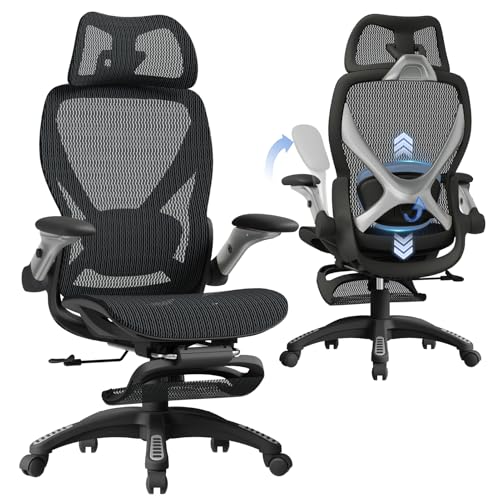
The ELABEST X100 blends a mesh work chair with a footrest for breaks. It offers a 3D lumbar pad, a headrest, and 5D flip-up arms. The arms move in height, depth, width, and angle, and they also flip up. That is handy when you want to slide close to a guitar, drawer, or workbench.
The footrest supports your legs when you recline for micro breaks. Short breaks help share load and let your discs rest. Mesh keeps you cool. For the price, the feature stack is strong for home and gaming setups.
Pros:
- Footrest makes recline breaks simple and comfy
- 5D arms adapt to many tasks and body sizes
- 3D lumbar pad provides targeted lower back support
- Breathable mesh for long sessions
- Good value for a feature-rich chair
Cons:
- Footrest is for resting only, not heavy load
- Durability can vary with intense daily use
- Assembly takes time due to more parts
My Recommendation
Choose this if you like to recline and reset during the day. The X100 helps you work, then lean back with leg support for quick relief. It earns a slot in the 7 Best Ergonomic Chairs because it makes healthy micro breaks easy.
| Best for | Why |
|---|---|
| Gamers with back pain | Deep recline with footrest supports quick resets |
| Shared rooms | Flip-up arms save space and clear obstacles |
| Budget-friendly setups | Strong features without a premium price |
Why these seven chairs work for disc relief
I want to call out what ties these picks together. Every model offers real lumbar that you can set and feel. Each one includes a tilt or recline that you can tune. That matters because research shows a light recline can reduce spinal disc pressure compared to a rigid 90-degree sit.
They also let you set seat height and often seat depth. When your feet rest flat and your thighs are supported, your lower back works less. Good arm support keeps your shoulders and neck from tugging on your spine. When that chain is calm, your lower back has a chance to settle.
One note I always share. A chair is gear, not a cure. If you have a herniated disc, talk with a licensed clinician for your plan. Use your chair to support that plan with calmer sitting and frequent breaks.
How to choose among the Best Ergonomic Chairs for Herniated Disc
Match the chair to your body first. Check size charts, seat height range, and weight rating. If you are between sizes, measure your thigh length and back height. Your goal is a chair that holds you, not one you fight.
Decide if you want mesh or foam. Mesh is cool and firm. Foam can feel plush but may trap heat. Test how the lumbar feels. With a disc issue, you often want clear but not harsh support at the base of your spine.
Check arm range. If you work on a laptop, you likely need arms that move in and out. If you use two monitors, pivot helps. Try a mild recline between 100 and 110 degrees when you type. It often feels better on your back than bolt upright.
FAQs Of Ergonomic Chairs for Herniated Disc Relief
Which features matter most for a herniated disc?
Firm, adjustable lumbar is key. Look for seat height and depth control. A smooth recline with lock points helps. Adjustable arms reduce shoulder and back strain.
Is mesh or foam better for disc relief?
Both can work. Mesh is cooler and often firmer, which helps posture. Foam can feel softer but may warm up. Pick the one that helps you hold a neutral spine.
How should I sit to reduce disc pressure?
Set feet flat and hips slightly above knees. Use a light recline, about 100–110 degrees. Keep lumbar support at the base of your spine. Take brief standing or walking breaks every 30–45 minutes.
Do I need a headrest?
Not always. A headrest helps when you recline or read. It is less vital for upright typing. If your neck gets tired, a headrest can help you relax between tasks.
Are these chairs a cure for back pain?
No chair is a cure. A well-fitted chair can reduce strain and help you move better. For care, speak with a qualified clinician. Use your chair to support the plan you set together.
Final Verdict: Which Should You Buy?
The 7 Best Ergonomic Chairs share one goal: steady support you can feel and adjust. Pick the model that fits your body and your work style.
For top-tier support, choose Aeron, Gesture, or Leap V2 (renewed). On a budget, Nouhaus, Branch, CAPOT, and ELABEST offer real comfort. Ergonomic Chairs for Herniated Disc Relief make daily sitting calmer, so you can get more done with less pain.


