

High back chairs support head and neck; mid back chairs boost core posture.
If you want less pain and more focus at your desk, your chair matters. In this High back vs Mid back ergonomic chair guide, I share what actually works in real offices. I mix hands-on tests, user coaching, and clear research. You will learn when each chair shines, what to check before you buy, and how to set it up so your body feels great all day.
Affiliate Disclosure: This article may contain affiliate links. ErgonomicZone may earn a commission at no extra cost to you if you purchase through these links.
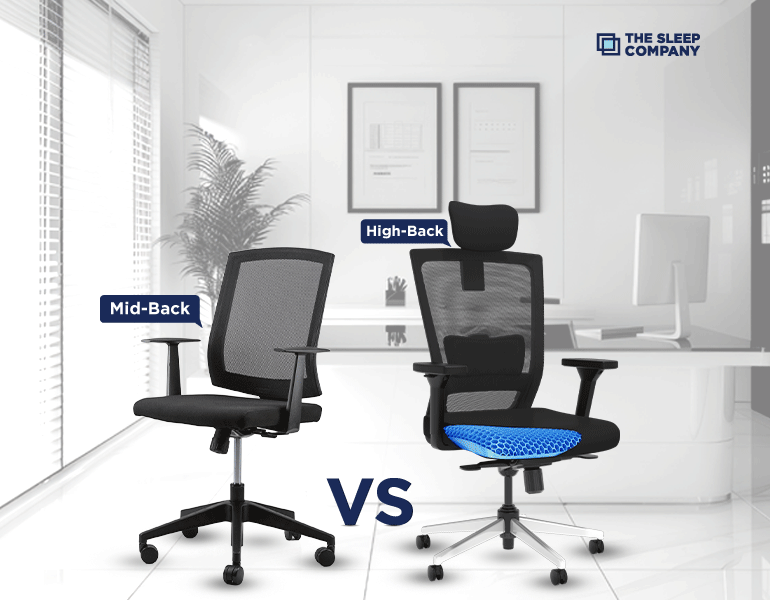
Source: thesleepcompany.in
High back vs Mid back ergonomic chair: core differences
High back and mid back describe the height of the backrest and the support zones. A high back chair reaches the upper shoulders and often adds a headrest. A mid back chair stops around the shoulder blades. Both can be fully ergonomic when built well.
Key differences you will feel:
- Back height. High back supports shoulders, upper back, and sometimes the neck. Mid back focuses on the thoracic and lumbar areas.
- Head and neck. High back models may include a headrest for recline breaks. Mid back models leave the neck free and mobile.
- Movement. Mid back chairs allow wider shoulder reach. High back chairs add stability during deep recline.
- Size and look. Mid back is lighter and easier to fit in tight rooms. High back adds a taller, executive look.
- Heat and airflow. Taller cushions trap more heat. Mesh mid back models breathe better.
If you want a quick rule, think tasks. Long calls or reading with recline lean to high back. Fast, hands-up tasks like sketching or coding often feel better in mid back. This High back vs Mid back ergonomic chair choice is about fit, not rank.
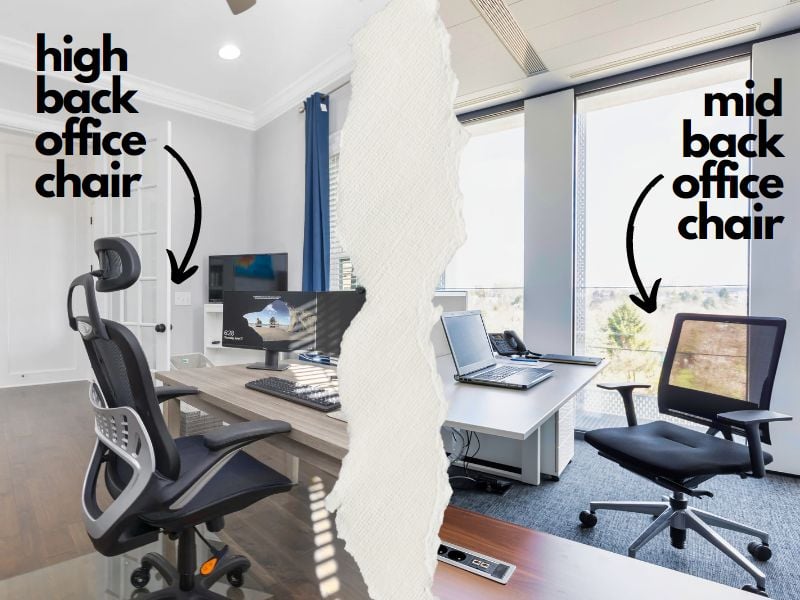
Source: co.uk
Benefits and limits of a high back ergonomic chair
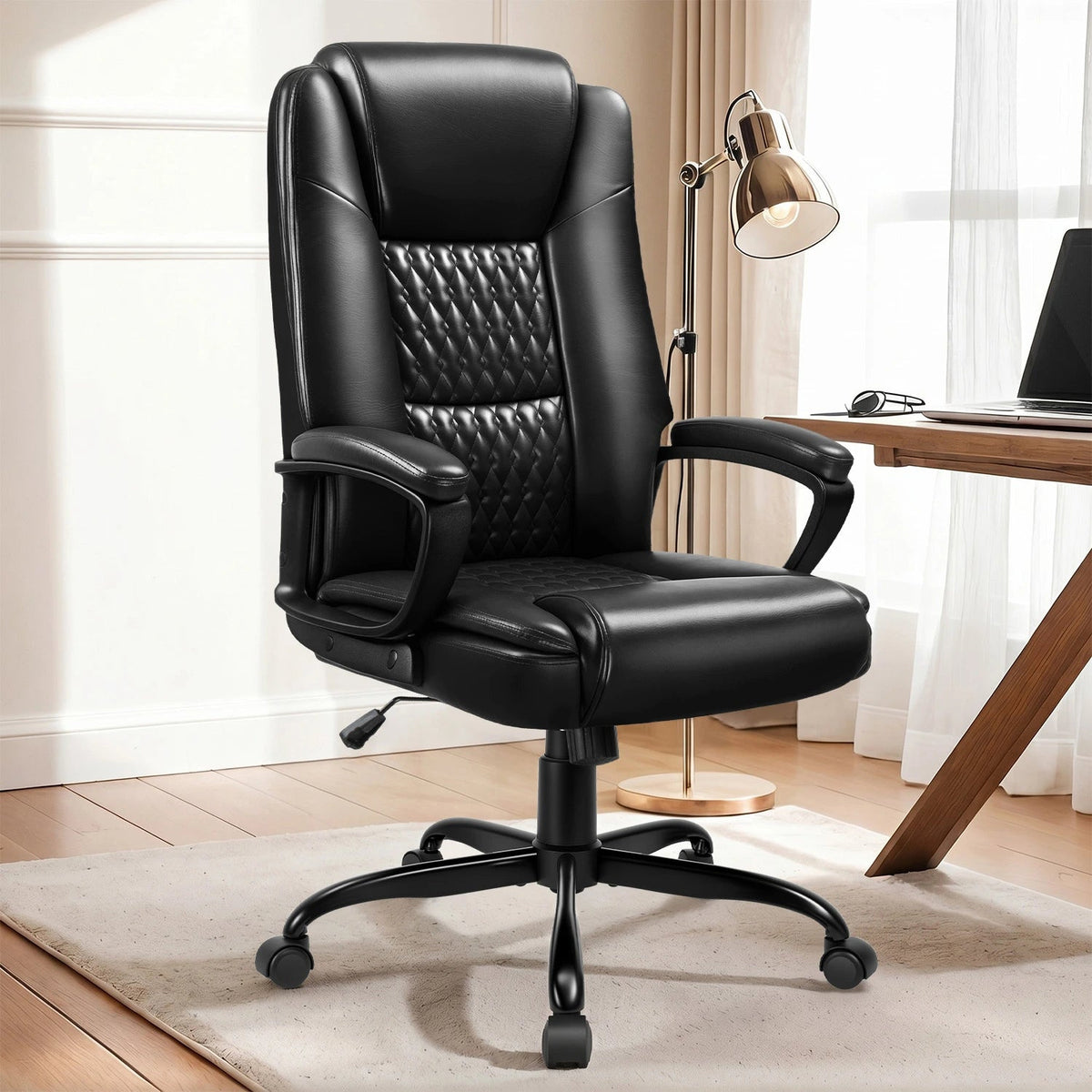
A high back chair can reduce neck load when you lean back. It is great for tall users and long focus blocks. It can give a sense of privacy and calm in open offices.
What I like:
- Neck and head support during recline breaks
- Better weight spread across the back
- Steady feel for deep tilt and relaxation
- Good match for taller bodies
Watch-outs:
- Bulky in small rooms
- A bad headrest can push your chin forward
- Can run warm without mesh
- Often costs more
When I coach teams, I use the High back vs Mid back ergonomic chair frame to match needs. People who read, review slides, or take calls for hours tend to prefer high back models.
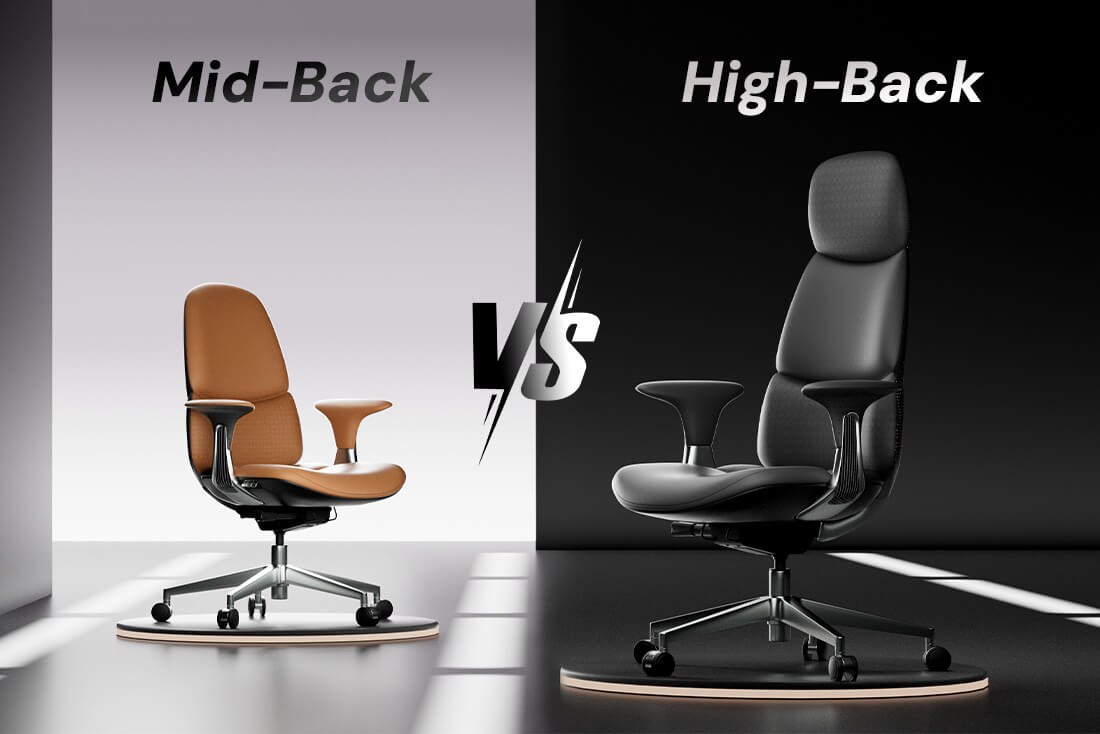
Source: omidifurniture.com
Benefits and limits of a mid back ergonomic chair
A mid back chair supports the spine where posture starts. It gives your shoulders room to move. It is often lighter on the budget and easy to adjust.
What I like:
- Freedom for shoulders and arms
- Great lumbar focus to keep the pelvis neutral
- Cooler with mesh backs
- Compact and easy to move
Watch-outs:
- No headrest for recline naps
- Can feel less secure for very tall users
- Poor models miss the upper back curve
For many desk jobs, a good mid back is the sweet spot. In many High back vs Mid back ergonomic chair trials I run, mid back wins for coders, designers, and writers who reach and move a lot.

Source: unite-it.com
The ergonomics that matter more than back height
Back height is only one piece. Fit and adjustability change the game. A great mid back can beat a poor high back, and the reverse is also true.
Look for:
- Lumbar support. It should meet the inward curve above your belt line. It must be height and depth adjustable.
- Seat depth. You want two to three fingers of space behind the knee. Sliding seats help different leg lengths.
- Tilt and recline. Synchronous tilt keeps hips and knees balanced. Lock positions or tension control are key.
- Armrests. Height, width, depth, and pivot let you keep shoulders down and wrists neutral.
- Seat foam and edge. Firm but not hard. A waterfall front edge reduces pressure on the thighs.
- Breathability. Mesh backs and knit fabrics manage heat in long sessions.
- Base and casters. A stable five-star base and casters that match your floor help posture and safety.
Strong evidence from office ergonomics shows that adjustable chairs cut discomfort and raise task comfort. That is why I tell buyers to frame every High back vs Mid back ergonomic chair pick around adjustability first.
Source: thesleepcompany.in
Which one suits you? Scenarios and body types
Match the chair to your body, your tasks, and your space. Use these simple guides to narrow your High back vs Mid back ergonomic chair choice.
Best fits by height:
- Under 5’5. Mid back with a small seat pan, soft edge, and low minimum seat height.
- 5’6 to 6’1. Either can work. Focus on adjustable lumbar, arm width, and seat depth.
- Over 6’2. High back or tall mid back with long seat depth and higher back.
Best fits by task:
- Calls, reading, webinars. High back with a headrest for recline breaks.
- Coding, sketching, spreadsheets. Mid back to free shoulders and arms.
- Gaming or long focus sprints. High back with smooth tilt and lumbar that stays put.
- Hot desking and shared rooms. Mid back for lighter weight and broad fit.
Room and style:
- Small home office. Mid back keeps sight lines clean and saves space.
- Executive suite or studio. High back adds presence and a calm feel.

Source: sihoo.com
Real-world lessons from testing both
I have set up more than 300 chairs in busy teams and home offices. Here is what users tell me after a week.
What went right:
- A tall analyst swapped to a high back with a better tilt. His neck pain eased when he leaned back to read.
- A designer moved from high back to mid back mesh. Her shoulder range improved and mouse reach felt smoother.
- A remote worker adjusted a mid back lumbar up one inch. Low back pain dropped by the third day.
Mistakes to avoid:
- Buying a high back for the headrest, then never reclining. You carry extra bulk with no gain.
- Picking a mid back without a firm lumbar. The spine tires fast, and posture slips.
- Ignoring seat depth. A long seat with short legs leads to numb thighs.
These stories shape how I guide a High back vs Mid back ergonomic chair purchase. Test the fit, not the label.
Source: inlandaction.com
Buying checklist and key specs to compare
Use this short list in the store or online. It keeps the focus on what you will feel all day.
Must haves:
- Seat height range that fits your leg length
- Seat depth adjustment or size options
- Height and depth adjustable lumbar
- Multiway arms that let elbows rest close to the body
- Smooth tilt with tension control and lock
- Breathable back material
- Sturdy base, 275 to 350 pound rating, and safety testing
- Warranty of at least five years and parts support
Nice to have:
- Headrest if you recline often
- Forward tilt for close work
- Easy-to-swap casters for carpet or hard floors
Compare the same specs across the High back vs Mid back ergonomic chair options. You will spot the real value fast.

Source: logicfox.net
Setup and posture tips for both chair types
A good chair still needs a good setup. Spend five minutes, and your body will thank you.
Simple steps:
- Set seat height so feet rest flat and thighs are level.
- Slide the seat so you have two to three fingers behind the knees.
- Raise lumbar to meet the curve of your lower back.
- Adjust arms so elbows rest at your sides and wrists are straight.
- If you have a headrest, use it only during recline, not while typing.
- Place the top of the screen at or slightly below eye level.
- Take short breaks every 30 to 45 minutes and reset posture.
These steps work whether you pick a high back or a mid back. They lock in the High back vs Mid back ergonomic chair benefits you paid for.

Source: caravelselect.com
Cost, durability, and warranty
Price ranges vary a lot. Mid back chairs often start lower. High back models tend to cost more due to extra materials and headrests. Focus on features and build, not only on height.
What to check:
- Frame and mechanism metal parts last longer under daily tilt
- Replaceable parts keep chairs working for years
- Fabric and mesh with high wear ratings resist sag and tears
- Clear warranty terms and easy support save time later
When you compare a High back vs Mid back ergonomic chair by durability, check the parts you touch and move most. Those are the parts that fail first.
Health and productivity outcomes you can expect
A well-fitted chair reduces pressure on the spine and hips. It helps you sit with less effort. Over time, this can lower discomfort and boost focus.
Research on office ergonomics links adjustable chairs and training with less pain reports and better work output. You still need movement, but the right High back vs Mid back ergonomic chair sets a strong base for your day.
Frequently Asked Questions of High back vs Mid back ergonomic chair
Are high back chairs better for neck pain?
They can be if you recline and use the headrest well. If you sit upright all day, a well-shaped mid back with good lumbar might feel better.
Can a mid back chair be fully ergonomic?
Yes. If it has solid lumbar, adjustable seat depth, and multiway arms, it can fit most users well. Good setup matters as much as back height.
Which is best for tall users in the High back vs Mid back ergonomic chair debate?
Tall users often prefer high back for upper support. A deep seat and higher back help spread load across a larger frame.
Is a headrest necessary?
No. A headrest is great during recline breaks but not needed for typing. It should never push your head forward.
How long should a good ergonomic chair last?
A quality chair should last seven to ten years with normal use. Look for replaceable parts and a strong warranty.
What is the best choice for a small home office?
A mid back chair saves space and keeps the room open. Choose mesh for airflow and a sliding seat for fit.
Does mesh or foam matter more than back height?
Material affects heat and support feel. Mesh breathes and flexes, while foam cushions; either can work when built well.
Conclusion
Both chair types can be great. High back supports the upper body during recline and suits taller users or long calls. Mid back frees movement, runs cooler, and fits many desk tasks. Focus on lumbar, seat depth, tilt, and arms, and your body will notice the change.
Try two models for at least 20 minutes each, then pick the one that melts away pressure points. If this High back vs Mid back ergonomic chair guide helped, share it with a friend, subscribe for more setup tips, or leave your questions in the comments.


