
Pick the right size, height range, casters, and locks, then test stability.
If you want to know how to choose a mobile rolling ergonomic desk, you are in the right place. I’ve set up dozens in homes, clinics, classrooms, and labs. In this guide, I’ll show you how to choose a mobile rolling ergonomic desk that fits your body, your space, and your work. You will get clear steps, real examples, and pro tips you can use today.

What makes a desk “mobile rolling ergonomic”
A mobile rolling ergonomic desk is a sit-stand surface on wheels. It lets you move, park, and lock it fast. The best ones support good posture and safe reach.
Key parts you will see:
- Base and frame The shape and metal that hold it up.
- Casters The wheels that roll and lock.
- Lift system Gas, electric, or manual.
- Desktop The size, shape, and finish you touch.
- Extras Cable trays, CPU mounts, and monitor arms.
When you learn how to choose a mobile rolling ergonomic desk, you will weigh all of these. Each part changes comfort, safety, and cost.

Your step-by-step plan: how to choose a mobile rolling ergonomic desk
Use this simple path before you buy.
- Define use cases
- Will you type, sketch, read, or do demos?
- How often will you roll it? Hallways or room to room?
- Measure your space
- Note door widths and tight turns.
- Check floor type. Tile, carpet, or wood need different wheels.
- Pick a height range
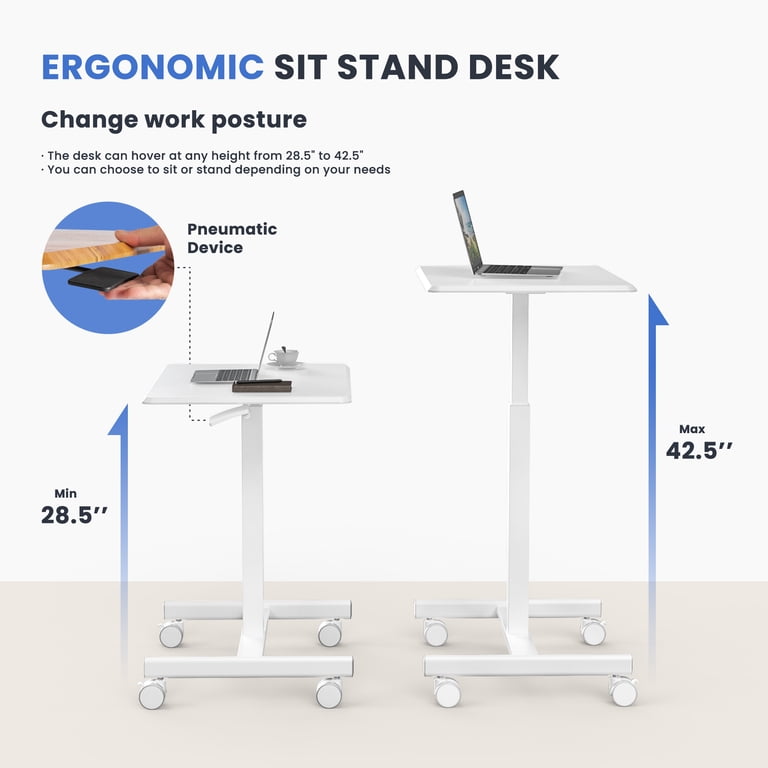
- Aim for 28–30 inches for sitting, 40–48 inches for standing.
- Short or tall? Check the spec fits you. Try in person if you can.
- Choose the lift type
- Gas spring Fast and quiet. Good for light to mid loads.
- Electric Smooth with buttons. Best for heavy gear.
- Crank Simple, low cost. Slower for big height moves.
- Focus on stability
- Look for wide base legs and steel frame.
- Tap the desk at full height. It should not wobble.
- Select casters
- 3–4 inch wheels roll best over gaps.
- Dual locks keep both roll and swivel still.
- Size the desktop
- 24×16 inches is ultra compact. 30×20 inches fits a laptop and mouse.
- 36×24 inches holds dual screens. Round edges save wrists.
- Weight capacity
- Add up gear weight with a 30 percent buffer.
- Check the max at full height, not just at low height.
- Cable and power
- Built-in power bar or a clamp strip saves time.
- A battery bank or UPS helps in classrooms and clinics.
- Add-ons
- VESA monitor arm keeps screens at eye level.
- CPU sling, hook for bag, and cup holder improve flow.
- Test and compare
- Push it loaded. Park it on a slope. Lock all wheels.
- Read return and warranty terms before you click buy.
- Budget smart
- Spend on frame, wheels, and height range first.
- Save on fancy tops. You can upgrade a surface later.
Follow these steps each time you ask how to choose a mobile rolling ergonomic desk. It keeps you focused on fit, safety, and value.
Ergonomics that matter most
Ergonomics means the desk fits you, not the other way around. When I run team fit sessions, I check three points: eyes, elbows, and feet.
- Eyes The top third of the screen should sit near eye height. Use a monitor arm.
- Elbows Keep a 90–110 degree bend with relaxed shoulders. Use a keyboard tray if needed.
- Feet Stand with weight even on both feet. Use a thin anti-fatigue mat if you stand long.
Helpful ranges
- Typing height is about elbow height. For many, that is 38–44 inches while standing.
- A negative tilt keyboard tray can ease wrist strain.
- Keep daily tools within 16–18 inches from your body. That cuts reach and twist.
Stand-move-sit rhythm
- Switch every 30–45 minutes. Short, often moves beat long static holds.
- Quick rule Change height when you change task.
These checks are key when you plan how to choose a mobile rolling ergonomic desk for shared teams or hot desks.
Mobility and stability: wheels, locks, and base design
A rolling desk is only as good as its wheels and base.
Casters
- Wheel size 3 inches is minimum for smooth floors. 4 inches for carpet.
- Material Soft rubber or TPR protects wood and runs quiet.
- Locks Choose total locks that stop roll and swivel. Two front locks are not enough for tall loads.
Base and frame
- T-shape bases are compact but can tip with heavy monitors.
- H-shape or wide C-bases resist sway and hold weight well.
- Low center of gravity is king. Heavy at the bottom, light on top.
Stability tests I use
- Full-height nudge test Push the top edge with two fingers.
- Ramp test Lock wheels on a small wedge or thick mat.
- Load test Add your heaviest gear and repeat.
If you ask how to choose a mobile rolling ergonomic desk for hallways, favor bigger wheels and a wider base. You will feel the difference at once.

Build quality and materials
Build drives safety and life span.
Frame and column
- Steel frame with thick gauge resists flex.
- Single column is fine for light tops. Dual column is better for wide tops.
Lift systems
- Gas spring Fast and tool-free. Check for easy squeeze force.
- Electric Precise and strong. Mind cord routing while you roll.
- Crank Simple and cheap. Best for steady height, not many changes.
Desktop surface
- HPL or laminate is tough and easy to clean.
- Solid wood feels great, but weighs more and costs more.
- Rounded edges help skin and cables.
If you care about how to choose a mobile rolling ergonomic desk that lasts, look for a five-year warranty on frame and lift.

Surface, storage, and cable management
Your top should match your tools and tasks.
Desktop choices
- Compact 24×16 inches For tablet or small laptop.
- Mid 30×20 inches For laptop, mouse, and notes.
- Wide 36×24 inches For dual screens or a small mixer.
Edge and finish
- Beveled edge saves wrists when you lean.
- Matte finish cuts glare for eyes and camera work.
Smart storage
- CPU sling under the top frees space.
- Small bin for pens and dongles.
- Hook for a bag or headset.
Cables and power
- A clamp-on power strip with USB-C is gold.
- Use a coiled cable or a magnetic clip so cords do not snag wheels.
These small wins add up when you nail how to choose a mobile rolling ergonomic desk for clean, fast work.

Safety, standards, and indoor air
Good desks meet clear marks.
Look for
- ANSI/BIFMA tests for stability and strength.
- BIFMA G1 guidance for fit.
- CARB Phase 2 or TSCA Title VI for low formaldehyde.
- GREENGUARD Gold for low VOCs in schools and clinics.
Tip and weight labels should be clear. Read the fine print. A safe choice is part of how to choose a mobile rolling ergonomic desk for kids, patients, and shared spaces.

Budget and value: where to save, where to spend
Price ranges I see in the field
- Entry level 120–250 dollars. Light use, simple lift, small top.
- Mid-range 250–600 dollars. Better wheels, stronger frame, add-ons.
- Pro 600–1,200 dollars. Heavy loads, quiet lift, long warranty.
Spend more on
- Frame, casters, and height range.
- A stable monitor arm if you use big screens.
Spend less on
- Exotic tops. You can upgrade later.
- Fancy cable kits. Zip ties and a cheap tray go far.
Total cost counts. Factor mats, arms, power strips, and time to set up. This view helps when you weigh how to choose a mobile rolling ergonomic desk for a team.
Setup, use, and maintenance tips from the field
These tips come from 30+ installs I led for clinics and schools.
- Unbox near the final spot. Keep the box flat to avoid warp.
- Use thread locker on key bolts. Re-check after the first week.
- Lube casters twice a year. Clean hair and grit from axles.
- Train users Set height by elbow rule. Lock all wheels before typing.
- Add a small floor dot where desks should park. It reduces clutter and bumps.
This is the practical side of how to choose a mobile rolling ergonomic desk and live with it day to day.
Common mistakes to avoid when you choose a mobile rolling ergonomic desk
I still see these errors on site visits.
- Buying on top size only. Stability beats square inches.
- Ignoring wheel quality. Cheap casters kill the experience.
- Skipping height tests. Tall users need more range.
- Forgetting cable slack. Short cords stop the roll or yank ports.
- Overloading the desk. A heavy monitor arm can tip a light base.
Avoid these, and you master how to choose a mobile rolling ergonomic desk without regret.
Real-world picks by scenario
Here are setups that worked well for my clients.
- 30×20 top, gas lift, 4 inch soft casters, single monitor arm.
- Light, quiet, easy to roll on wood floors.
Classroom
- 36×24 top, electric lift, wide H-base, big wheels, power strip.
- Locks on all casters. Bright edge tape for safety.
Clinic or telehealth
- 30×22 antimicrobial top, gas lift, CPU sling, VESA arm, cable tray.
- Smooth wheels for tile. Easy to wipe clean.
Warehouse or lab
- 36×24 HPL top, dual column, electric lift, 4 inch TPR wheels.
- Shock mat and total locks. High weight cap.
Photography or AV
- 36×24 top with lip, dual monitor arm, battery pack, cable hooks.
- Quiet wheels to roll during shoots.
Use these as models when you think through how to choose a mobile rolling ergonomic desk for your world.
Comparison checklist you can use today
Print or copy this list. Score each desk 1–5.
- Fits my height range at sit and stand
- Stable at full height with my gear
- Wheels 3–4 inches, soft tread, total locks
- Base shape fits doors and tight turns
- Weight capacity covers gear plus 30 percent
- Desktop size and edge suit my tasks
- Lift type matches use and noise needs
- Cable plan and power within reach
- Add-ons I need now or can add later
- Warranty length and support quality
- Meets BIFMA and low-VOC standards
- Price fits budget and total value
Use it every time you judge how to choose a mobile rolling ergonomic desk.
Frequently Asked Questions of how to choose a mobile rolling ergonomic desk
What height range should I look for?
Most users need 28–30 inches for sitting and 40–48 inches for standing. Tall or short users should confirm the spec before buying.
Are bigger wheels always better?
Bigger wheels roll easier over gaps and carpet. Choose 4 inches for rough floors and 3 inches for smooth floors.
Gas, electric, or crank: which is best?
Gas is fast and quiet for light gear. Electric handles heavy loads well, while cranks are cheap but slow.
How much weight capacity do I need?
Add up your gear and add 30 percent for safety. Check capacity at full height, not just the base spec.
Do I need a monitor arm?
If you use an external screen, yes. It sets eye height fast and cuts neck strain.
What standards should I check?
Look for ANSI/BIFMA tests for strength and stability. GREENGUARD and CARB labels help reduce indoor air concerns.
How do I stop wobble at full height?
Use a wider base and lock all wheels. Reduce top-heavy loads with a monitor arm and lower shelf weight.
Conclusion
Now you know how to choose a mobile rolling ergonomic desk that fits your body, your room, and your work. Measure your space, match the height range, pick solid wheels and locks, and test stability with your real gear. Add smart cable and power plans, and you will enjoy smooth days on the move.
Take five minutes to use the checklist above on your top three picks. Make one change this week, even if it is just adding a monitor arm or better casters. Want more hands-on guides like this? Subscribe, share your setup in the comments, and tell me what you want tested next.


