

Sit tall, support your lower back, move often, and reset posture daily.
If you want to know how to improve sitting alignment daily, you’re in the right place. I coach busy teams and solo workers on simple, science-backed posture habits. In this guide, I’ll show you clear steps, easy drills, and smart tools. You’ll learn how to improve sitting alignment daily without pain, fluff, or guesswork.

Source: theyogipreneur.com
What good sitting alignment actually means
Think of alignment like stacking blocks. Your ears, shoulders, and hips should line up. Your feet rest flat. Your weight spreads over both sit bones.
Your spine has three gentle curves. Keep them, do not flatten them. Your ribs sit over your pelvis. Your neck stays long, not jammed forward.
Your chair should meet you. Not the other way around. This is the base for how to improve sitting alignment daily. It is simple, repeatable, and kind to your back.

Source: com.be
A simple daily alignment checklist
Use this short list each day. It keeps your body honest. It also makes how to improve sitting alignment daily feel easy.
Morning setup
- Sit, inhale, grow tall. Exhale, keep that height.
- Roll shoulders back and down. Let your neck feel light.
- Place a small towel at your lower back. Support the curve.
During work
- Feet flat. Knees level with hips.
- Hips to the back of the seat. Do not perch.
- Screen at eye height. No chin dip.
- Elbows near 90 degrees. Wrists straight.
- Every 30 minutes, stand or stretch.
End of day
- Two minutes of chest and hip stretches.
- One minute of deep, slow belly breaths.
- Jot how you felt. This builds awareness.
Do this, and you will know how to improve sitting alignment daily in a steady way. You will see change in days, not months.
Source: inspireuplift.com
Set up your desk and chair
Small tweaks beat big gear. Follow these steps.
- Seat height: Set so feet are flat. Knees near hip level.
- Seat depth: Fit two fingers between seat edge and calf.
- Lumbar support: Place a roll at belt line. Keep a gentle curve.
- Backrest angle: 95–110 degrees. A slight recline reduces load.
- Armrests: Match elbow height. Keep shoulders relaxed.
- Keyboard and mouse: Close to your body. Elbows by your sides.
- Monitor: Top of screen at or just below eye level. Arm’s length away.
- Laptop fix: Use a stand and an external keyboard and mouse.
Extras
- If feet dangle, add a footrest.
- If you use two screens, center the main one.
- Phone work? Use a headset. Save your neck.
These steps answer how to improve sitting alignment daily at your desk. They also help at home or on the go.

Source: advancedcoachingacademy.com
Move often and break wisely
Your best posture is your next one. Stillness, not slouching, is the main foe.
Try this simple rhythm
- Every 30 minutes: stand for 2 minutes.
- Every hour: walk for 3 minutes.
- Every 2–3 hours: do a quick reset drill set.
Use anchors
- Sip water, then stand.
- Finish an email, then roll your shoulders.
- Take a call, then walk inside your space.
Eye care
- 20-20-20 rule. Look 20 feet away for 20 seconds every 20 minutes.
This is the heart of how to improve sitting alignment daily. You move, your tissues thank you.

Source: amazon.sa
Quick mobility resets
These drills hit spots that get tight. Do them pain-free. Breathe slow.
- Chin nods: Gentle yes and no, 30 seconds. Keep the neck long.
- Chest opener: Hands on door frame. Step through, 30 seconds.
- Upper back extension: Sit tall, hands behind head, lift chest, 8 reps.
- Hip flexor lunge: One knee down, squeeze back glute, 30 seconds each side.
- Figure-4 stretch: Ankle on knee, hinge forward, 30 seconds each side.
Five-minute reset flow
- 1 minute chest opener
- 1 minute hip flexor lunge
- 1 minute upper back extension
- 1 minute figure-4
- 1 minute easy walk
Use this when you feel stiff. It is a fast way for how to improve sitting alignment daily without gear.

Source: chiroher.com
Build strength for posture
Mobility opens space. Strength holds it. Do this short plan three times per week.
- Dead bug: 2 sets of 6–8 slow reps each side.
- Bird dog: 2 sets of 6–8 slow reps each side.
- Glute bridge: 2 sets of 10 reps. Pause at top.
- Row or band pull-apart: 2 sets of 10–12 reps.
- Wall angels: 1–2 sets of 6–8 slow reps.
Tips
- Move slow. Feel the muscles work.
- Stop if you feel sharp pain or numbness.
- Add a walk or light cardio for 10 minutes.
These moves lock in how to improve sitting alignment daily. They also build steady, joint-friendly strength.

Source: betterhood.in
Habits and cues to stay aligned
Willpower fades. Cues win. Stack posture to habits you already have.
Easy cues
- After each coffee, do three shoulder rolls.
- After each meeting, stand and breathe for 30 seconds.
- After lunch, do the five-minute reset.
Simple phrases
- Grow tall, then relax 10 percent.
- Soft ribs, long neck.
- Heavy feet, light hands.
Use tech for good
- Set phone alerts at 30-minute blocks.
- Use a watch buzz as a stand cue.
- Place a sticky note: Head over heart.
These cues make how to improve sitting alignment daily feel natural. Soon, it becomes a reflex.

Source: amazon.com
Tools and tech that help (with caution)
Gear can help, but it is not magic. Choose tools that guide, not cage.
Helpful tools
- Lumbar roll or small towel. Cheap and effective.
- Footrest. Great if your chair is tall.
- External keyboard and mouse. Vital for laptop users.
- Sit-stand desk. Alternate, do not stand all day.
Use with care
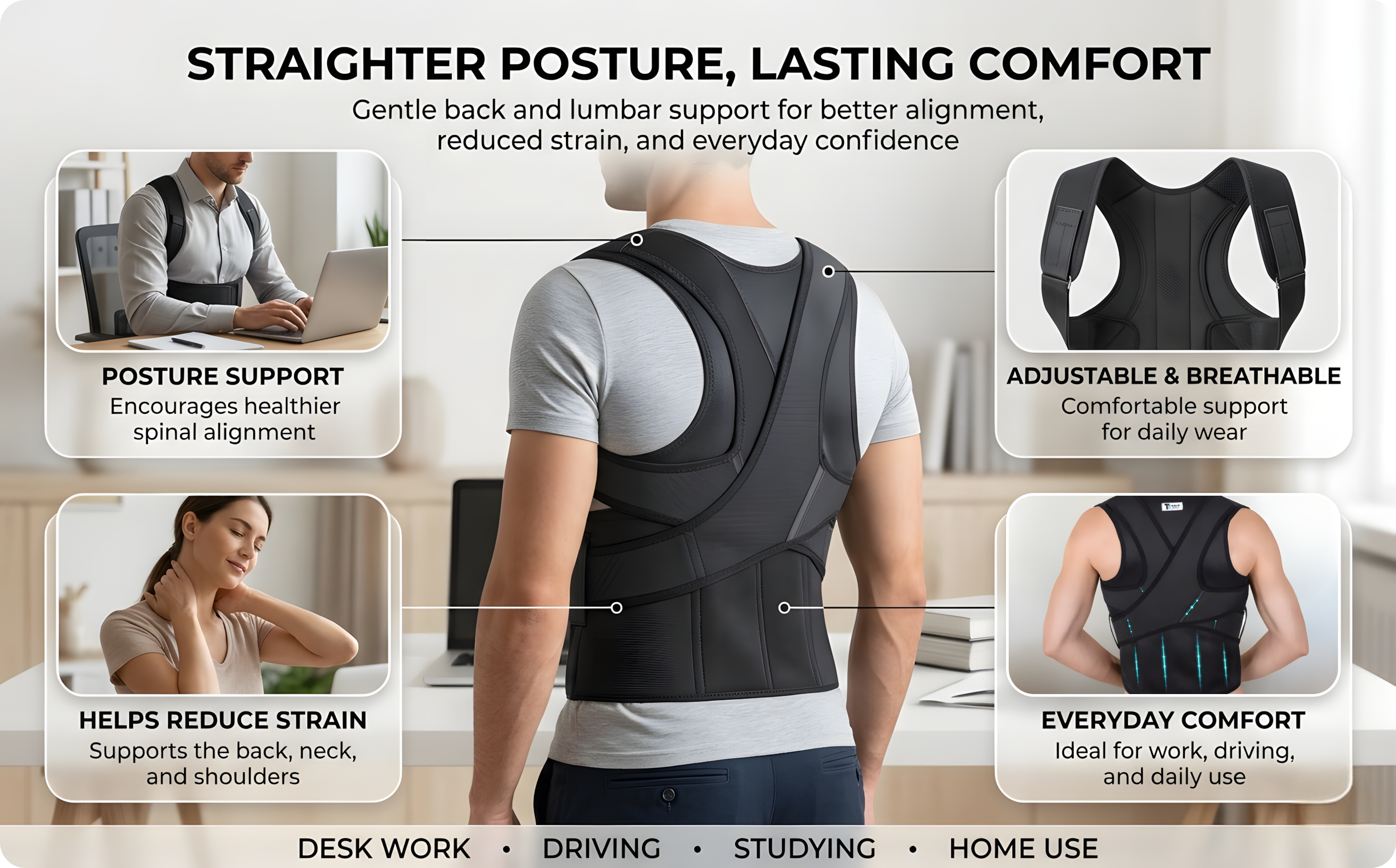
- Posture braces. Short use only. Do not rely on them.
- Cushions that tilt a lot. Try before you buy.
Apps and wearables
- Vibration cues help some people.
- Track steps and stand time.
- Review trends, not single days.
Pick what you will use. That is how to improve sitting alignment daily without waste.
Track progress and troubleshoot
What gets tracked gets better. Keep it light and simple.
Track three things
- Discomfort: 0–10 at end of day.
- Energy: 0–10 at end of day.
- Movement: Steps or stand minutes per day.
Weekly check
- Take a photo of your desk. Spot one fix.
- Note two drills that helped most.
- Plan your break times for the week.
Common mistakes
- Sitting still, even with “perfect” form.
- Perching on the front edge of the seat.
- Screen too low. This pulls the neck forward.
- Armrests too high. This hikes the shoulders.
When to get help
- Pain, numbness, or weakness. Get checked by a clinician.
- Night pain or symptoms that spread. Do not wait.
Use this to guide how to improve sitting alignment daily with safety and care.
Frequently Asked Questions of how to improve sitting alignment daily
How long does it take to fix posture?
You can feel better in days. Habit change for lasting posture takes weeks to months.
Is a sit-stand desk required?
No. It helps, but movement breaks work too. The key is to avoid long, fixed sitting.
What chair is best for alignment?
One that fits your body and supports your lower back. Adjustability matters more than brand.
Can I improve alignment without exercise?
Yes, but strength speeds results. A few core and back moves help you hold position with less effort.
How high should my monitor be?
Top of the screen at or just below eye level. Keep it about an arm’s length away.
Does crossing legs ruin alignment?
Short bouts are fine. Switch legs often and return to feet flat for most of the day.
How do I improve alignment when traveling?
Use a rolled jacket for lumbar support. Take stand and walk breaks at each stop.
Conclusion
You now have a clear plan: set your seat, stack your body, and move often. Add quick resets and small strength work. Track what helps and drop what does not. This is how to improve sitting alignment daily in a simple, steady way.
Pick one tip today and apply it for a week. Then add one more. If you found this useful, share it, subscribe for more guides, or leave a comment with your wins and questions.


