

Set up your desk right, move often, and keep your neck in neutral.
If you want how to prevent neck pain working, you’re in the right place. I’ve coached remote teams, set up hundreds of desks, and rehabbed my own tech-neck. Below you’ll get a simple, science-backed plan that shows how to prevent neck pain working at home, in the office, or on the go—without fancy gear.
Source: madisonspinept.com
Why your neck hurts at work
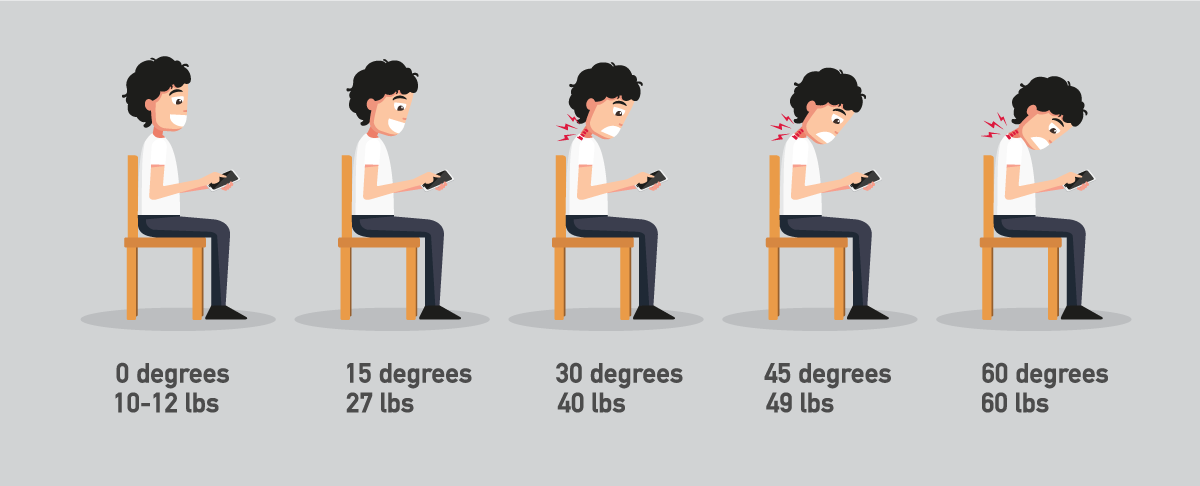
Most work neck pain comes from two things: poor alignment and long static time. Your head is heavy. For every inch it tilts forward, your neck muscles carry much more load. Over hours, that strain adds up.
Other triggers play a role too:
- Screen height that makes you look down for long periods.
- Laptops that force a hunched posture.
- Phones that pull your head forward.
- Stress that tightens shoulder and neck muscles.
- Weak deep neck and upper back muscles.
Research in ergonomics shows neutral alignment and regular breaks reduce pain. That is the heart of how to prevent neck pain working.

Source: perfecttherapy.ie
Your step-by-step setup for a pain-free desk
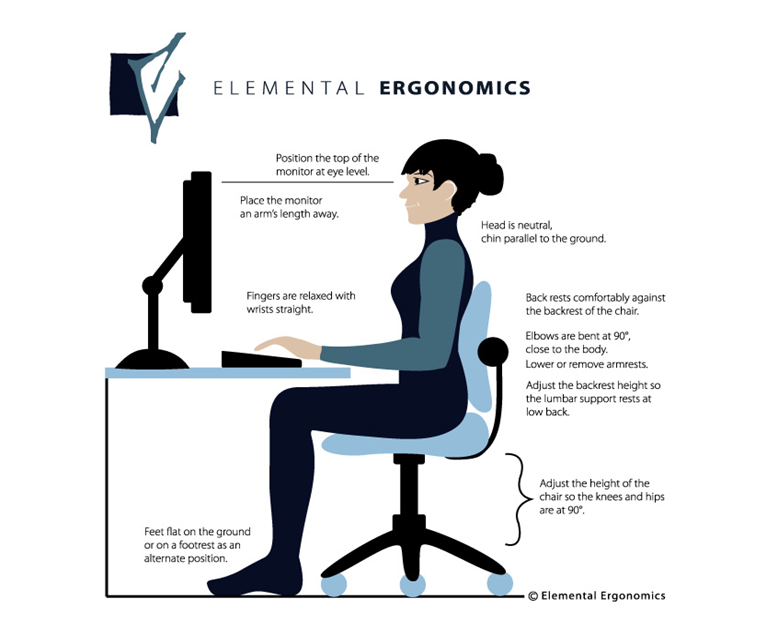
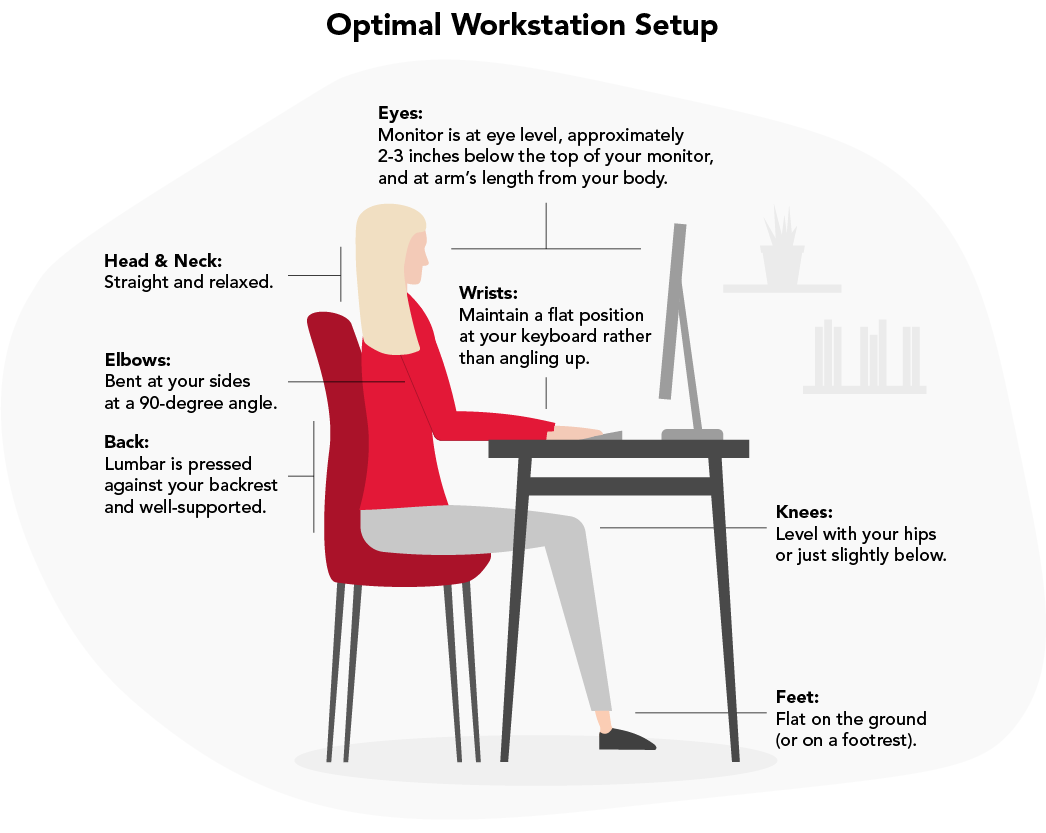
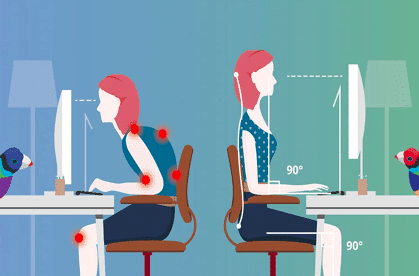
Think of your desk like a car cockpit. Everything should fit you, not the other way around. Follow this quick checklist.
- Chair: Set seat height so feet rest flat and knees are level with hips. Keep a fist-sized gap from seat edge to the back of your knees.
- Back support: Keep your lower back supported. Use a small cushion or built-in lumbar support.
- Desk height: Keep elbows near 90 to 100 degrees with relaxed shoulders.
- Keyboard and mouse: Place them close so your elbows hang by your sides.
- Monitor: Place the top of the screen at or slightly below eye level. Keep it about an arm’s length away.
- Laptop fix: Use a stand and external keyboard and mouse.
This layout teaches your body how to prevent neck pain working without constant effort.
How high should my monitor be?
Align the top edge at or just below eye level. If you wear progressives, lower it a bit to avoid tipping your chin up.
Where should my keyboard sit?
Keep it flat and close. Your wrists should be straight, and your shoulders relaxed. If your shoulders creep up, the desk is too high.
Source: arso-rehab.com
Posture you can keep all day
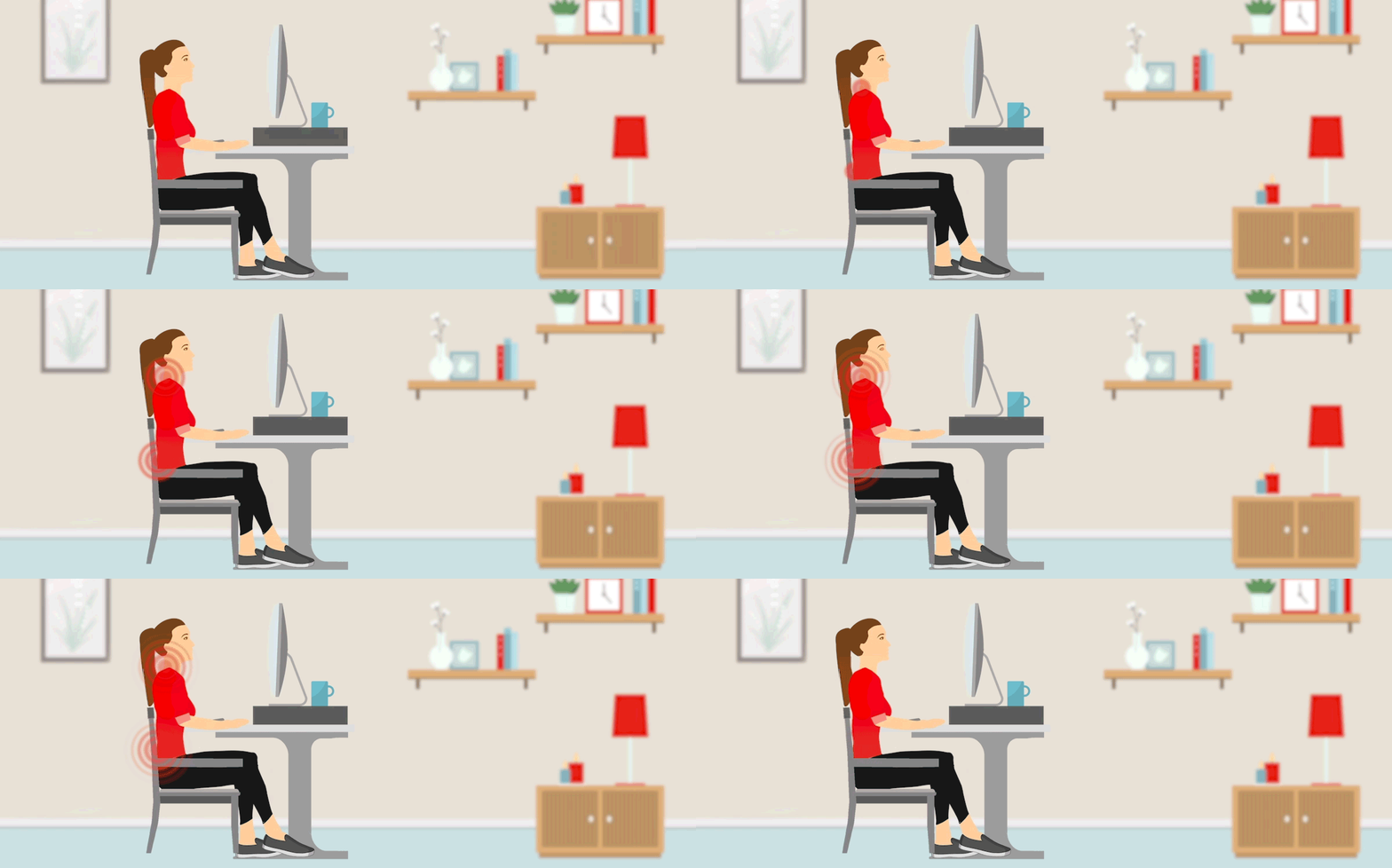
Good posture is dynamic, not stiff. Picture a bobblehead that hovers over your torso, not a soldier at attention.
- Neutral neck: Ears over shoulders. Chin level. Imagine a string lifting your crown.
- Open chest: Gently draw shoulder blades down and back, not jammed.
- Soft ribs: Avoid flaring your ribs forward.
- Light grip: Relax your hands to reduce shoulder tension.
Here’s how to prevent neck pain working with a 10‑second reset: Sit tall, exhale, tuck chin slightly, slide shoulder blades into your back pockets, and relax your jaw. Repeat many times a day.

Source: clevelandclinic.org
Movement snacks and microbreaks
Your neck loves variety more than perfect posture. Movement acts like oil for joints and a reset for tight muscles.
- Follow the 20‑8‑2 pattern: Every 20 minutes of sitting, stand for 8, and move for 2.
- Use the 30‑second rule: If you feel tight, stop and do 30 seconds of simple moves.
- Eye reset: Every 20 minutes, look 20 feet away for 20 seconds.
This is the most practical path for how to prevent neck pain working during long days.
How often should I take breaks?
At least every 30 to 45 minutes. Short and frequent beats long and rare.

Source: polkadotpowerhouse.com
Smart habits for laptops, phones, and meetings
Your neck pain often shows up outside your desk.
- On laptops: Use a stand and external devices. If that is not possible, sit the laptop on books and type for short bursts only.
- On phones: Bring the phone to eye level. Use voice notes or headphones for long calls.
- In meetings: Stand up for part of long calls. Pace during audio-only parts.
- On the go: Use a backpack with two straps. Keep loads close to your body.
These tiny shifts are key if you ask how to prevent neck pain working while traveling or switching spots.
Source: nyp.org
Stretches and exercises that help
Gentle, regular work beats a big weekend push. Here are simple moves I use with clients and myself.
Daily mobility, 1 to 2 times per day:
- Chin tucks: Sit tall. Gently draw your chin back like making a double chin. Hold 3 seconds. Do 10 reps.
- Upper trap stretch: Tilt your head to one side. Hold 20 seconds. Switch sides. Do 2 rounds.
- Levator stretch: Turn your head 45 degrees, look down to your armpit, and gently pull. Hold 20 seconds. Do 2 rounds each side.
- Thoracic openers: Sit tall. Hug yourself. Rotate right and left. Do 10 reps each side.
Strength, 3 times per week:
- Deep neck flexor hold: Lie on your back. Do a tiny chin tuck, lift head one inch. Hold 10 to 20 seconds. Do 3 to 5 holds.
- Scapular retraction: With a band, squeeze shoulder blades back and down. Do 12 to 15 reps.
- Wall angels: Back to the wall. Slide arms up and down. Keep ribs down. Do 10 reps.
- Farmer carries: Hold light weights. Stand tall. Walk 30 to 45 seconds. Do 3 walks.
If you want how to prevent neck pain working with lasting results, pair posture with these simple drills.
Source: wbjournal.com
Recovery that protects your neck
Work is only part of the picture. Recovery seals the deal.
- Sleep: Use one pillow that keeps your neck level. Side or back sleep works best.
- Heat and cold: Use heat to relax tight muscles. Use cold if you have sharp pain.
- Stress tools: Breath out longer than you breathe in. Try 4 seconds in, 6 to 8 seconds out.
- Hydration: Your discs love water. Keep a bottle near you.
These steps help your body learn how to prevent neck pain working day after day.
Source: symmetryptmiami.com
When to seek help
Most work neck pain eases with setup, breaks, and gentle strength. Still, some signs need care.
- Pain that spreads into the arm with numbness or weakness.
- Pain that wakes you at night or lasts beyond two weeks.
- Recent trauma or fever with neck pain.
A licensed clinician can assess you and tailor a plan. This is part of a safe path for how to prevent neck pain working without guesswork.

Source: necksofa.com
Tools and apps that keep you on track
You do not need much gear to feel better. Start small and build.
- Desk add-ons: Laptop stand, external keyboard and mouse, footrest, or a small lumbar pillow.
- Wearables and apps: Posture reminders, microbreak timers, and breathing apps.
- Self-care tools: A soft massage ball, a heating pad, and a light resistance band.
Use tech as a nudge, not a crutch. A few smart prompts can make how to prevent neck pain working feel simple and routine.
Real-world examples and lessons learned
I learned this the hard way. Years ago, I scaled a team from my kitchen table. My screen was low, my chair was high, and my neck paid the price. I could not turn my head by Friday.
Here is what fixed it fast:
- I raised my screen to eye level.
- I set a 30‑minute timer to stand and walk.
- I did chin tucks and band pulls at lunch.
- I stopped doom-scrolling with my chin on my chest.
Within two weeks, pain dropped by half. In one month, it was gone. This is how to prevent neck pain working even under stress: small changes, done often, that stick.
Frequently Asked Questions of how to prevent neck pain working
What is the best sitting posture for desk work?
Keep your ears over your shoulders and your elbows by your sides. Feet flat, hips level with or slightly above knees, and screen at eye level.
Is a standing desk better for my neck?
Standing helps, but variety is the secret. Use a sit-stand setup and rotate often, which is how to prevent neck pain working in a balanced way.
How long should I stretch each day?
Aim for 5 to 10 minutes total. Split it into short sessions during breaks to keep tissues happy and reduce stiffness.
Do I need special equipment to fix neck pain?
No. A laptop stand, an external keyboard, and a band go a long way. Start there before buying more.
When should I see a professional for neck pain?
If pain is severe, lasts more than two weeks, or includes numbness or weakness, seek care. A tailored plan speeds recovery and prevents setbacks.
Conclusion
You now have a clear, practical plan for a healthy neck at work: align your setup, move often, and build small strength. That is the simple truth behind how to prevent neck pain working, and it works in any space.
Pick one fix today. Raise your screen, set a timer, or do ten chin tucks. Stack these wins over a week and watch your neck thank you. Want more tips like this? Subscribe, share your results, or drop a question in the comments so we can help you fine-tune your setup.


