

A tight, sharp, or burning chest wall ache that eases with better posture.
If you’ve ever wondered what does chest pain from bad posture feel like, you’re in the right place. I’ve helped many desk workers, drivers, and new parents solve this exact problem. In this guide, I’ll explain it in clear terms, share what works, and show you how to fix it. Stick with me to learn why it happens, how to tell it from heart pain, and the best steps to feel better fast.
Understanding posture-related chest pain
Poor posture shifts stress into your chest wall. Muscles in the front of your chest and between your ribs can get tight and sore. Joints near your breastbone can get irritated. Nerves can feel pinched. This is usually not heart pain, but it can feel scary.
People search for what does chest pain from bad posture feel like because the pain can mimic serious issues. The key is to know the signs, test yourself, and make small daily changes.
What does chest pain from bad posture feel like?
Most people describe it as a dull ache or tight band across the chest. Some feel a sharp twinge near the breastbone when they slouch or twist. Others notice a burning pull that spreads to the shoulder, armpit, or upper back.
Common patterns include:
- Pain that worsens after long sitting, phone use, or driving, and eases with a stretch.
- Tender spots along the ribs or breastbone that hurt when pressed.
- Pain that changes with movement, deep breathing, or posture.
- A “stitch” on one side of the chest during a deep breath.
- Tingling down the arm if nerves near the collarbone get compressed.
In clinic, I often hear, “It hurts when I hunch, but a doorway stretch gives quick relief.” If you ask what does chest pain from bad posture feel like during a typical workday, think tight, nagging, and position-dependent, not constant or crushing.

Why bad posture triggers chest pain: anatomy and mechanics
When you round your shoulders and crane your head forward, several things happen:
- Pectoral muscles tighten and pull the shoulders inward. This strains the front of your chest.
- Intercostal muscles between ribs work harder and can spasm.
- Joints where ribs meet the breastbone can get inflamed.
- Nerves under the collarbone may get squeezed by tight tissues.
- Shallow breathing overworks the upper chest and neck.
These changes build a loop of tension and pain. Over time, even light tasks can set it off. This is why people ask what does chest pain from bad posture feel like when it lingers for weeks.

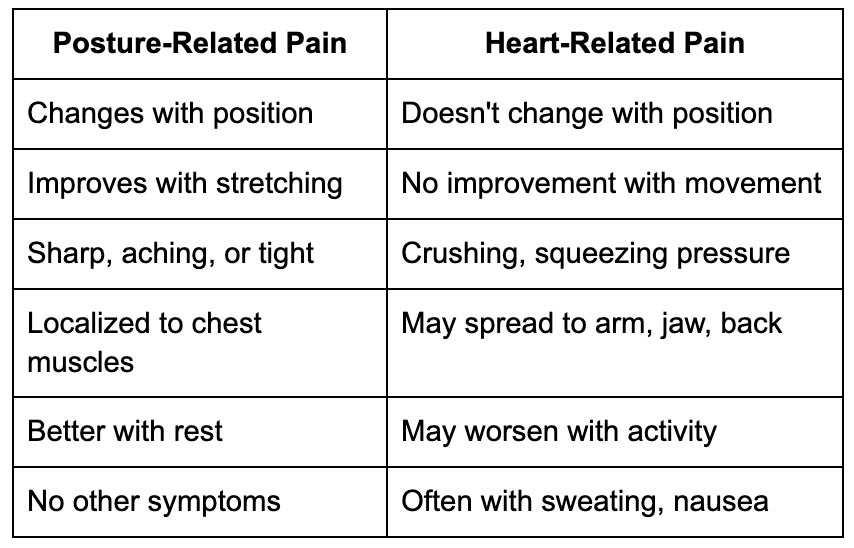
How to tell posture chest pain from heart pain
You should never ignore new or severe chest pain. That said, posture pain often:
- Feels worse with slouching, reaching, or taking a deep breath.
- Is tender to touch on the chest wall.
- Improves with a quick posture reset or stretch.
Red flags that need urgent care:
- Pressure, squeezing, or heavy pain that does not change with posture.
- Pain with shortness of breath, sweating, nausea, or jaw/left arm spread.
- Sudden severe pain after exertion.
- You have heart risk factors, or the pain is new and intense.
If you are unsure, seek care now. It is still helpful to learn what does chest pain from bad posture feel like, but safety comes first.

Self-tests and quick relief techniques
Try these simple checks:
- Press test: Press along your breastbone and ribs. If it reproduces your pain, it suggests chest wall strain.
- Posture reset: Sit tall, chin tuck, shoulder blades back and down. Hold 10 seconds. If pain eases, posture is part of it.
- Doorway pec stretch: Elbow at shoulder height, forearm on the door frame. Step through. If it feels tight and helpful, your chest is involved.
- Deep breath test: If slow nose-breathing reduces pain, shallow chest breathing may be the issue.
Fast relief you can try today:
- 30-30 rule: Every 30 minutes, move for 30 seconds. Stand, reach, roll your shoulders.
- Heat for 10 minutes to relax tight muscles.
- Gentle tennis ball massage to pecs and upper back against a wall.
- Slow belly breathing: 4 seconds in, 6 seconds out, for 2 minutes.
These steps help you feel what does chest pain from bad posture feel like and confirm the source. Stop if pain is sharp or spreading.
Daily habits and ergonomic fixes
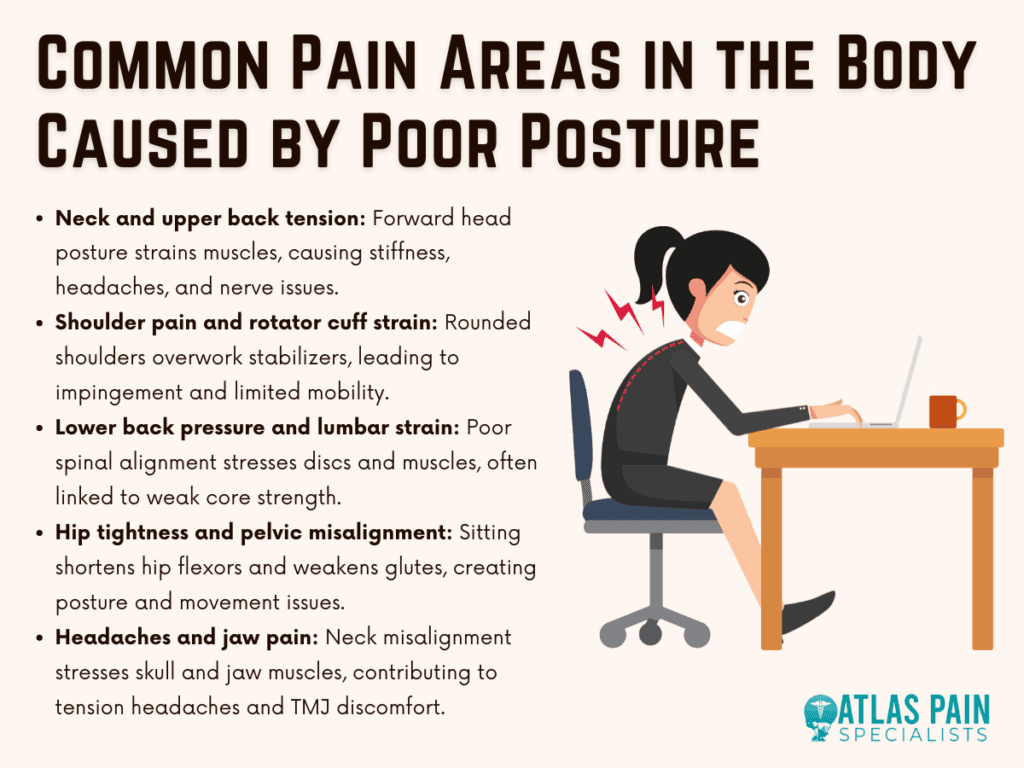
Small changes beat big overhauls. Aim for neutral alignment in daily life:
- Desk: Screen at eye level. Elbows at 90 degrees. Feet flat. Hips slightly above knees.
- Keyboard and mouse: Close to your body. Shoulders relaxed, not shrugged.
- Laptop: Use a stand and external keyboard.
- Phone: Hold it at eye level. Avoid long cradling in one hand.
- Driving: Bring the seat closer. Slight recline. Head on the headrest.
- Sleep: Side or back with a mid-height pillow. Avoid stomach sleep.
Set gentle reminders. A good setup teaches your body what does chest pain from bad posture feel like and how to prevent it.

Stretches and strengthening routine
Do this 10-minute plan, 4–5 days a week:
- Doorway chest stretch: 2 sets of 30 seconds each side.
- Thoracic extension over a rolled towel: 1–2 minutes of slow breathing.
- Scalene and upper trap stretch: 2 sets of 20 seconds each side.
- Intercostal reach: Stand tall, reach one arm overhead and lean away. 2 sets of 20 seconds each side.
- Band rows: 2 sets of 12. Squeeze shoulder blades down and back.
- Wall angels: 2 sets of 8 slow reps. Keep ribs down.
- Serratus punches with a light band: 2 sets of 12. Reach slightly forward without shrugging.
- Diaphragm breathing: 1 minute of 4–6 slow breaths.
Stop before sharp pain. Over a few weeks, you’ll learn firsthand what does chest pain from bad posture feel like as it fades.
When to see a doctor and what to expect
Seek care if pain lasts more than 2–3 weeks, keeps you up at night, follows trauma, or comes with fever, cough, rash, numbness, or breath issues. A clinician may check your heart to be safe, then assess your ribs, muscles, and nerves.
You might get an ECG, chest imaging if needed, and a plan that can include anti-inflammatories, physical therapy, breathing work, and ergonomic coaching. In rare cases, injections help with stubborn costochondritis. Clear answers on what does chest pain from bad posture feel like often come from a combined medical and movement exam.

Frequently Asked Questions of what does chest pain from bad posture feel like
What does chest pain from bad posture feel like at night?
It often feels like a tight band or sharp spot when you roll to one side. A pillow under the arm or between the knees can ease strain.
Can bad posture cause chest pain and shortness of breath?
Yes. Rounded shoulders and a forward head can limit rib motion and shallow your breath. Diaphragm breathing and chest mobility work often help.
How long does posture-related chest pain take to heal?
Many people feel better in 1–3 weeks with daily stretches and breaks. Long-standing pain can take 6–8 weeks as strength and habits improve.
Is it normal for it to hurt when I take a deep breath?
It can be, if intercostal muscles or rib joints are irritated. Gentle breathing drills and posture resets often reduce that pain.
Could this be anxiety instead of posture?
Both can play a role. Anxiety can raise muscle tension and change breathing, which adds to chest wall pain. Treating posture and stress together works best.
Should I still see a doctor if I think it’s posture?
If your pain is new, severe, or you have risk factors, yes. Better to rule out heart or lung issues, then follow a posture plan with confidence.
Conclusion
Posture-driven chest pain is common, real, and solvable. It feels tight, tender, and changes with movement and breath. With small daily fixes, simple tests, and a short routine, you can ease pain and build resilience.
Start today: set a 30-minute movement timer, do one doorway stretch, and try five slow belly breaths. If you found this helpful, share it, subscribe for more simple guides, or leave a comment with your question.


