

If your chair keeps dropping the moment you get comfortable, you are not alone. Many people deal with a chair that slowly sinks while they work, study, or game. You raise the seat. You sit back down. Minutes later, the chair drops again. It is annoying. It breaks your focus. It can even hurt your back.
The good news is simple. This problem is common. Most of the time, the cause is the gas lift cylinder. The seals inside wear out. Pressure leaks. The chair cannot hold height. The better news? You can fix it. Some fixes are fast and cheap. One fix is a true, long-term solution. With a little time and a few tools, you can bring your chair back to life.
Affiliate disclosure: Some product suggestions below may include affiliate recommendations. If you buy through those, we may earn a small commission at no extra cost to you. This helps us keep creating helpful guides.
Why Office Chairs Start Sinking
Most office chairs use a gas lift cylinder to raise and lower the seat. The cylinder has compressed gas inside. It also has small seals that hold that pressure in place. Over time, those seals wear out. When they fail, the gas slips past the seals. The chair cannot hold your weight at the set height, so it sinks.

A few things make this happen faster:
- Heavy daily use, like long work days or gaming sessions
- Frequent height changes, which force the seals to move a lot
- Extra weight beyond the chair’s rating
- Dust, dirt, and moisture, which can get into the mechanism
- Low-quality parts used in some budget chairs
If your chair drops a little at a time, the seals are likely leaking. If it slams down at once, the cylinder may be shot. Either way, the fix is very similar.
The Fastest Ways to Stop Your Chair From Sinking
You have three main paths. Two are quick, low-cost hacks. One is the proper long-term fix. Your choice depends on time, budget, and how long you want the repair to last.
PVC Pipe Method (Quick and Cheap)
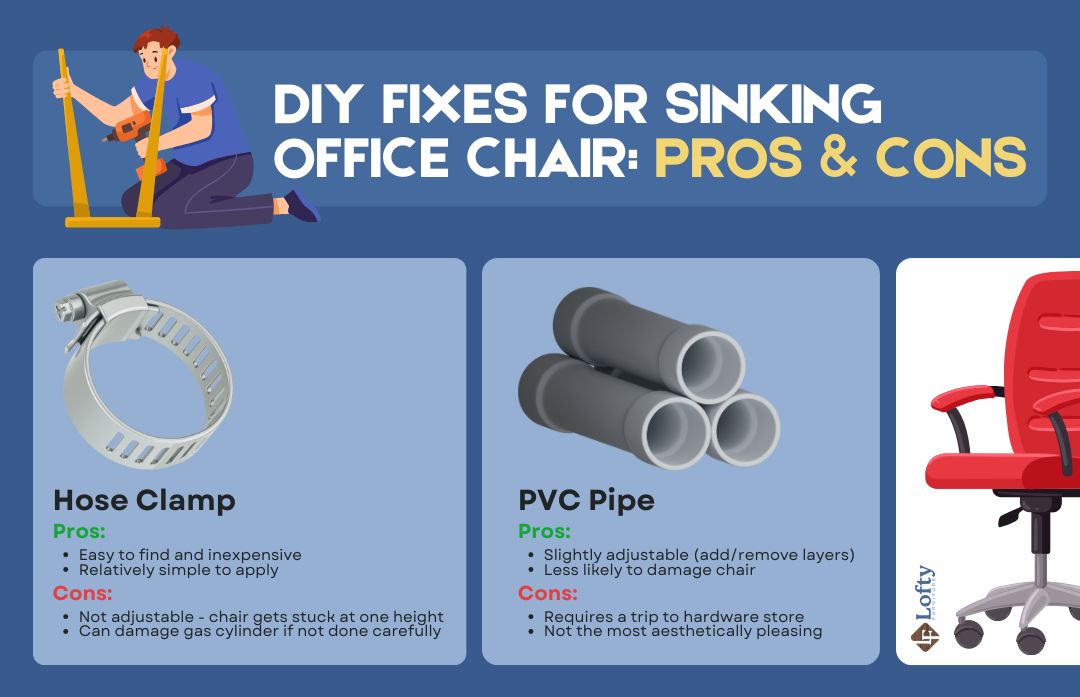
This is a fast way to lock the chair at a set height. You cut a length of PVC pipe. You place it around the shiny metal shaft of the cylinder under the seat. The pipe blocks the seat from moving down. It is like a spacer. It is not pretty, but it works.
How to do it:
- Raise the chair to the height you want.
- Measure the gap on the cylinder shaft from the seat to the base.
- Buy PVC pipe with an inner diameter that fits around the shaft. Most chair shafts are close to 1.1 inches wide. A 1.25-inch inner diameter pipe often works.
- Cut the pipe to length. Use a saw to make a clean cut.
- Slice the pipe lengthwise so you can open it.
- Snap the pipe around the shaft. Add more pieces if needed for fine tuning.
- Sit and test. Add tape or foam if it slips.
Pros:
- Very cheap
- Works in minutes
– No special tools
Cons:
- Locks you at one height
- Looks rough
- Not a smooth adjuster
Best for: A quick fix for a spare chair or a short-term need.
The Hose Clamp (Jubilee Clamp) Fix
This trick uses a metal hose clamp. You tighten it around the cylinder shaft right under the seat. It forms a collar. The seat cannot slide down past the clamp. You can also add a rubber spacer under the clamp for more grip.
How to do it:
- Raise the seat to where you like it.
- Wrap a rubber strip or a few layers of tape around the shaft.
- Put the hose clamp over the rubber.
- Tighten it with a screwdriver until snug.
- Sit and test. Tighten more if needed.
Pros:
- Cheap and quick
- A bit easier to fine-tune than PVC
- No cutting
Cons:
- Can scratch the shaft if not padded
- Still a hack, not a real fix
- Can slip over time
Best for: A stopgap while you wait for a new cylinder.
Replace the Gas Cylinder (Proper Fix)
This is the fix that lasts. You swap the worn cylinder for a new one. A fresh cylinder will hold pressure. It will move up and down like new. If the rest of your chair is solid, this is the best route.

Pros:
- Restores smooth height control
- Looks clean
- Lasts for years if you choose a good part
Cons:
- Takes a bit more time
- You need a few tools
- Costs more than a clamp, but still far less than a new chair
The Best Long-Term Fix (Replacing the Cylinder)
Do not worry. Replacing a gas lift cylinder sounds hard, but it is not. You can do it in under an hour. Most chairs use similar parts. With a few tools, you can handle it at home.

What You’ll Need
Here is what helps. You likely have some of these already.

- New gas lift cylinder (Class 4 or heavy-duty is a smart pick)
- Rubber mallet or regular hammer with a wood block
- Pipe wrench or locking pliers
- Flathead screwdriver
- Penetrating oil (optional, for stuck parts)
- Work gloves and safety glasses
- Old towel or cardboard to protect the floor
Step 1: Remove the Base
Flip the chair over on a soft surface. Hold the wheel base with one hand. Tap the underside of the metal base hub with a rubber mallet. A few firm hits will loosen it. If it is stuck, spray a little penetrating oil where the cylinder meets the base. Let it sit for a few minutes, then tap again. The base should pop off.

Tip: Do not hit the cylinder shaft directly with a metal hammer. Use a wood block or a soft mallet to avoid damage.
Step 2: Separate the Cylinder From the Seat Mechanism
With the wheel base off, you will see the top of the cylinder pressed into the seat mechanism. Grab the cylinder with a pipe wrench as close to the top as you can. Twist and pull down. Keep a hand on the mechanism so it does not drop. If it will not budge, add a bit of oil and try again. Slow and steady works best.
If the cylinder is very stuck, clamp the wrench tight and tap the wrench handle with a mallet to shock it loose. Do not rush. Work it free.
Step 3: Prep the New Cylinder
Compare the old and new parts. Length may differ a little. That is fine. Focus on fit. The top and bottom need to slide into the same sockets. Lightly grease the ends if you want smoother assembly. Not required, but it helps.
Check the stroke (how far it moves). A 4–6 inch stroke fits most desks. If you are tall, a longer stroke can help.
Step 4: Install the New Cylinder
Press the narrow end of the new cylinder into the seat mechanism first. It should slide in by hand. Then flip the chair over. Place the wheel base hub onto the bottom of the cylinder. Press down firmly. Sit on the chair to set the taper. It should seat with a soft pop.
If the base does not seat, stand up and give the hub a gentle tap with the mallet. Do not hit the shaft.
Step 5: Test and Adjust
Flip the chair upright. Use the lever to raise and lower the seat. It should rise smooth and hold your weight at the set height. If it sinks, check that the cylinder is seated fully at the top and bottom. Reseat as needed.
A quick safety check: Make sure the lever locks and releases as normal. Roll around a bit and watch for wobble.
What If the Cylinder Is Stuck?
If the base or top joint feels welded in place, do this:
- Apply penetrating oil and wait 10–20 minutes.
- Use a pipe wrench and rock the part, not just twist.
- Tap around the joint with a mallet to break rust.
- As a last resort, heat the joint gently with a hair dryer to expand the metal. Avoid open flames.
If none of that works and the chair is old, it may be time to replace the chair.
When You Should Replace the Entire Chair
A new cylinder will not fix other broken parts. Sometimes a full chair replacement is smarter. You save time. You gain comfort. You may also get a better warranty.
Replace the whole chair if:
- The base is cracked or wobbles even with a new cylinder
- The backrest leans to one side or the tilt does not lock
- The seat foam is flat and hurts your hips or tailbone
- The armrests flop or the frame creaks
- The chair is very cheap and other parts are failing
- You need better ergonomics for long work days
If the frame is sound and the seat still supports you, a cylinder swap is worth it. But if you fight more than one issue, upgrade.
Best Replacement Cylinders and Chair Options
Choosing a good cylinder matters. It affects how smooth the chair feels. It also affects how long the fix lasts. Look for “Class 4” or “heavy-duty” gas lifts. These tend to have stronger seals and higher weight ratings.
Here are solid, practical picks:
- Heavy-Duty Class 4 Universal Gas Lift (400–450 lb rating). Smooth travel, better seals, and longer life. Great for most standard office and gaming chairs. Check for a 2-inch outer diameter on the column and a cone/taper base fit, which most chairs use.
- Extended-Height Drafting Cylinder. If you work at a standing desk or a drafting table, pick a tall cylinder with a 9–10 inch stroke. Add a foot ring for comfort. This raises you higher than a standard cylinder.
- Short-Travel Low-Height Cylinder. If you are shorter or use a low desk, choose a 3–4 inch stroke. This keeps your feet flat on the floor and your knees at 90 degrees.
- Cylinder Removal Tool Kit. A small kit with a rubber mallet and a clamp or puller makes the job easier. Helpful if you plan to fix more than one chair.
- If you need a new chair:
- Budget pick: A basic ergonomic chair with lumbar support and a Class 4 lift. Aim for a 250–300 lb rating and a stable nylon base.
- Mid-range pick: A chair from brands like HON or AmazonCommercial with adjustable arms and tilt lock. Good durability without a high price.
- Premium pick: A reputable ergonomic model with a strong warranty from brands like Steelcase or Herman Miller. Costly, but built to last.
Note: Always check size and fit. Most office chairs use a standard taper and a 2-inch column, but a few models are different. Verify before you buy.
How to Prevent the Problem in the Future
A few small habits will help your next cylinder last longer. Treat the chair like a tool, not a toy. Gentle use helps the seals stay tight. Clean parts keep grit away from moving parts.
Simple tips:
- Avoid dropping your weight into the chair
- Do not ride the lever up and down for fun
- Keep within the listed weight limit
- Wipe dust from the cylinder shaft once in a while
- Use a high-quality Class 4 cylinder when you replace it
- Place a chair mat on carpet to reduce shock on the base and wheels
- If you share the chair, set the height once per user to cut extra cycles
These habits seem small. But they help a lot over time.
FAQs
Why does my chair sink by itself?
- The gas lift cylinder is leaking pressure. The seals wear out with time and use. When they fail, the cylinder cannot hold your weight at the set height. The seat slides down little by little.
Can I fix it without replacing parts?
- Yes, for a while. The PVC pipe and hose clamp methods both work as quick fixes. They hold the seat up by blocking movement. They do not restore smooth height control. For a real fix that lasts, replace the gas cylinder.
Are chair cylinders universal?
- Many are close to universal. Most use a standard taper at the base and a similar top fit into the seat mechanism. Many also use a 2-inch outer diameter column with about a 1.1-inch shaft. But not all chairs follow this. Some brands use unique sizes. Always check the fit and length before you buy.
How long should a new cylinder last?
- A good Class 4 cylinder often lasts several years with normal use. Heavy daily use or frequent height changes can shorten that time.
What if the chair still sinks after a new cylinder?
- Check assembly. Make sure both ends of the cylinder are fully seated. If it still sinks, the lever or seat mechanism may be faulty. At that point, consider a new mechanism or a new chair.
Is replacing the cylinder safe to do at home?
- Yes, if you take simple safety steps. Wear gloves and eye protection. Work on a stable surface. Use a mallet, not a bare metal hammer, on the base. Go slow and steady.
CONCLUSION
A sinking chair is a common headache. The cause is almost always a worn gas lift cylinder. You have three options. For a fast, cheap hold, use PVC or a hose clamp. For a fix that feels like new, replace the cylinder. The swap is simpler than it sounds and costs far less than a new chair.
Start with the easiest path for you. If your chair frame, seat, and base are solid, a new cylinder is the best long-term move. If the chair is old, creaks, or feels weak, put your money toward a better chair. Your back and your focus will thank you.


