
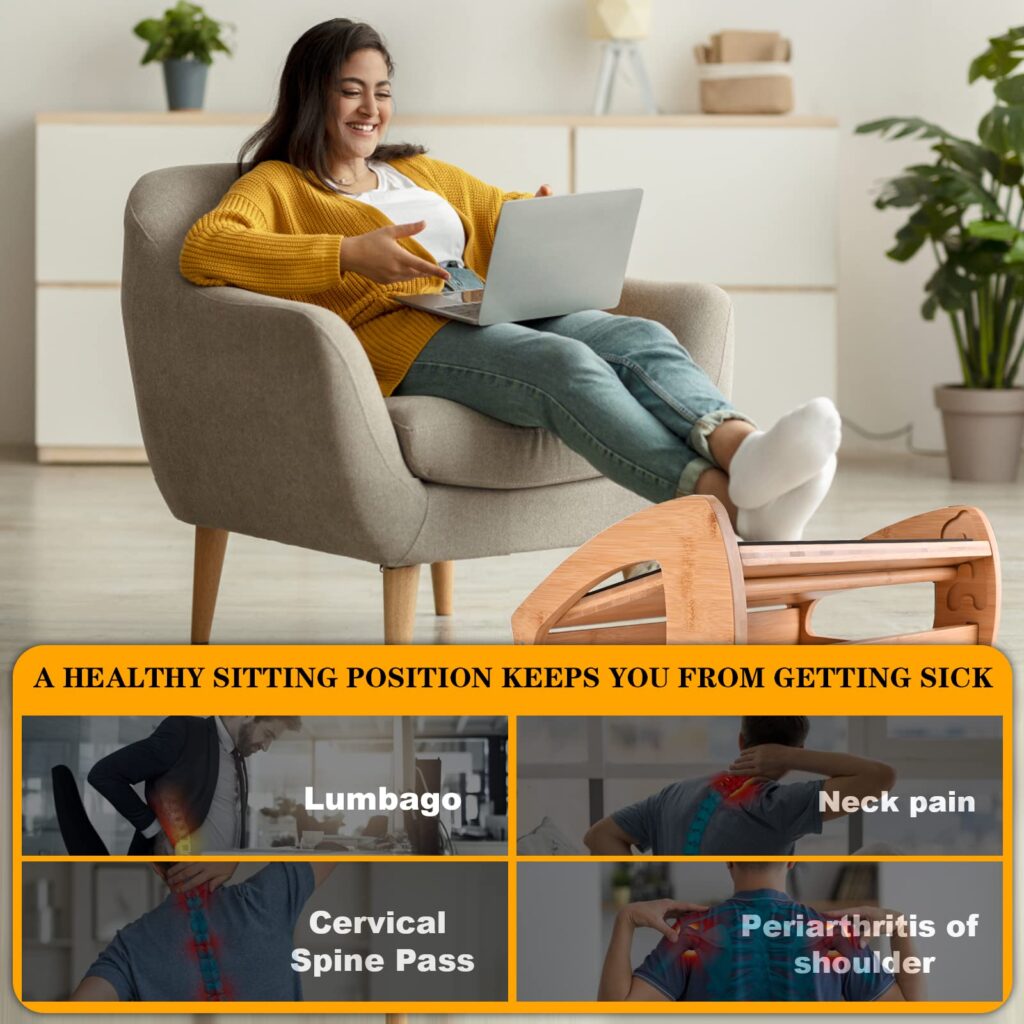
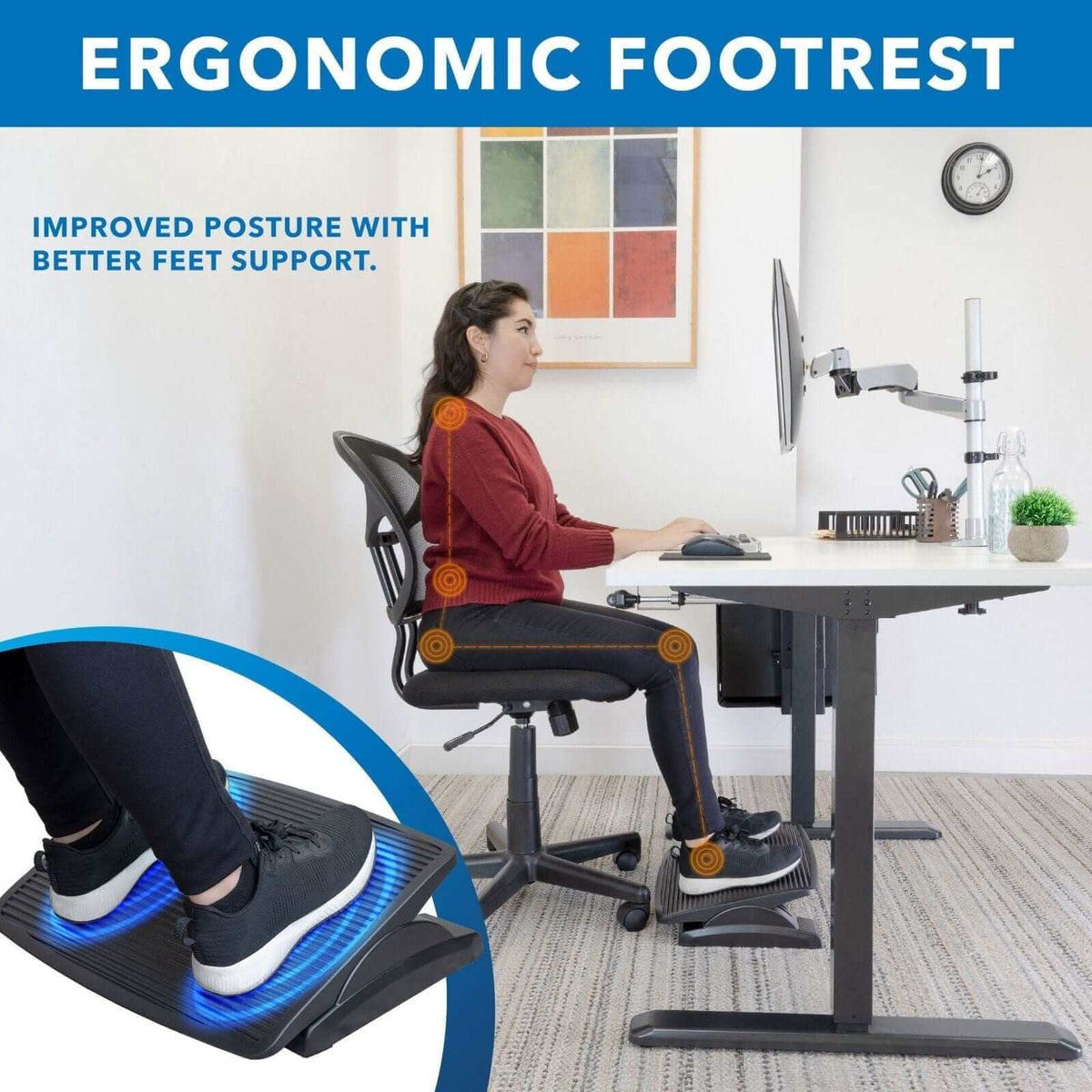
A footrest improves sitting posture by bringing the floor up to your feet. It supports your legs, keeps knees at about 90 degrees, and reduces pressure on the lower back. With stable foot contact, your pelvis stays neutral and your spine stacks naturally, which eases slouching and helps circulation. It’s a simple fix under any desk.
Do your legs hang or feel tired while sitting at your desk? You shift, cross your ankles, and still can’t get comfy. Here’s what most people ignore: your feet. When your feet don’t have firm support, your whole posture falls apart. A simple under-desk footrest can improve posture instantly and ease back and leg strain.
What Is a Footrest and How Does It Work?
A footrest is a small platform that sits under your desk. You place your feet on it while you work. It can be foam, wood, or plastic. Many tilt or rock to let your legs move during the day.
Think of it as bringing the floor up to you. If your chair is high, or your desk is fixed, your feet may not rest flat. A footrest fills that gap. With steady footing, your body finds a more natural sitting shape with less effort.

How a Footrest Improves Sitting Posture
Here is how a footrest helps you sit better, fast. If you have asked, “how does a footrest improve posture?” or “is footrest good for posture?” this is the simple answer.
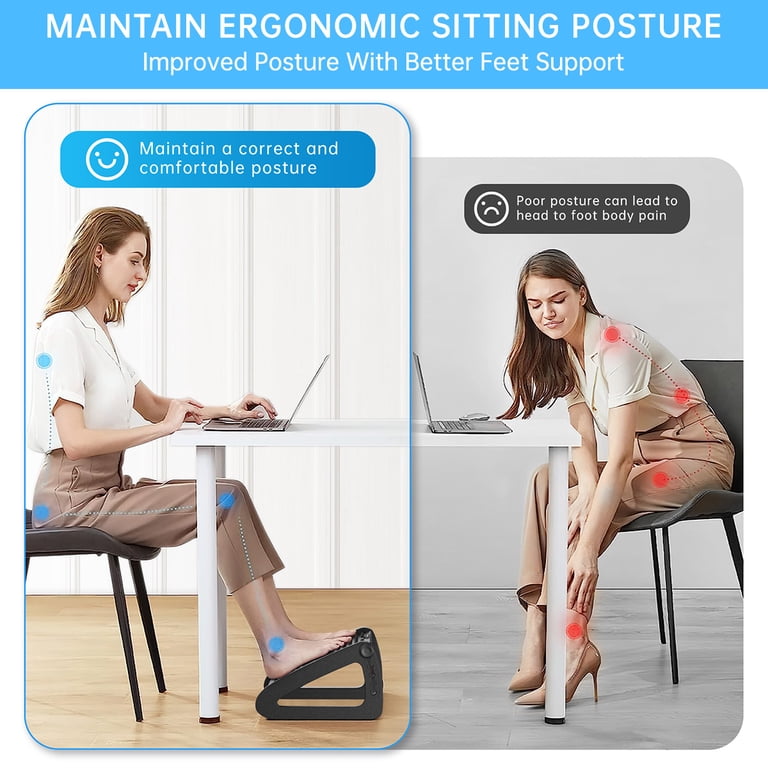
- Keeps your feet supported: Dangling feet pull on the thighs and tilt the pelvis. A footrest gives a steady base, so your hips don’t roll back.
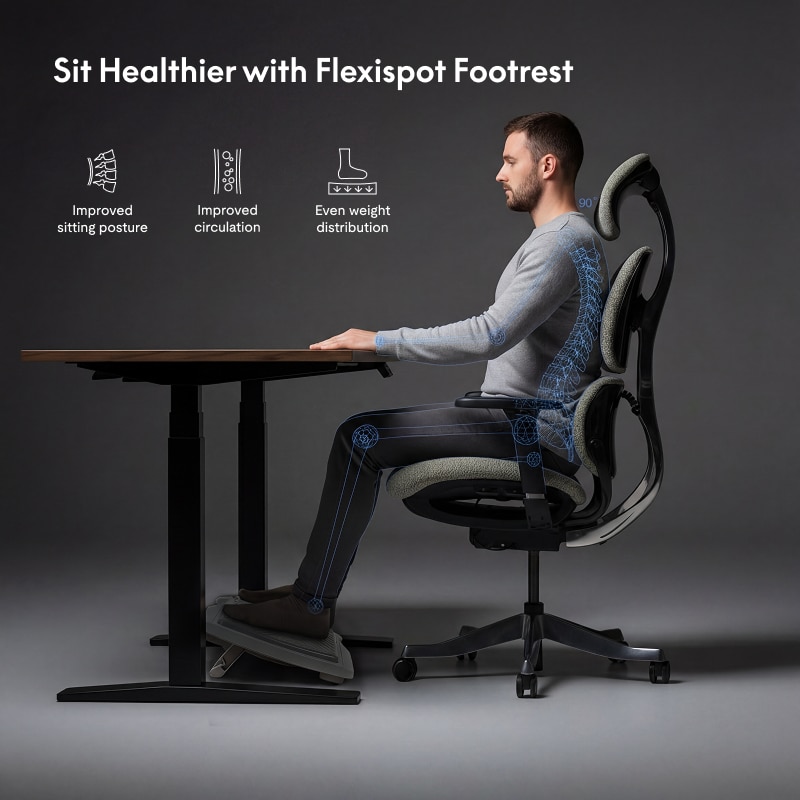
- Maintains a 90° knee angle: When your knees bend near 90 degrees, your thighs relax. This cuts strain on your hips and lower back.
- Reduces lower back pressure: With foot support, your pelvis sits neutral. This eases disc pressure and tightness in your lumbar area.
- Improves spine alignment: Stable feet help your core switch on. Your spine stacks up, and your shoulders open. Less slouch, less neck strain.
This is the core of how footrest improves sitting posture. It sets your base first. The rest of your body follows.

Key Benefits of Using a Footrest
You get posture benefits, but there are more under desk footrest benefits you’ll feel right away.
- Better circulation: A footrest lowers pressure under your thighs. Blood flows better to your lower legs and feet. This helps reduce swelling.
- Less leg fatigue: Supported feet and a soft angle at the knees reduce calf and hamstring strain. You feel fresher at the end of the day.
- Improved comfort: You won’t fidget as much. Your hips and back relax. Tasks feel easier when your body is not fighting the chair.
- More movement: Many footrests tilt or rock. Small, steady moves boost comfort without pulling focus from work.
- Simple fix for mixed setups: Shared desks rarely fit all users. A footrest makes a too-high desk workable in seconds.

Check On Amazon
How to Use a Footrest Correctly
Set it once, and your body will thank you. Here’s how to dial it in for fast, lasting relief.
- Adjust height first: Sit back in your chair. Set the footrest so your knees are near 90 degrees. Your thighs should feel light, not pressed.
- Keep feet flat: Place both feet fully on the platform. Avoid perching on your toes. Full contact brings the best support.
- Match chair height: Raise your chair so your elbows are near 90 degrees on the desk. Then use the footrest to meet your feet.
- Sit back in the chair: Keep your hips back and your back supported. Let the footrest hold your legs, not your back muscles.
- Move a little: If the footrest tilts, rock it now and then. Short, gentle moves help blood flow and comfort.
- Shoes or socks: Use what feels best. If the surface is slick, wear shoes or add a non-slip cover.

Common Mistakes to Avoid
Most footrest fails are easy to fix. Watch for these and you’ll get the full benefit.
- Footrest too high: If your knees sit above your hips, drop the height. Aim for knees near 90 degrees.
- Feet not fully supported: Toes-only won’t work. Keep your whole foot on the platform.
- Wrong chair setup: If your elbows aren’t near 90 degrees on the desk, adjust the chair first. Then fine-tune the footrest.
- Pushing the footrest too far away: Keep it close so your heels can rest, not just your toes.
- Locking your legs: Don’t hold a rigid pose. Small moves keep you relaxed.
Who Should Use a Footrest?
Almost anyone who sits can benefit. But some people will feel a big change right away.
- Short users: If your feet don’t touch the floor, a footrest is a must.
- Long sitting workers: Writers, coders, gamers, analysts, and call center staff can cut daily strain.
- Desk users with fixed-height desks: Shared offices and older desks often sit too high. A footrest balances the setup.
- People with leg fatigue or swelling: Better leg angles and movement help comfort and circulation.
- Pregnant users: A footrest can ease pelvic tilt and reduce back and leg pressure.
- Remote workers: Make your dining table or high counter more ergonomic with this simple tool.
Best Footrests for Desk (Top Picks)
Here are solid, easy wins you can order today. Each one supports better posture and long-term comfort.
- Adjustable Tilting Footrest (plastic/metal)
- Why it’s great: Sturdy, wide, and easy to clean. Lets you tilt the angle to suit your leg length. Good for shared spaces.
- Best for: Offices and home desks that need a simple, durable fix.
- High-Density Foam Footrest (rocker style)
- Why it’s great: Soft on ankles and quiet. Flip it to rock for micro-movement. Great under bare feet or socks.
- Best for: Home offices and anyone who wants a softer feel and more motion.
- Memory Foam Footrest with Non-Slip Cover
- Why it’s great: Plush support with a grippy base. The cover often zips off for washing. Comfortable for long hours.
- Best for: Remote workers who sit for long stretches.
- Height-Stackable Footrest (modular blocks)
- Why it’s great: You can add or remove layers to match your desk or chair. Simple, stable, and very adjustable.
- Best for: Short users or mixed-height setups.
Small note: Choose a footrest that is at least as wide as your stance. Non-slip surfaces are a plus. If your desk is shared, pick an easy-to-clean material.

Check On Amazon
Quick Checklist
Run through this quick setup to improve posture instantly.
- Are your elbows near 90 degrees on the desk?
- Do your knees bend around 90 degrees?
- Are both feet flat and fully supported?
- Is pressure under your thighs low?
- Can you tilt or move your feet a bit?
- Do you sit back with your back supported?
FAQ
Q: Is a footrest good for posture, really?
A: Yes. Stable foot support sets your pelvis in a neutral spot. That eases lower back pressure and supports a tall, relaxed spine. It also helps your shoulders open and your neck align.
Q: How does a footrest improve posture compared to lowering my chair?
A: Lowering your chair can wreck your desk and elbow height. A footrest preserves the ideal arm angle while lifting the floor to your feet. You get both good arm position and solid leg support.
Q: Do tall people need a footrest?
A: Sometimes. If the desk is high and your chair must rise to match it, a footrest can still help. It keeps the knee angle comfy and cuts thigh pressure.
Conclusion
If your legs hang or feel heavy at your desk, the fix is simple. Support your feet. A footrest brings the floor to you, eases lower back strain, and helps your spine stack with less effort. Pair it with a good chair height, and you’ll feel the change today. Upgrade your desk comfort now and enjoy better posture with every task.
Tip: Add images like a footrest position diagram, a correct sitting posture view, and a full desk setup example to lock in the right form and help others set up fast.


