
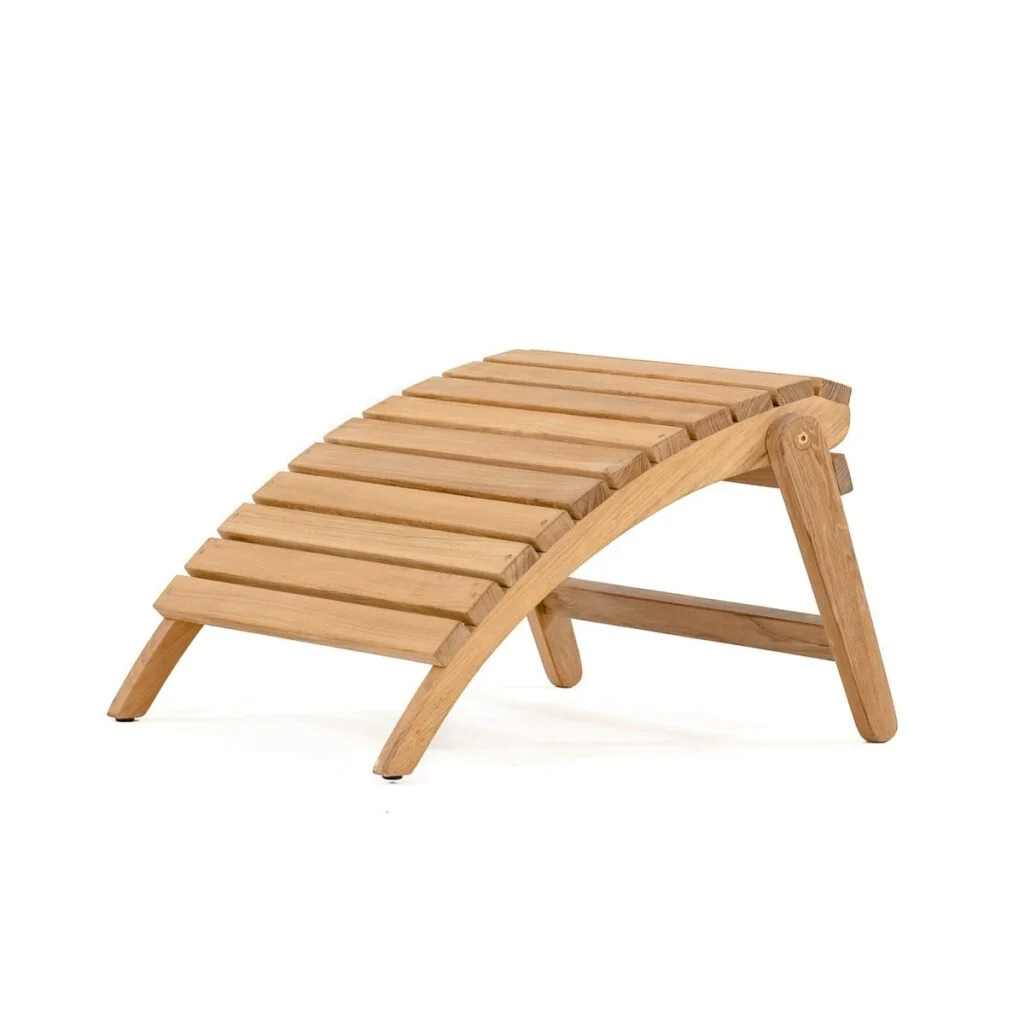
Most footrests are angled to match how your ankles and knees naturally rest when you sit. A gentle slope lets your feet land in a relaxed way, supports your legs, and helps your lower back settle into the chair. This small change in footrest angle can ease pressure under your thighs, help your sitting posture, and make long desk hours feel easier. In short, an angled footrest supports neutral alignment and adds comfort without much effort.

What does an angled footrest do?
An angled footrest raises your feet and tilts them slightly so your ankles sit in a neutral spot. This helps your knees open to a comfortable angle and keeps pressure off the backs of your legs. When your feet land well, the rest of your body follows. You sit back into the chair, your hips feel stable, and your spine stacks more easily.
Think of it like parking your feet on a small ramp. Your toes point up a little, your ankles relax, and your legs rest without strain. Many ergonomic footrest designs also rock or flex. This encourages tiny movements in your ankles and calves. These micro-movements can help you avoid stiff legs and keep your body more awake while you work.
A few simple desk examples:
- If your chair is a bit high, an angled footrest gives your feet a firm base so they do not dangle.
- If your seat cuts into the backs of your thighs, a slight angle can shift weight off that pressure point.
- If you tend to tuck your feet under the chair, the slope invites your feet forward so your posture opens up.
Practical tips:
- Start with a footrest angle between 10–20 degrees.
- Place the footrest close enough that your heels can rest on it without reaching.
- Sit back into your chair and let your lower back touch the backrest.
Common mistakes:
- Setting the angle too steep so your toes strain upward.
- Placing the footrest too far away, which pulls you forward and rounds your back.
- Perching on the front edge of the seat instead of using the backrest.
Why are most footrests angled instead of flat?
Most footrests are angled because flat platforms do not match the way your ankles naturally rest. When your feet sit flat on a flat board, your toes may point forward, your shins stay vertical, and your ankles can feel stiff. With a gentle slope, your toes lift slightly and your ankle joint relaxes. This makes it easier to sit longer with less effort.
An angled platform also increases contact under your feet. More contact means more support and less slipping. Many angled footrests let you rock your feet too. That motion is helpful because it adds movement to a static desk setup. Even small movement boosts desk comfort and helps break up strain.
Flat vs angled footrest in practice:
- Flat: good if you only need height or a stable base for a foot pedal.
- Angled: better if you want to support your ankles and encourage easy posture.
Practical tips:
- Choose an adjustable ergonomic footrest if more than one person will use the desk.
- If your shoes have thick soles, you may need a slightly lower angle to feel relaxed.
- Try a textured surface to reduce slipping and keep your feet steady.
Common mistakes:
- Picking a fixed, steep angle that locks your ankles.
- Using a footrest that is too tall, which pushes your knees too high and tilts your pelvis back.

Are angled footrests better for sitting posture?
For most people, yes. An angled footrest supports better sitting posture by helping your pelvis stay neutral and your spine align. When your feet have a solid, comfy base, your body can settle against the backrest. This reduces the urge to hunch forward or round your lower back.
Picture this at a desk: your feet rest on the angled platform, your knees are slightly below your hips, and your hips stay back in the seat. Your lumbar area meets the backrest, so your core does less work to hold you upright. The angle is not a fix-all, but it gives your body a stable base to stack from, which is key for long work sessions.
Practical tips:
- Adjust your chair first: hips slightly higher than knees, feet supported.
- Then set the footrest angle so your ankles feel neutral, not bent.
- Keep your screen at eye level and your keyboard close to avoid leaning.
Common mistakes:
- Using an angled footrest to compensate for poor chair height. Set chair height first.
- Letting the seat pan press into the backs of your thighs. If it does, lower the seat or use a shallower seat pan.
- Pushing the footrest far under the desk so you reach and lose back support.
Can an angled footrest reduce leg and back discomfort?
An angled footrest can help reduce common desk discomfort by easing pressure and nudging your posture into a more relaxed shape. The slope supports your feet and lets your knees fall into a gentle, open angle. This may reduce the load under your thighs. It also makes it easier to lean back and rest your lower back on the chair, which can lower strain during long tasks.
The ability to move matters too. Many angled footrests rock or tilt. That small motion encourages you to change foot position often. Movement helps you feel better at the end of the day because your body dislikes long, fixed postures.
Desk examples:
- If your legs feel heavy or stiff by noon, try a low angle and rock your feet a few times each hour.
- If your lower back gets tight, check that your feet are supported and you are using the backrest.
- If you cross your legs often, a footrest can make it easier to keep both feet forward, which often feels better over time.
Practical tips:
- Switch between shoes and socks? Adjust the angle as needed for each.
- Try three foot positions across the day: heels down, mid-foot contact, and toes gently pressed.
- Stand up for short breaks, then return and reset your angle.
Common mistakes:
- Cranking the angle high and pressing only on the toes, which can tire your ankles.
- Keeping the same foot position for hours. Change it at least every 30–60 minutes.
- Ignoring chair depth. If the seat is too long, your legs may still feel pressure even with a footrest.
When should you choose a flat footrest instead?
A flat footrest can be the right choice in a few clear cases. If you only need height, not angle, a flat platform keeps things simple. For example, if your desk is low and your chair must be low too, a thick flat block lifts your feet without extra ankle bend. A flat option is also helpful if you use foot pedals, a sewing machine, or a switch that needs a stable, level base.
You might also choose flat if your ankles are stiff and any incline feels tense. In that case, a flat surface can still boost desk comfort by giving your feet a firm, non-slip base. Some users mix both styles. They keep an angled footrest for normal typing and a flat board nearby for tasks that need a steady platform.
Flat vs angled footrest guidance:
- Choose flat if you need height only, or a stable base for pedals.
- Choose angled if you want relaxed ankles, better sitting posture, and gentle movement.
- If unsure, pick an adjustable model that can switch from flat to angled.
Practical tips:
- Make sure your knees are not higher than your hips, even with a flat rest.
- Keep the board close. Your shins should not reach or strain.
- Use a non-slip surface so your feet do not slide.
Common mistakes:
- Using a flat board that is too tall, which can tuck your pelvis and round your back.
- Placing the board too far forward, which pulls you off the backrest.
- Treating the footrest as a footstool for lounging. It should support neutral posture, not slouching.

In the end, footrests are angled because your ankles and knees prefer a gentle slope when you sit. That slope helps your feet land well, supports your legs, and makes it easier to sit back and relax into the chair. If you want better desk comfort, try a small, adjustable ergonomic footrest. Start with a 10–20 degree footrest angle, keep the footrest close, and change your foot position through the day. If you only need height or a very stable base, a flat option can still work. Pick the style that matches your desk, your chair, and the way your body feels best.


